-1920w.jpg)
How to Plan Catering for a Corporate Event
Ask a room of people what they remember about a corporate event six months later, and a surprising number will describe the food. Not the keynote. Whether dinner came out warm, whether the line was too long, whether there was anything they could actually eat. Catering is the part of your event guests take in with their whole body, and it's usually the largest number on the budget. Which makes it strange how often it gets planned last.
What planning corporate event catering really involves
Planning catering for a corporate event means making five decisions in the right order: set a per-head budget, pick a service style that fits your guest count & your timeline, lock the menu, collect dietary needs on a real deadline & confirm how food service lines up with the rest of your run of show. Get those five right & the food carries the room. Miss the order & you get cold plates, long lines & guests who ate before they came because they weren't sure you'd feed them.
None of that is about being fancy. It's about the food doing its job at the moment the night needs it to, without becoming the thing that runs your schedule off the rails.
Start with the budget, because food is the biggest line item
Food & beverage is the single largest expense on most event budgets. In GoGather's 2026 cost breakdown, 73% of planners said F&B was their biggest expense, and they warn that service charges & gratuities can stack another 20 to 25% on top of the menu price. That last part is where budgets quietly break: the per-plate number you approved is not the number you pay.
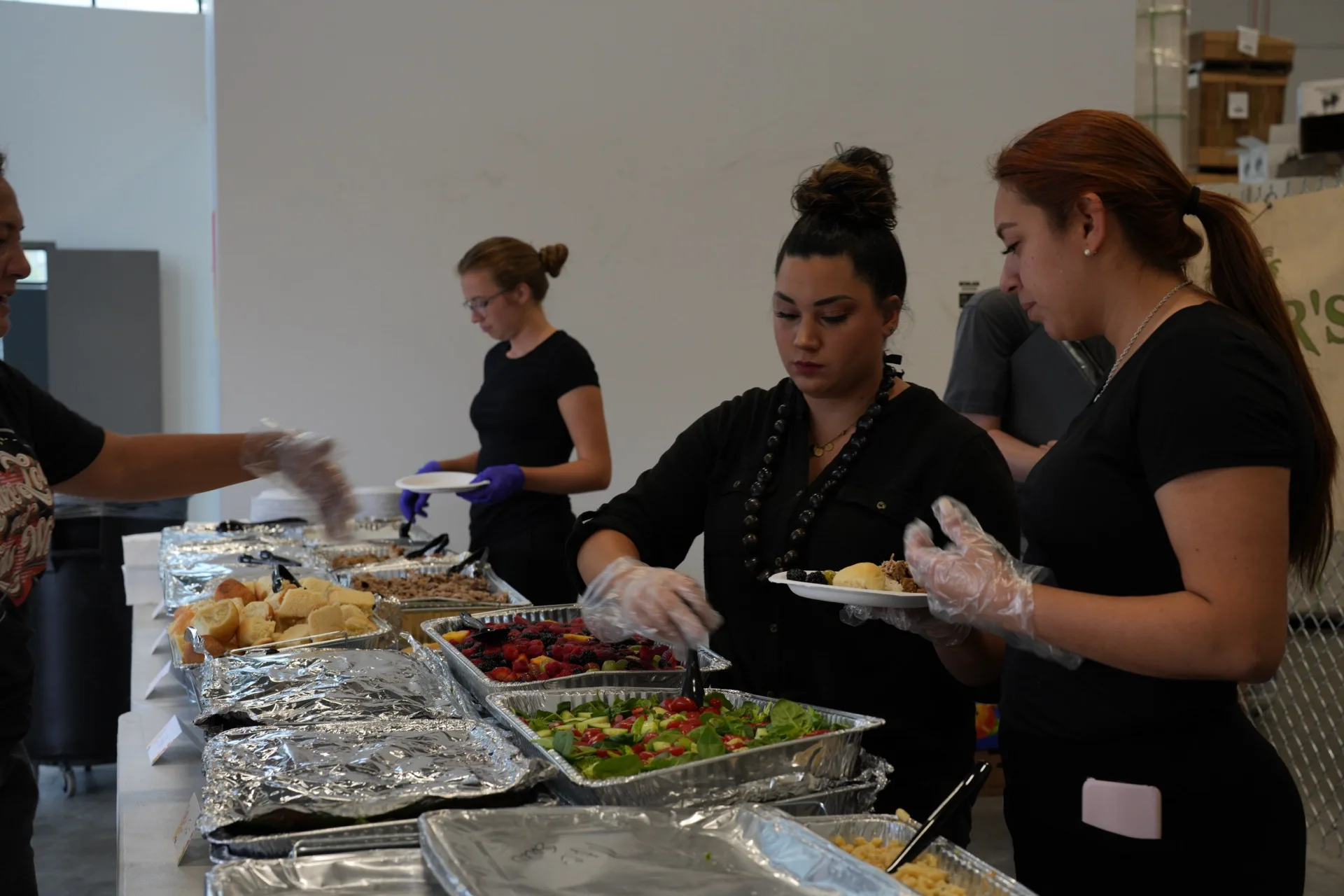
For a working range, CaterCamp's 2026 pricing guide puts general corporate catering at roughly $20 to $75 per person. Buffet service runs about $25 to $65 a head, plated dinner climbs to $45 to $150 as the server count goes up & drop-off catering with no on-site staff sits at $15 to $40. Decide which tier the event calls for before you fall in love with a menu, not after.
The pressure is real & rising. The Amex GBT 2026 forecast found 71% of planners expect cost per attendee to go up, with F&B price increases named as a main driver & cost is now the top planning challenge overall. Smart catering choices are one of the few levers that protect the budget without the guests feeling cut.
Match the service style to your guest count & your clock
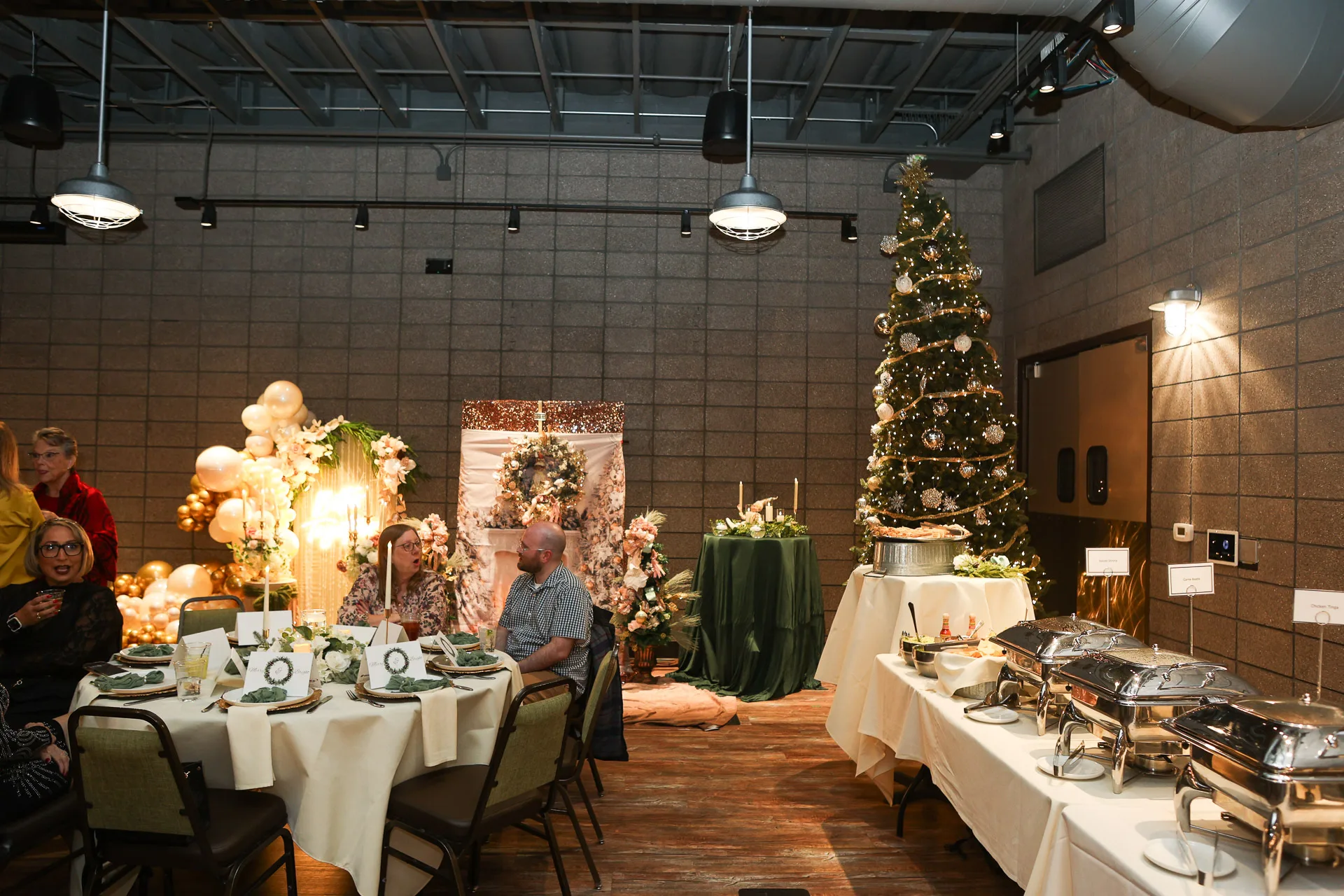
Buffet or plated is not a taste question. It's a timing question & it decides whether your agenda holds. The clearest numbers come from Evolved Events Catering: a buffet with two lines feeds 100 guests in 30 to 45 minutes, a single line stretches that to 45 to 60 & a plated dinner keeps guests seated for 60 to 90 minutes across three courses.

That timing shapes the whole night. Plated service suits groups under about 75, where the pace feels intentional & the room stays seated for a program. Buffet earns its keep at 75 & up, especially with two lines, because it cuts the wait nearly in half & gets people back to the reason they came. Staffing follows the same split: a plated dinner needs roughly one server for every 10 to 15 guests, while a buffet runs closer to one staff member per 40. If a caterer's quote is priced like a buffet but staffed like a plated dinner, that gap shows up as a slow room.
Treat the dietary list as a deadline, not an afterthought
The fastest way to embarrass a host is a guest with nothing to eat. Building the accommodation in has a real calendar. Breadless recommends collecting dietary responses about 21 days out with a reminder at 10 days, booking the caterer at least four weeks ahead when the needs are complex & giving yourself a six to eight week window for large groups. Those dates belong on the timeline the day you set the date, not the week of.
It reads like logistics because it is. It's also the difference between a guest who feels thought about & one who spends the dinner hour hunting for a side dish.
Where the menu becomes an experience
Once the fundamentals hold, the menu is a design tool. BizBash's 2025 F&B trends point to family-style service that seats people at shared tables & gets them talking & live-action stations, carved-to-order mains & the like, that turn a meal into something guests gather around. The same report flags that roughly 40% of Americans are drinking less, which is why a serious non-alcoholic program has moved from nice-to-have to expected.
The move is to place those choices where the night needs a lift, the same way you would with any other element of the room. Food that arrives at the right moment is part of the experience design, not a break from it.
Catering & your timeline are the same decision
Every number above points back to one document. When dinner runs long, the speaker who follows it inherits a restless room. When the line backs up, the energy you built drains into the wait. That's why service style, menu & guest count belong in the same conversation as the rest of the schedule, which we lay out in our guide to building a run of show. Catering isn't a vendor you hand off & forget. It's a timing decision with a plate attached & it's part of the same event strategy & design work that shapes everything else about the night.
Corporate catering FAQs
How much should I budget for corporate event catering per person?
Plan on roughly $20 to $75 per person for standard corporate catering, with buffet at the lower end & full plated service reaching $150 a head. Then add 20 to 25% for service charges & gratuities, which are rarely in the headline quote.
Is a buffet or a plated dinner better for a corporate event?
It depends on your guest count & your schedule. Plated dinner suits groups under about 75 & a seated program, keeping guests at the table for 60 to 90 minutes. A buffet fits 75 or more, and with two lines it feeds 100 people in 30 to 45 minutes, which protects a tight agenda.
When should I collect dietary requirements from guests?
Collect dietary responses about 21 days before the event with a reminder at 10 days out. Book the caterer at least four weeks ahead for complex needs & give yourself six to eight weeks for large groups.
What percentage of an event budget is food and beverage?
Food and beverage is usually the largest single line item. In recent planner surveys, 73% named F&B their biggest expense, and most planners expect cost per attendee to keep rising into 2026.
If you'd rather hand the whole food experience to someone who plans it against the run of show, not just the guest count, that's the job. Tell us about your event & we'll show you what we'd do with your room: start the conversation here.
New posts, straight to your inbox.
Real lessons from real corporate events, no filler.










-1920w.jpg)