Immersive Corporate Experiences
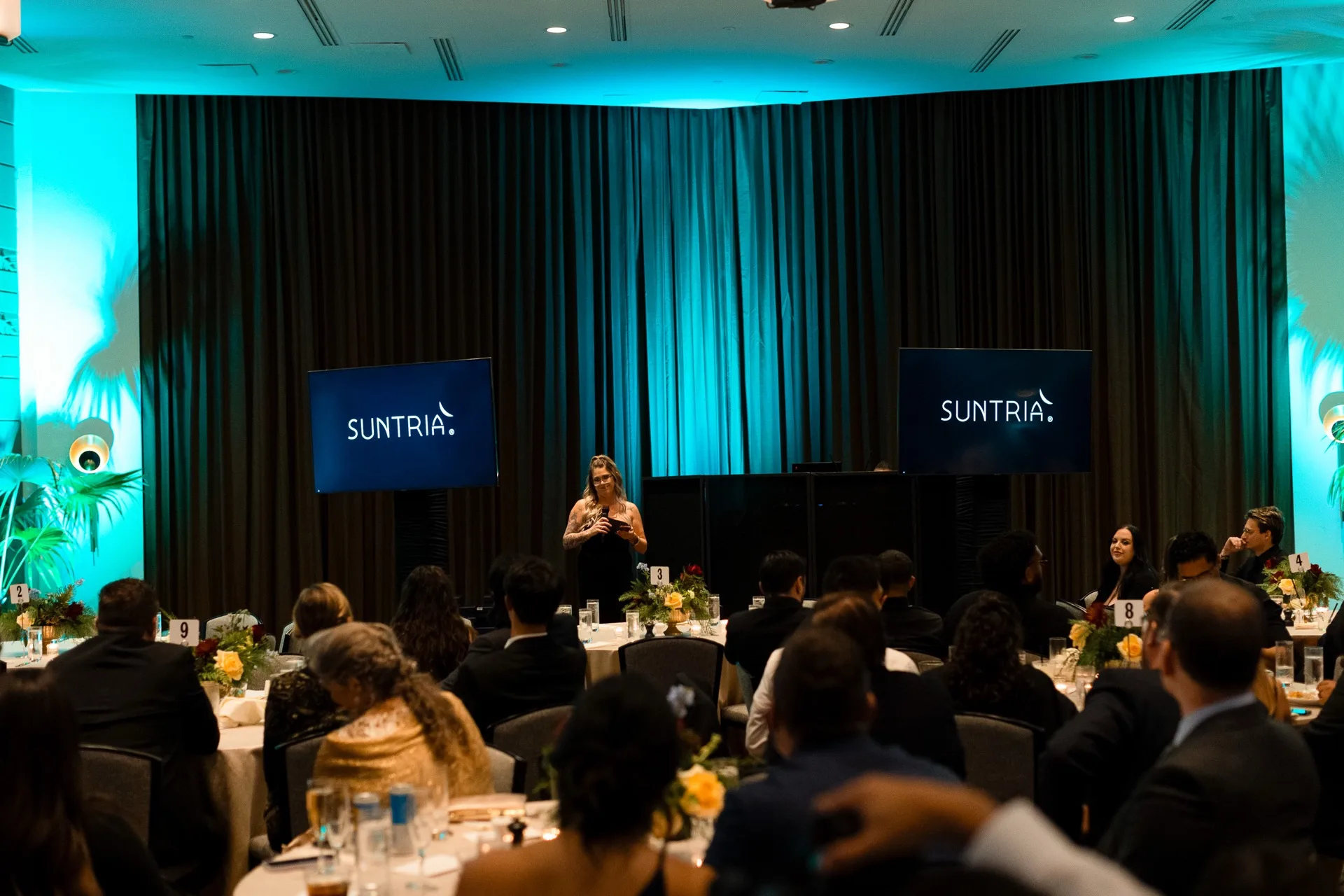
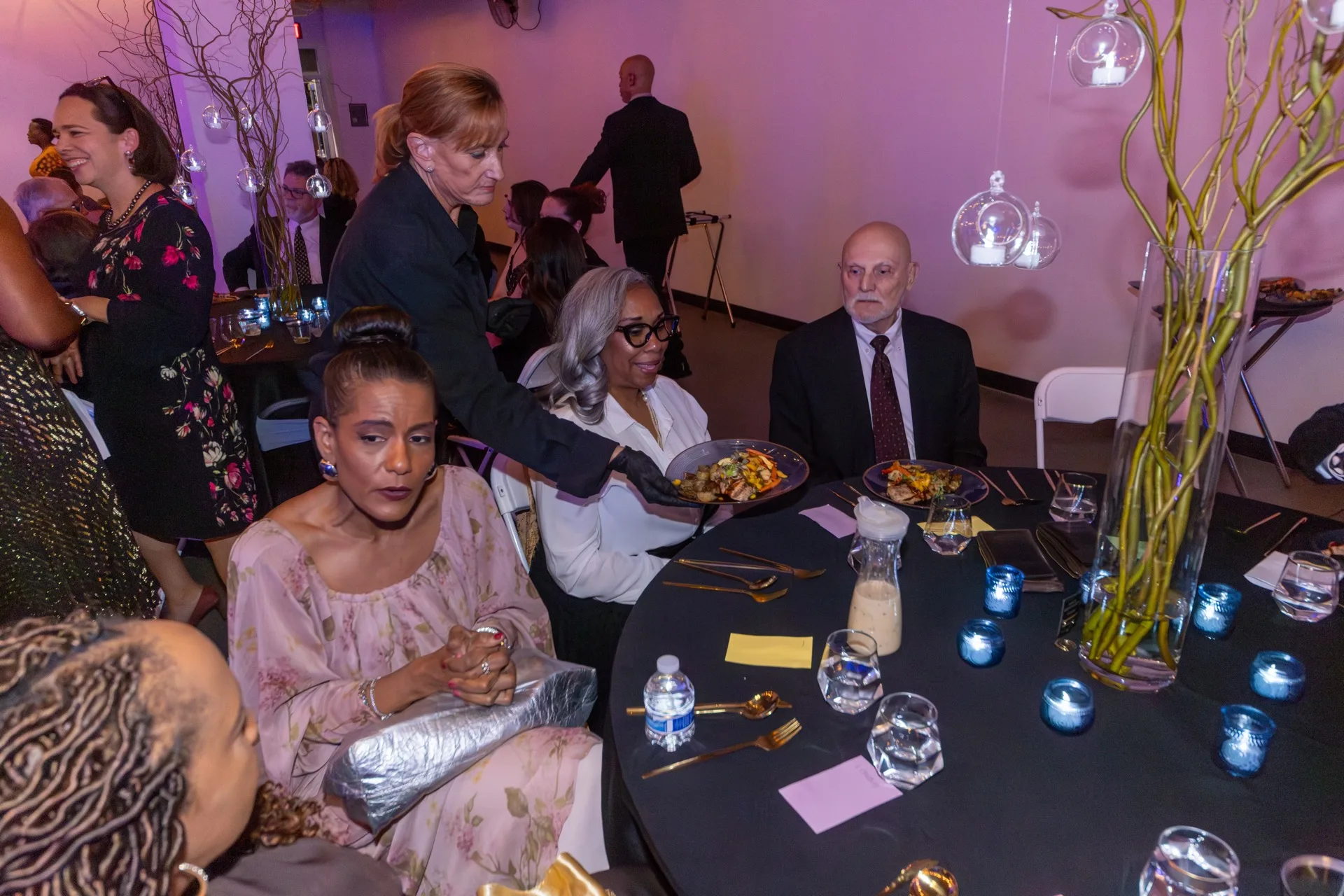
Most corporate events put a stage at the front of the room & everyone else in rows facing it. That's a show. Immersive is a different design choice: the room itself becomes part of the experience, & guests move through it instead of watching it happen at them.
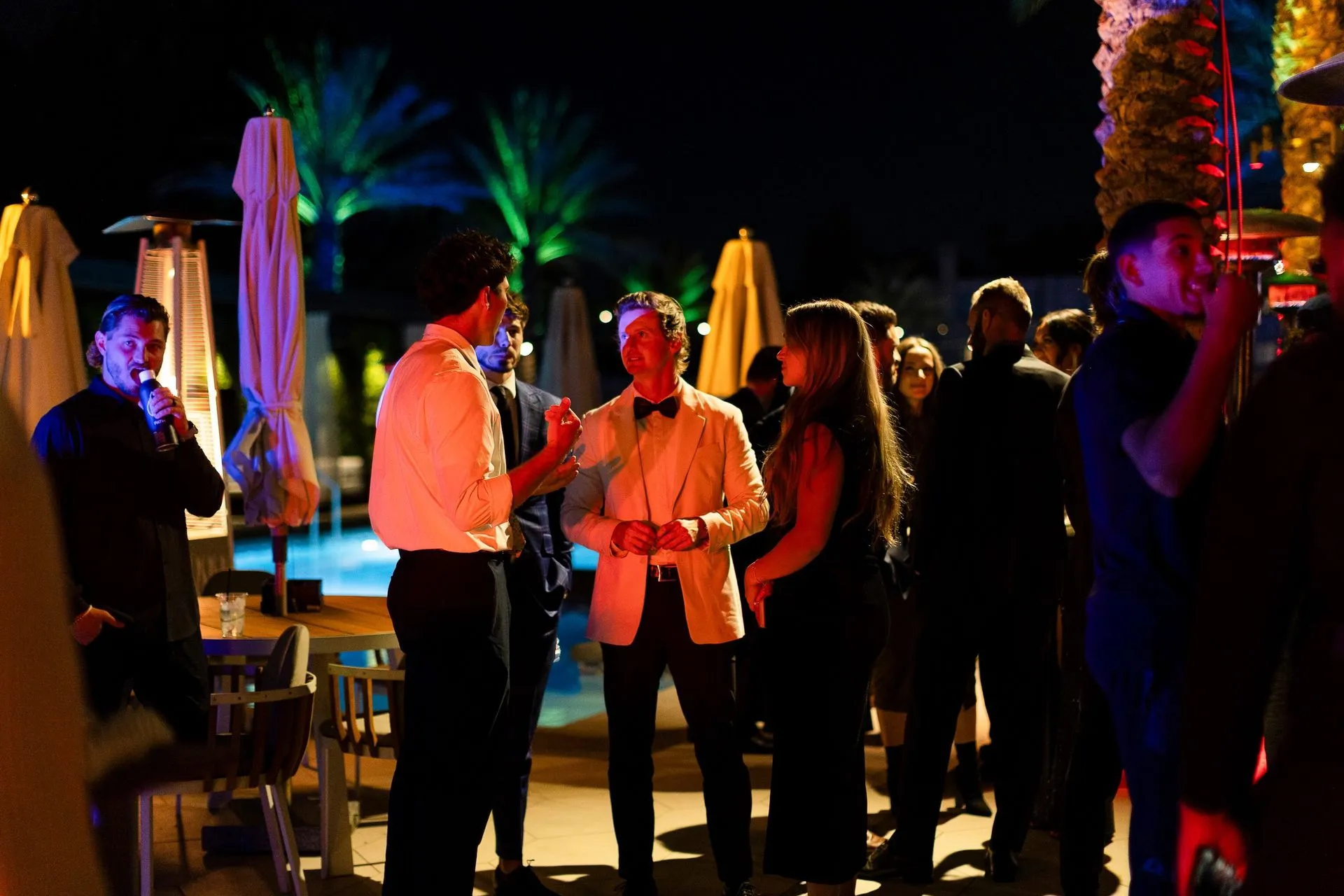
We get asked about this a lot lately because "immersive" has turned into a word agencies slap on anything with a projector & moving lights. It doesn't mean gear. It means the event is built so people are inside it, using their senses, making small choices, following a thread that runs through the whole night instead of clapping at a stage.
What actually makes an event feel immersive?
Four things, & we build all four into every program we design. Miss one & the night still works fine. Miss three & people remember the open bar & not much else.
- The senses in the room. Lighting, sound, temperature, scent, texture. All of it registers before anyone reads a word on a slide.
- Participation. Guests doing something instead of only watching something.
- A story. A reason behind the night, not a theme picked off a mood board.
- Flow. How one moment leads into the next, not a lineup of acts with dead air between them.
Most events do one or two of these well & call the result immersive. A haze machine & a hashtag is not immersive, it's decoration. The four pieces only work as a system. Senses without a story feel random. A story without flow feels like a stage play nobody asked to watch.
What does the room feel like?
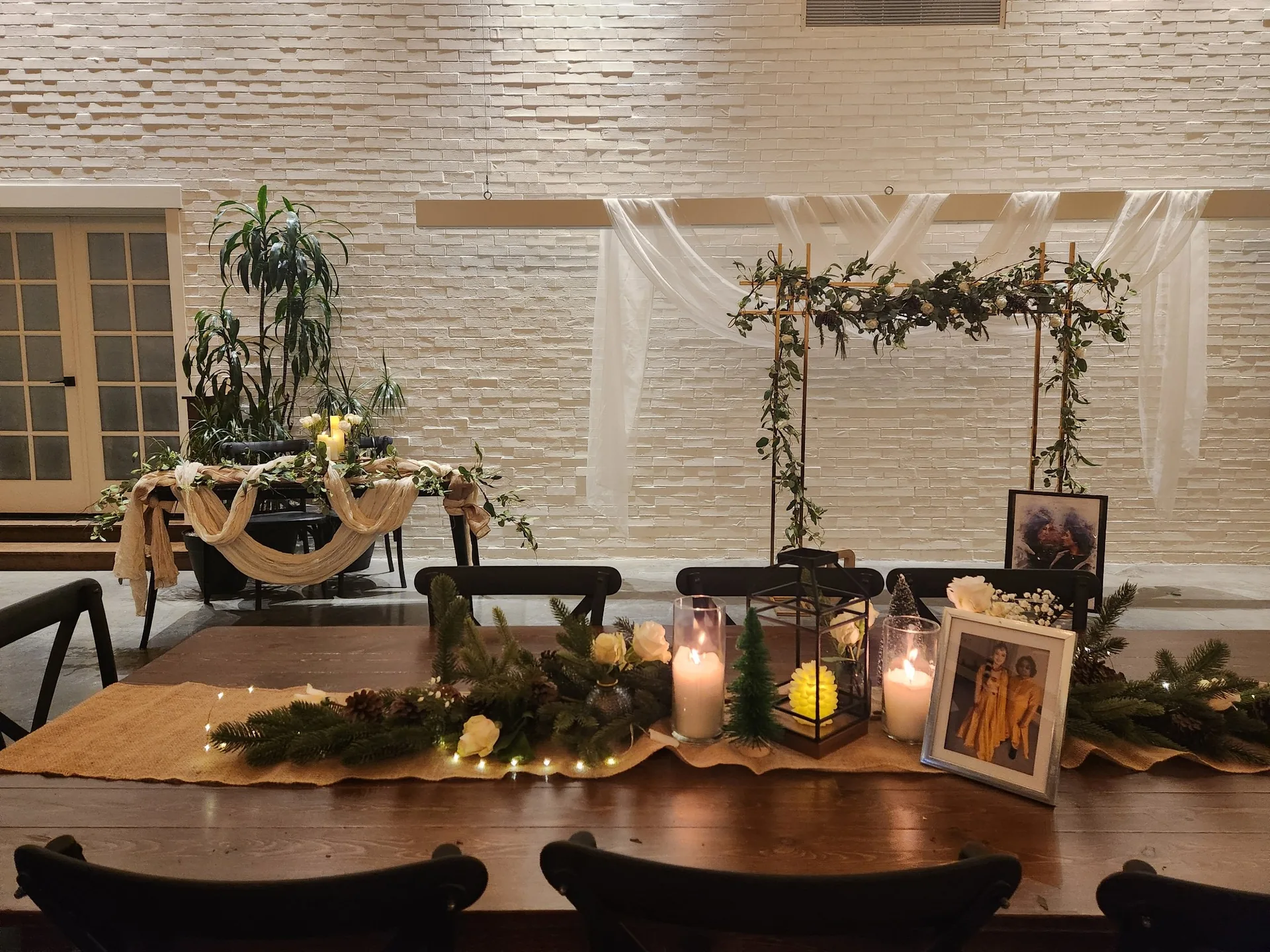
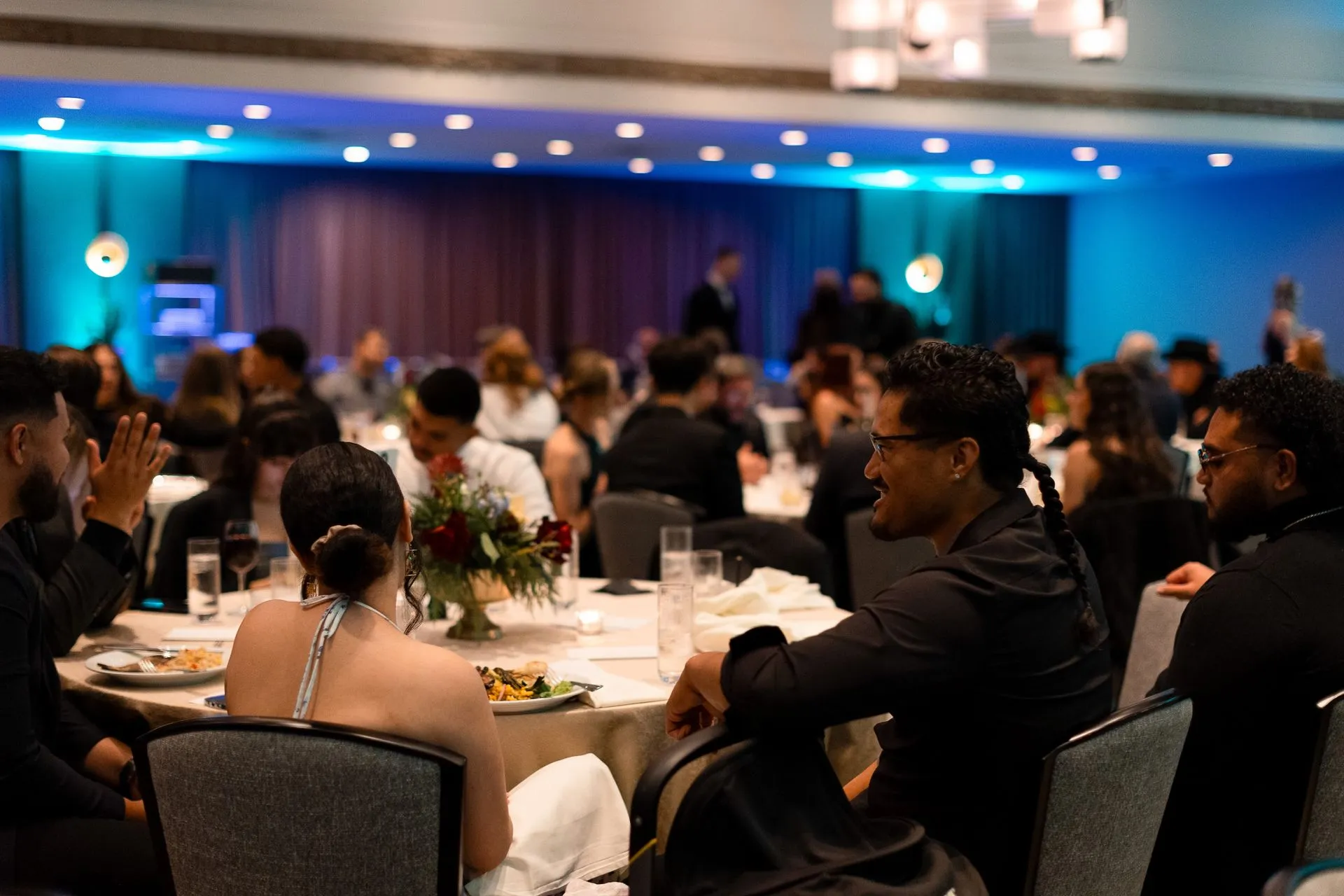
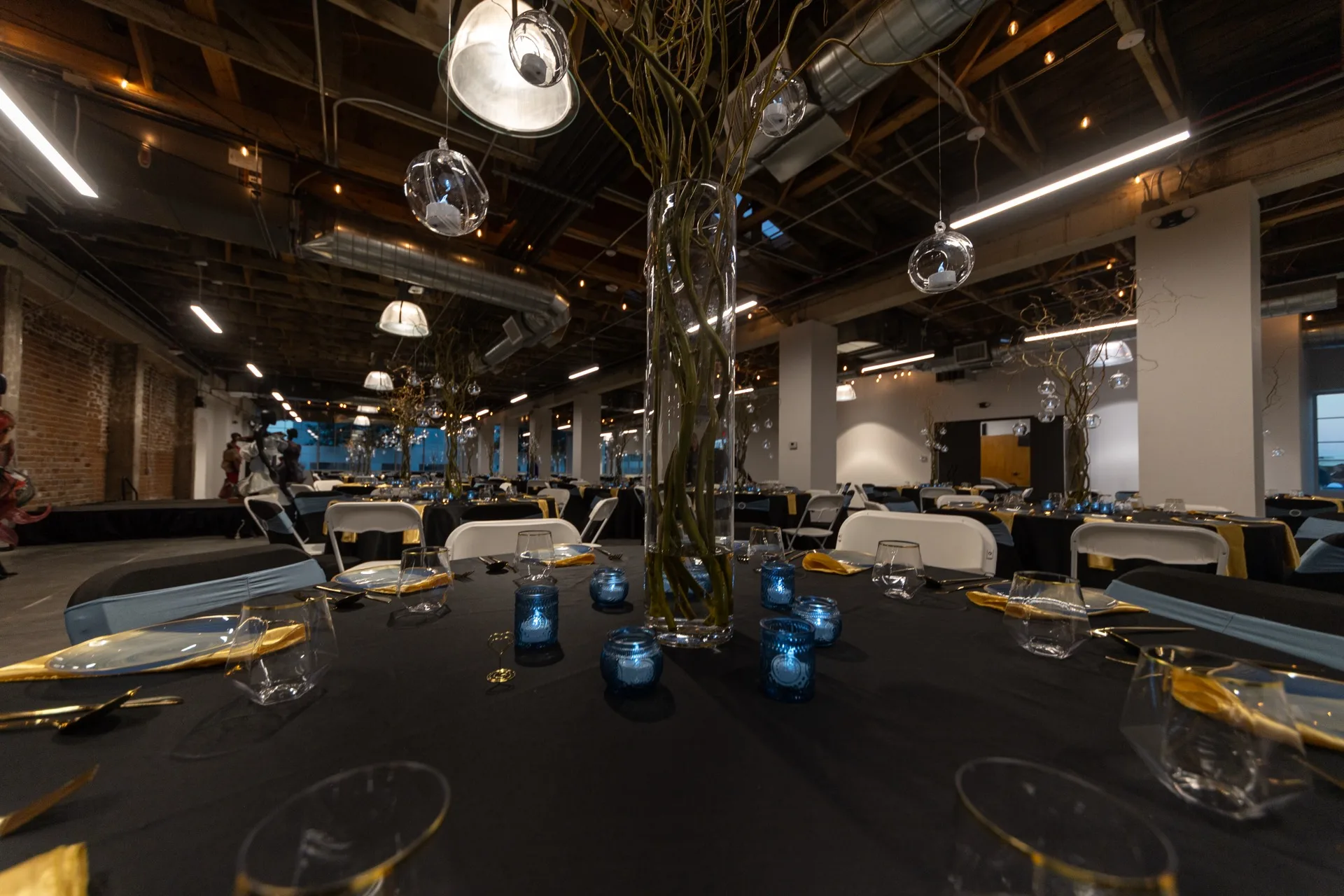
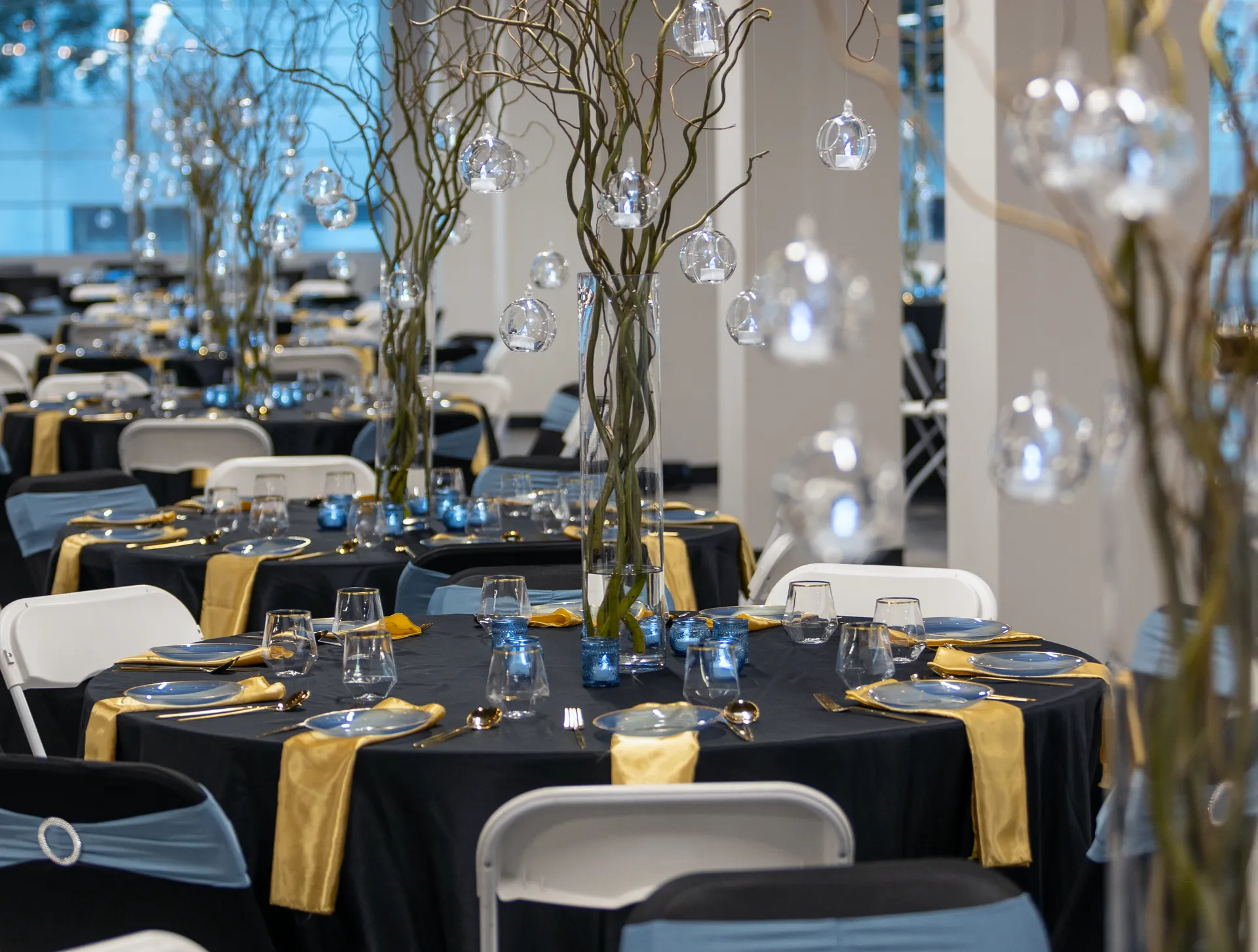
Lighting, sound, temperature & scent all land before a guest processes anything you're telling them. A ballroom lit like a ballroom feels like a ballroom no matter what's happening on stage. Change the light, layer in sound design, give people something to touch or taste, & the same four walls read as a different world entirely. We've written before about designing for all five senses, & it's usually the first layer that gets cut when a budget gets tight, which is exactly backward. It's the cheapest lever with the biggest effect on how a room feels.
What do guests actually do?
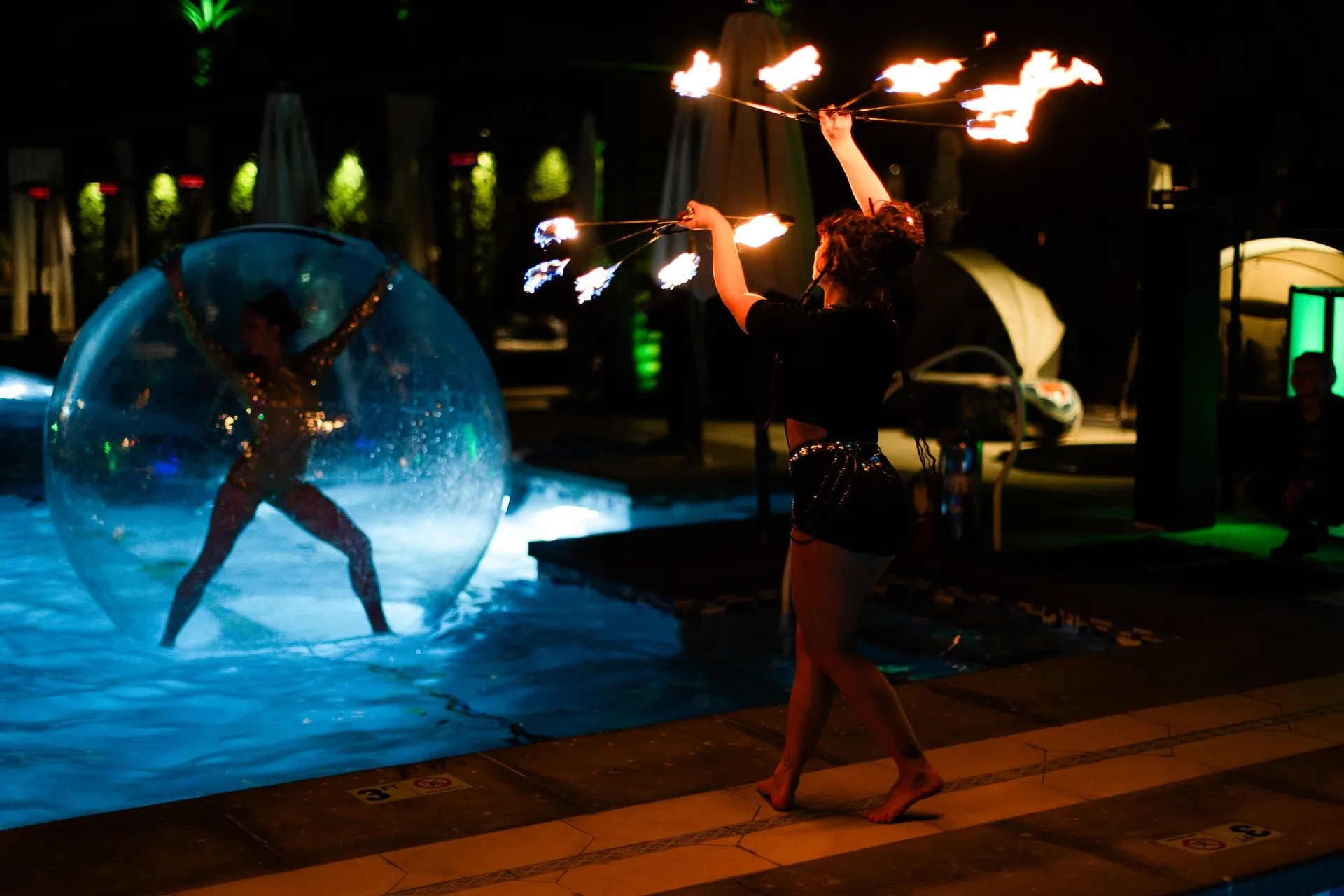
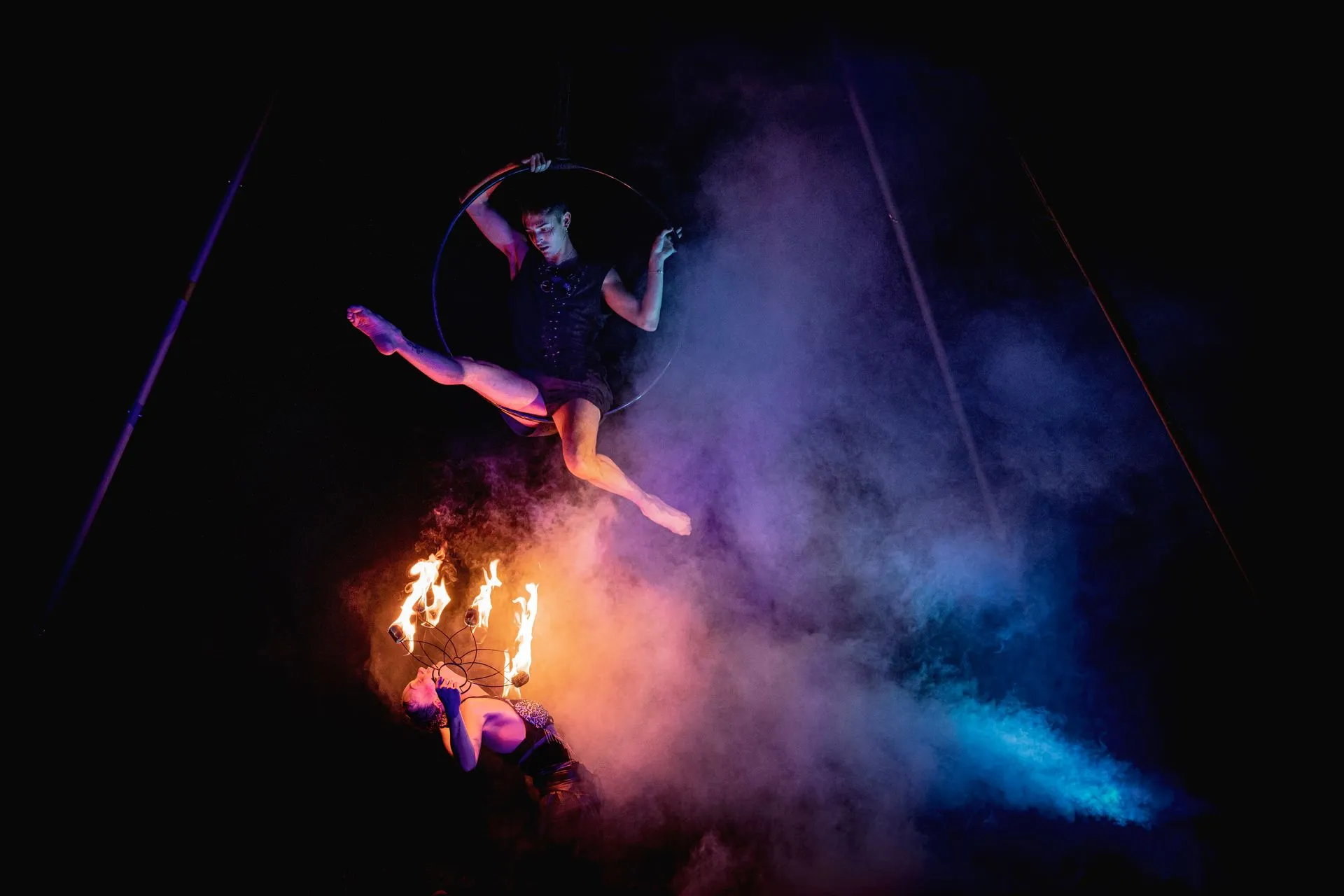
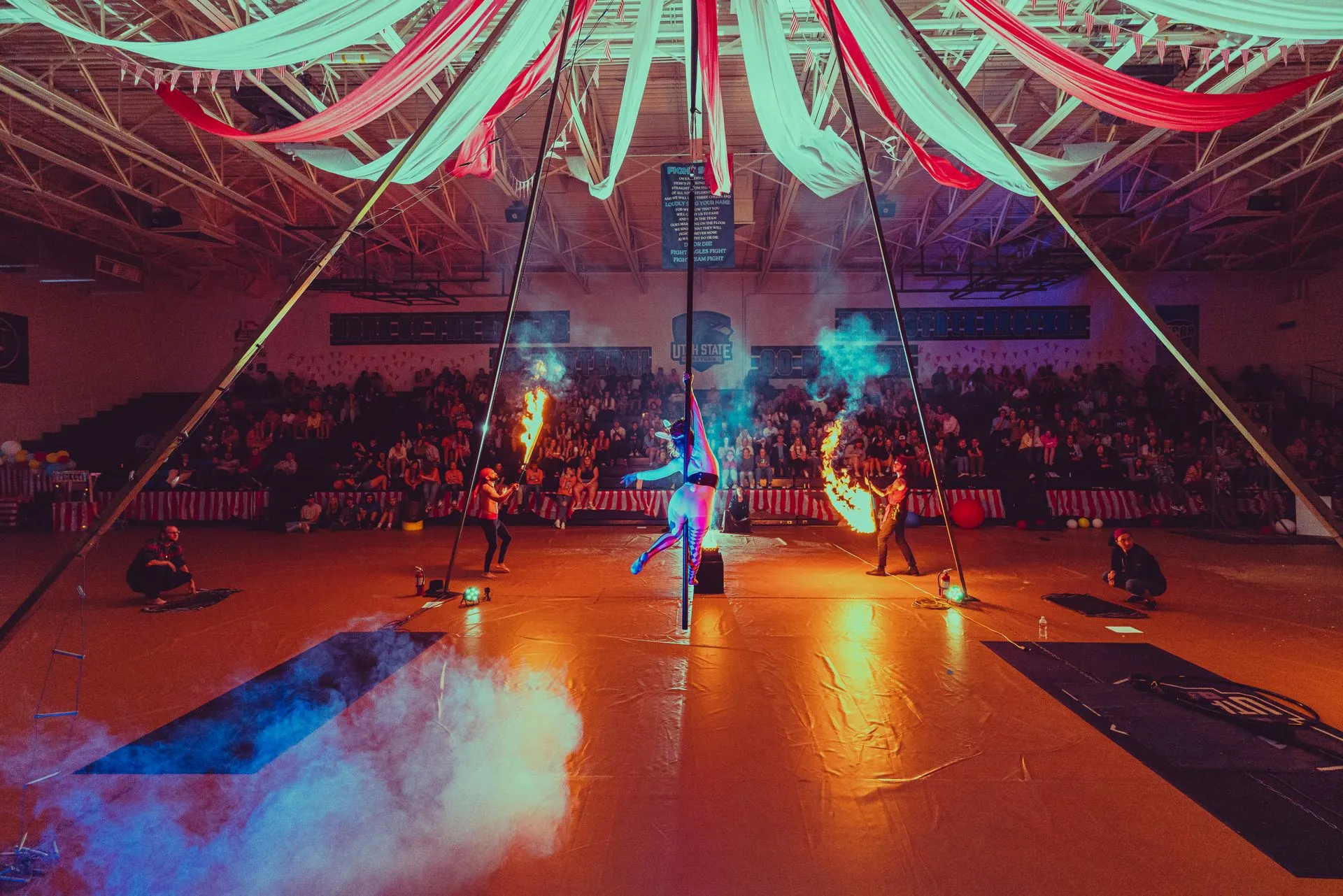
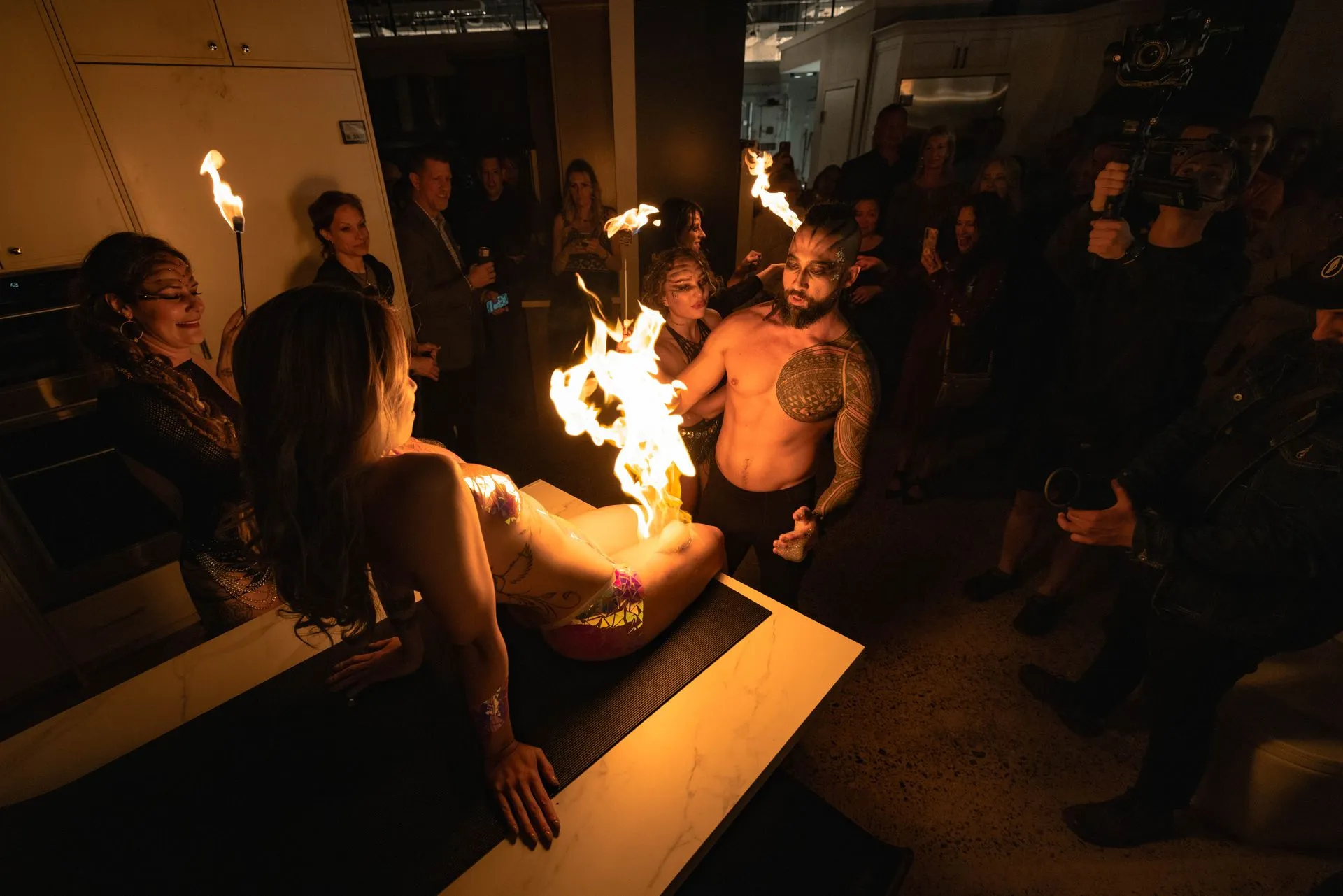
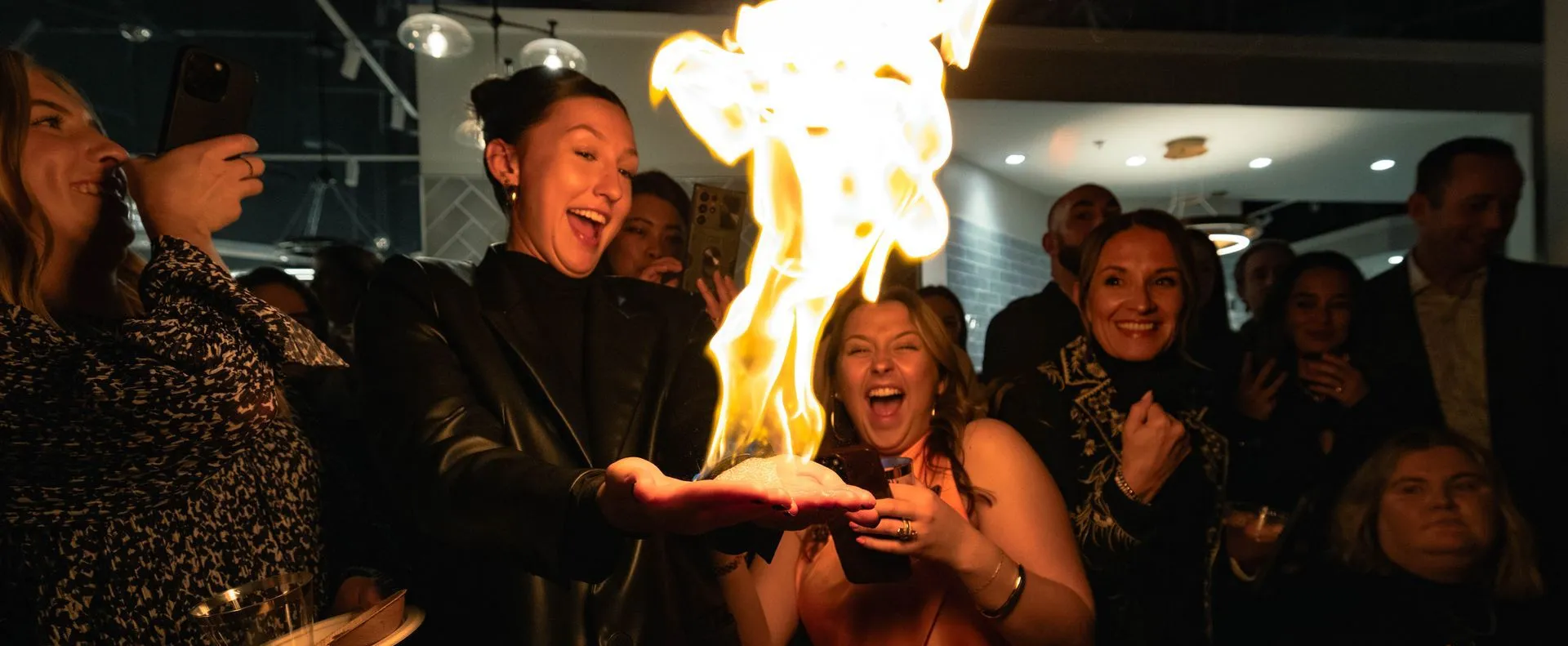
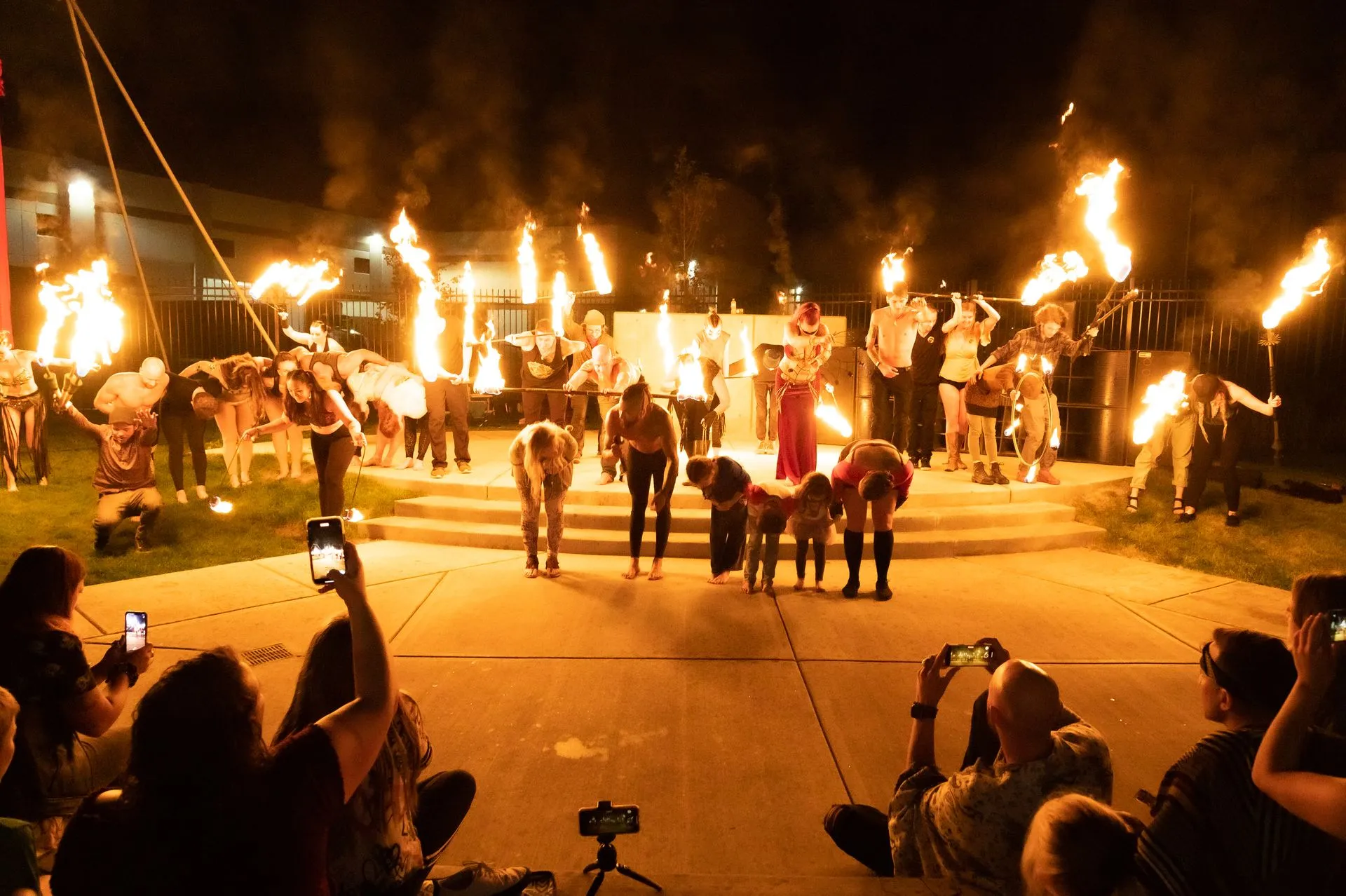
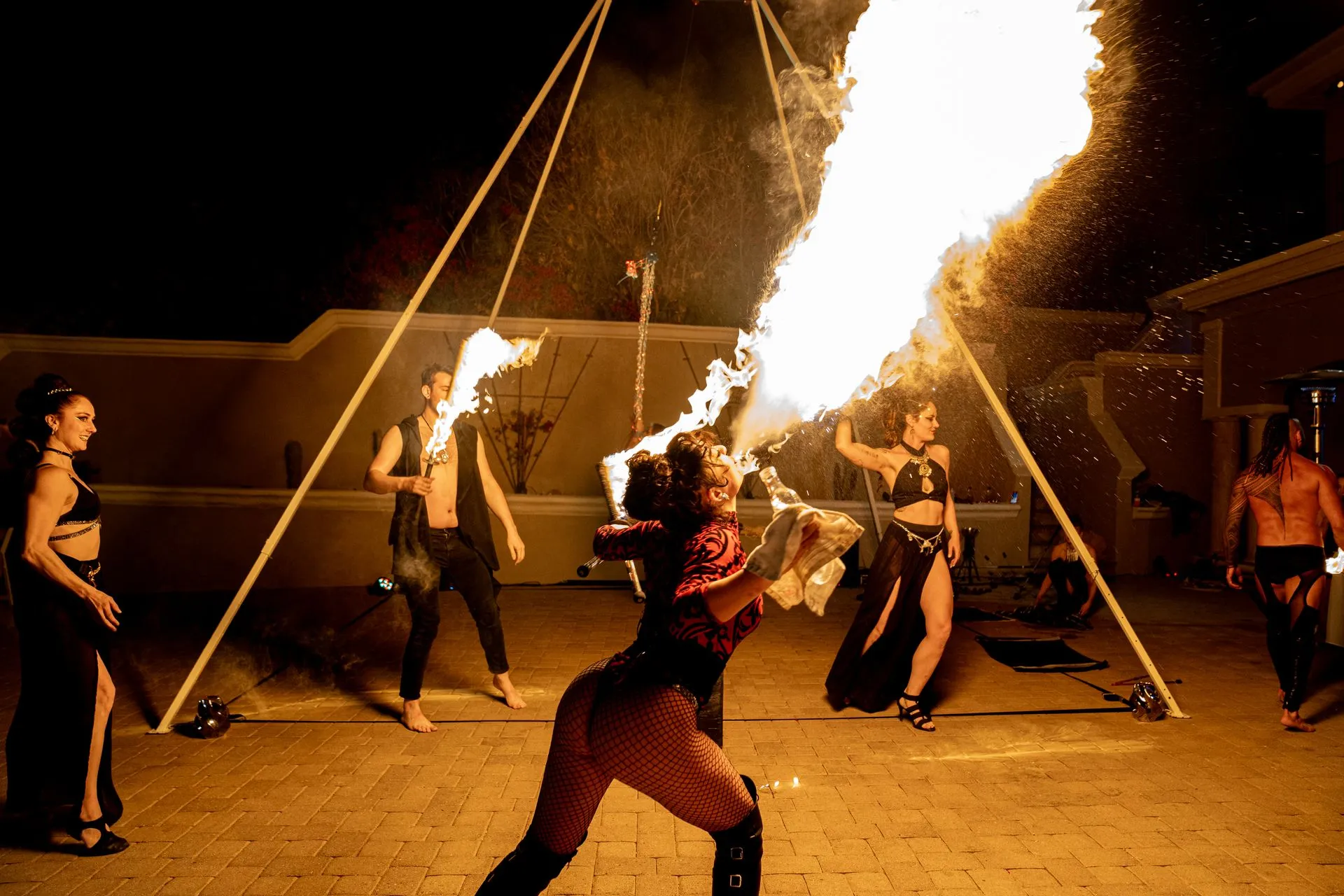
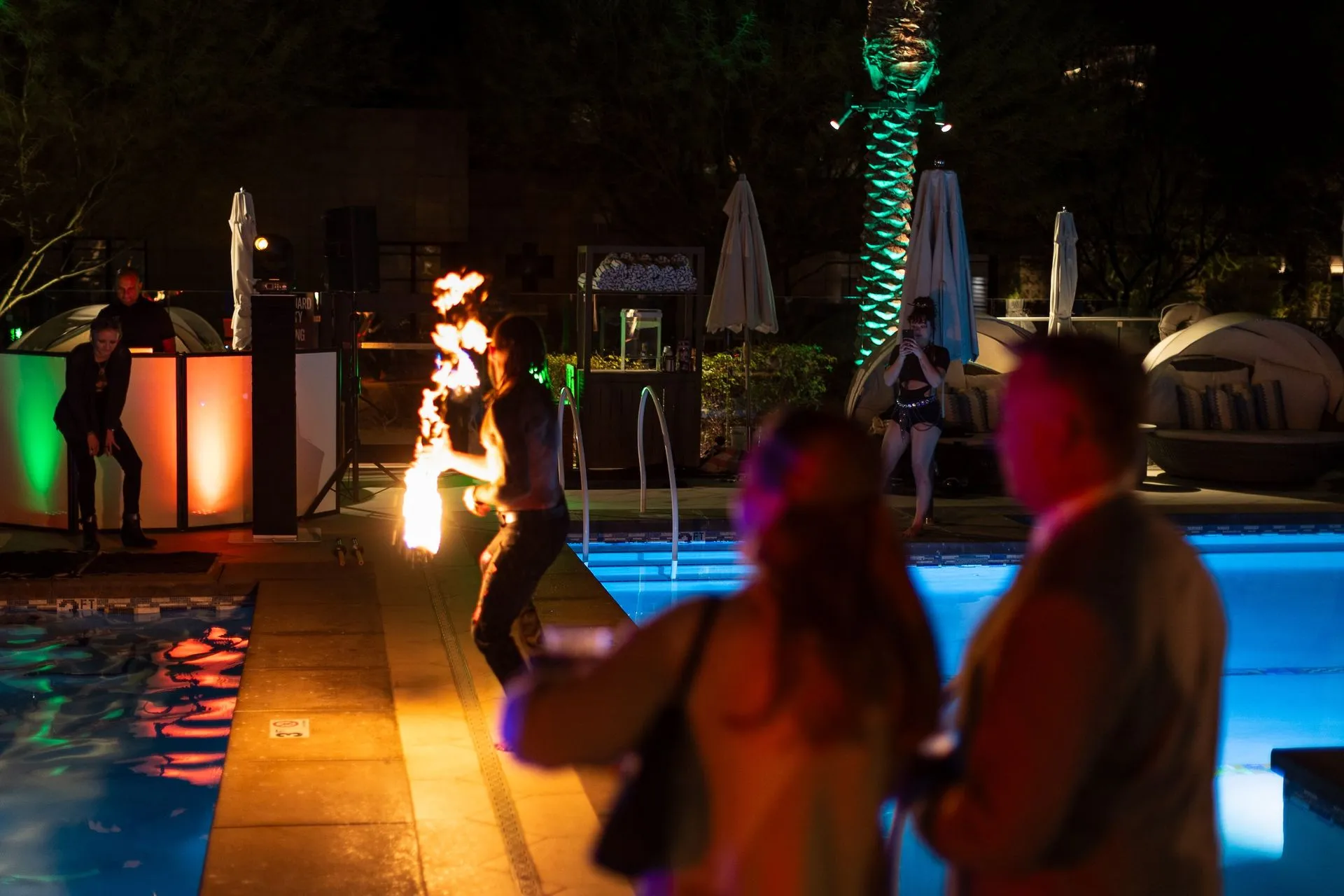
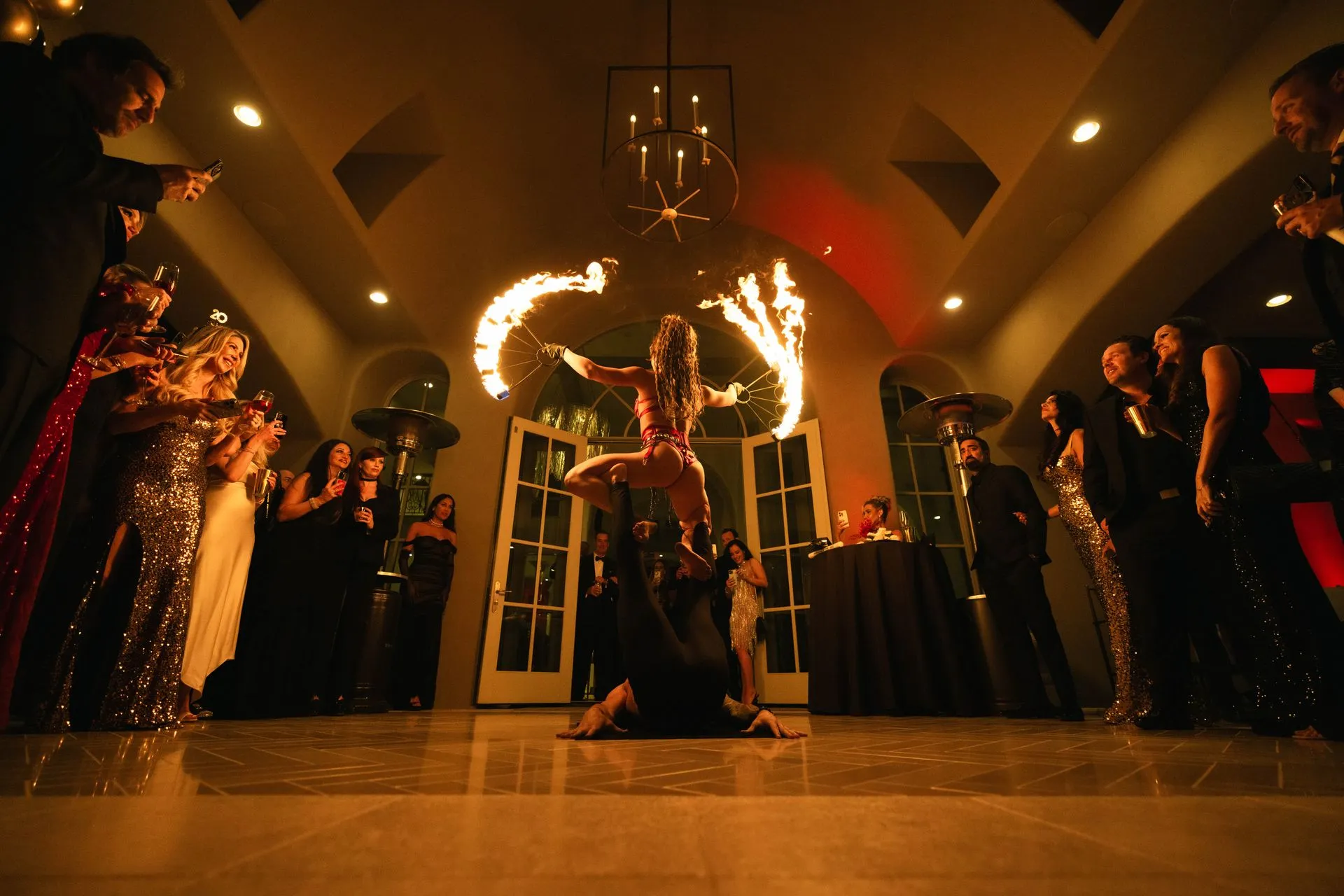
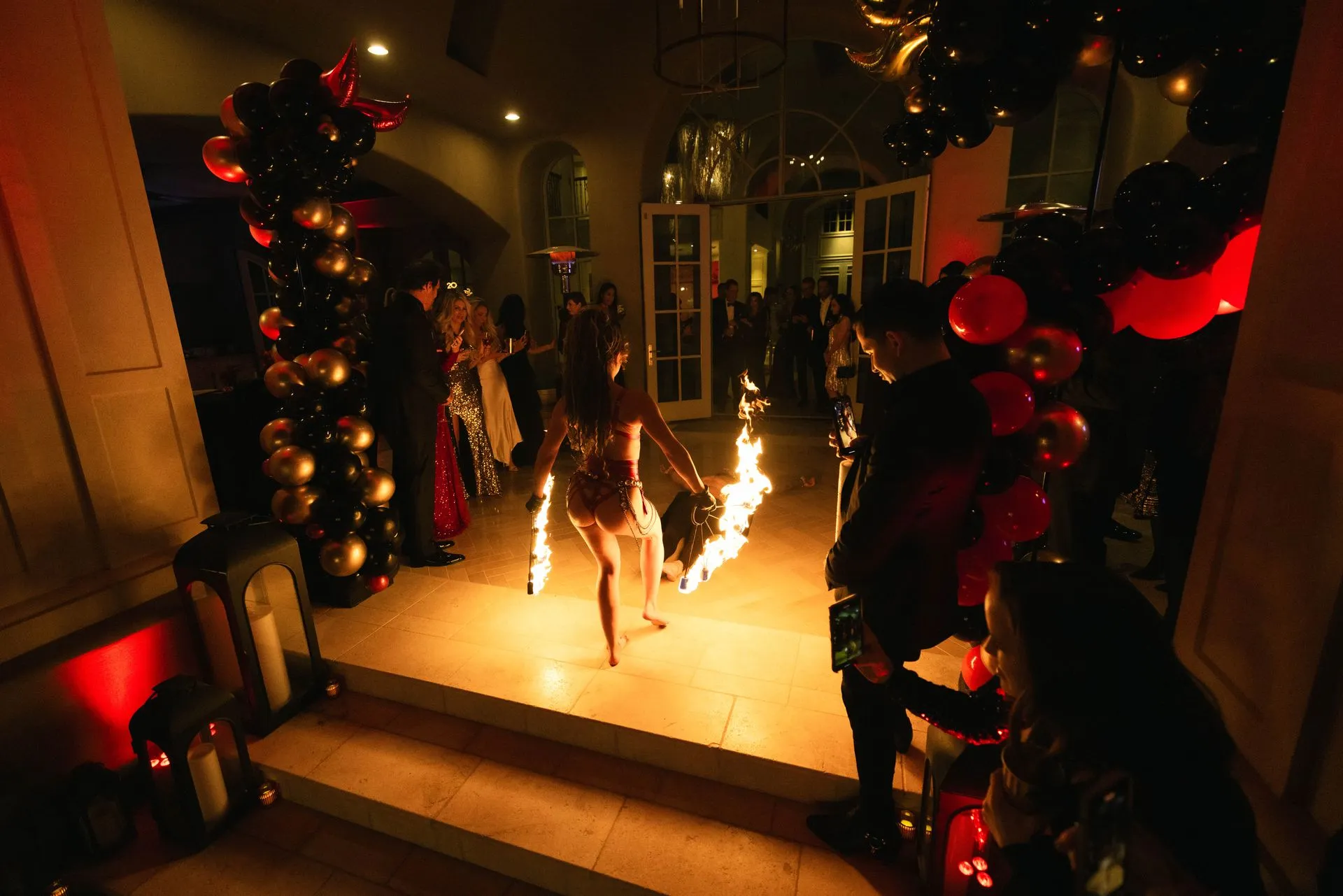
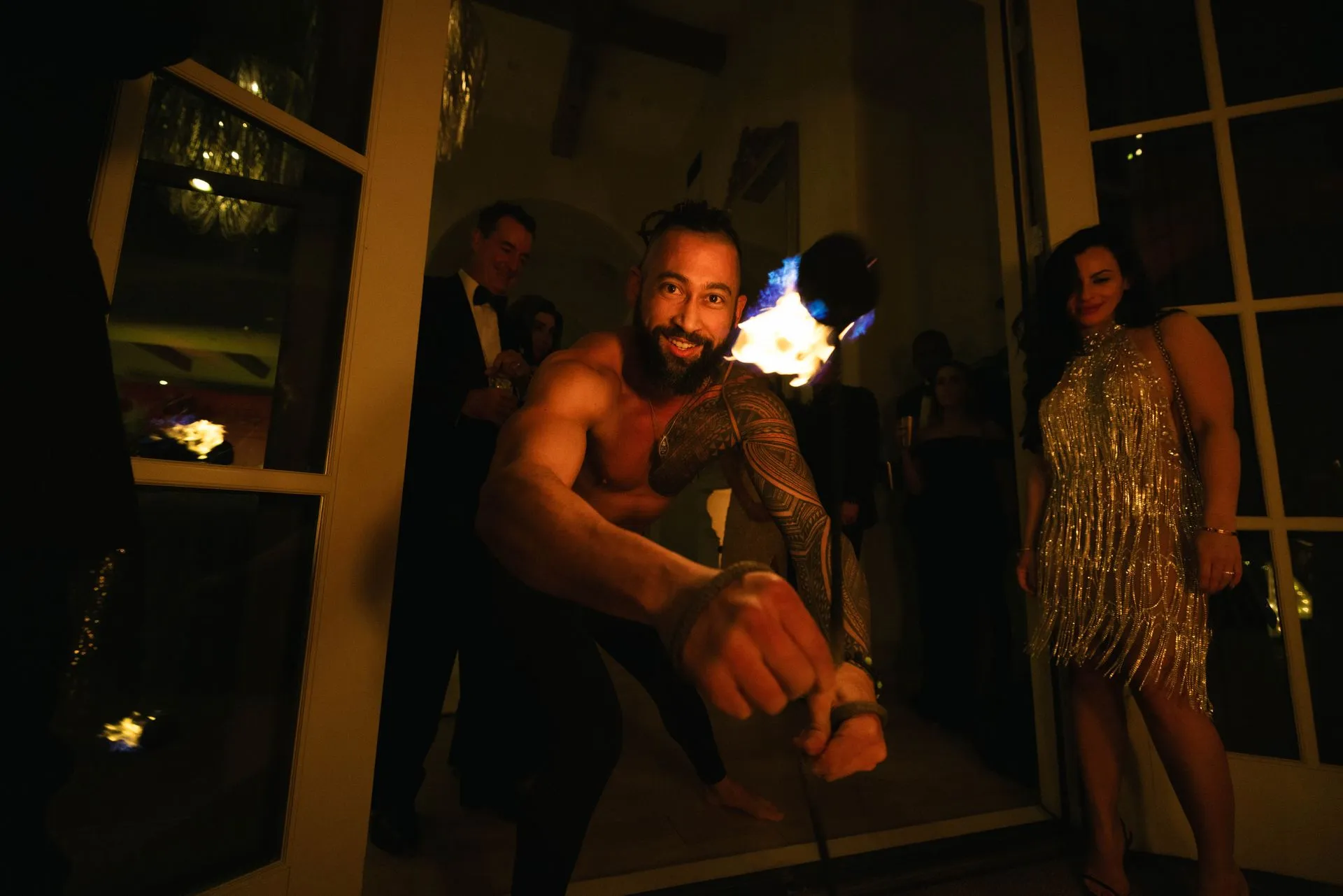
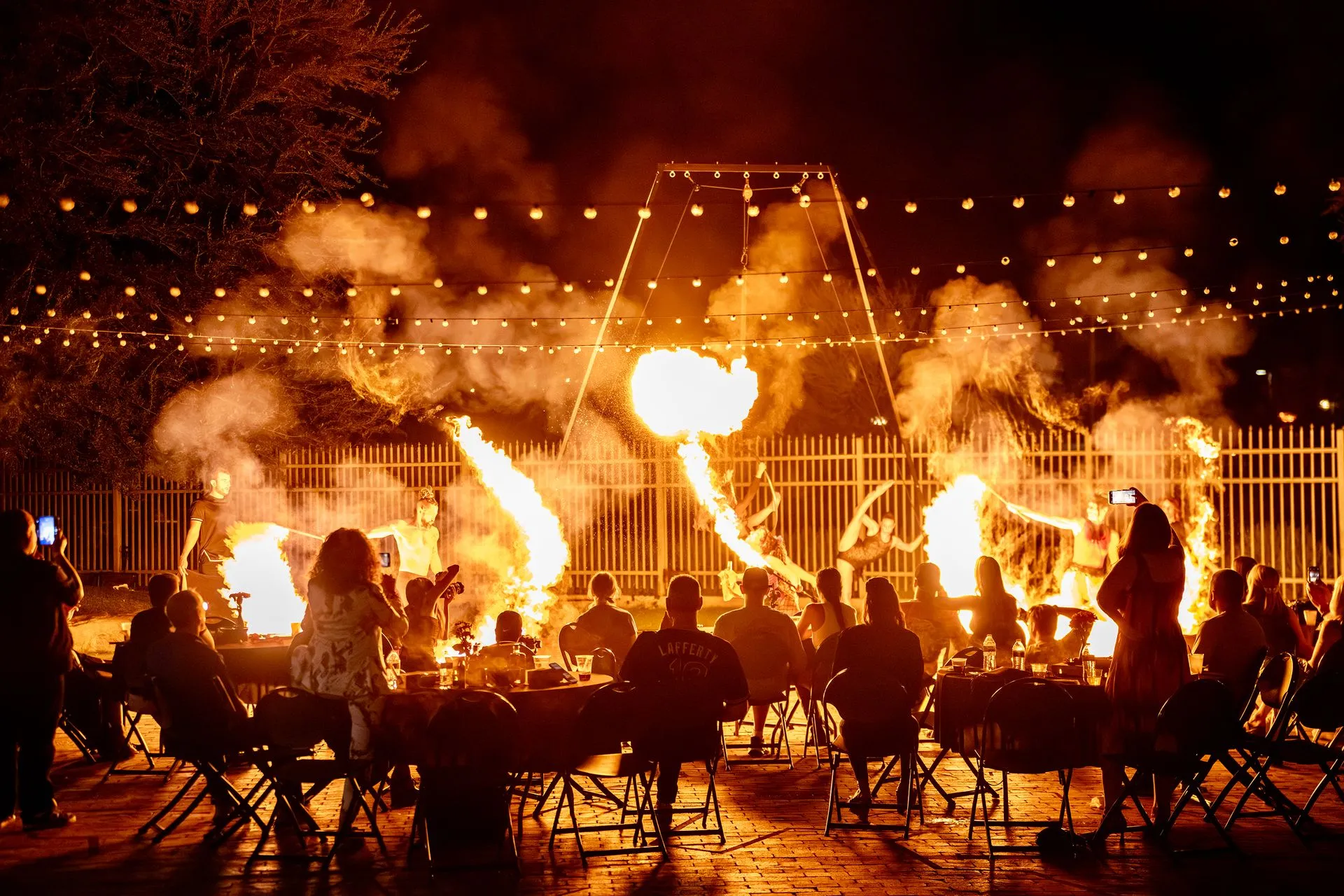
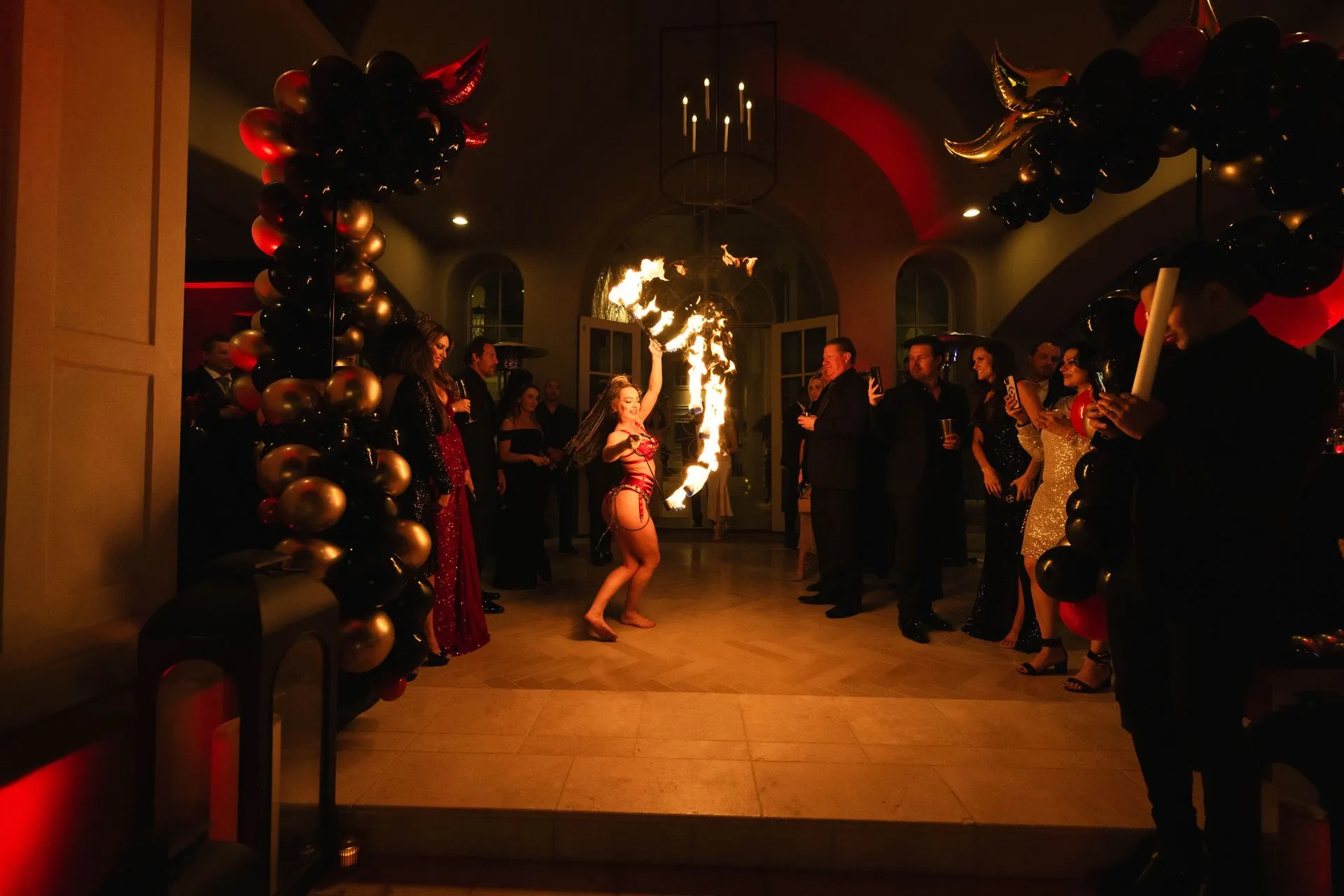
Watching is passive. An immersive event gives people something to do: get close enough to a performer to feel it instead of viewing one from the back row, walk through a space instead of sitting in it for two hours straight, interact instead of just applaud. Our entertainment experiences are built around proximity on purpose. Fire circus works in a room because guests are close enough to feel the heat, not because it's loud.
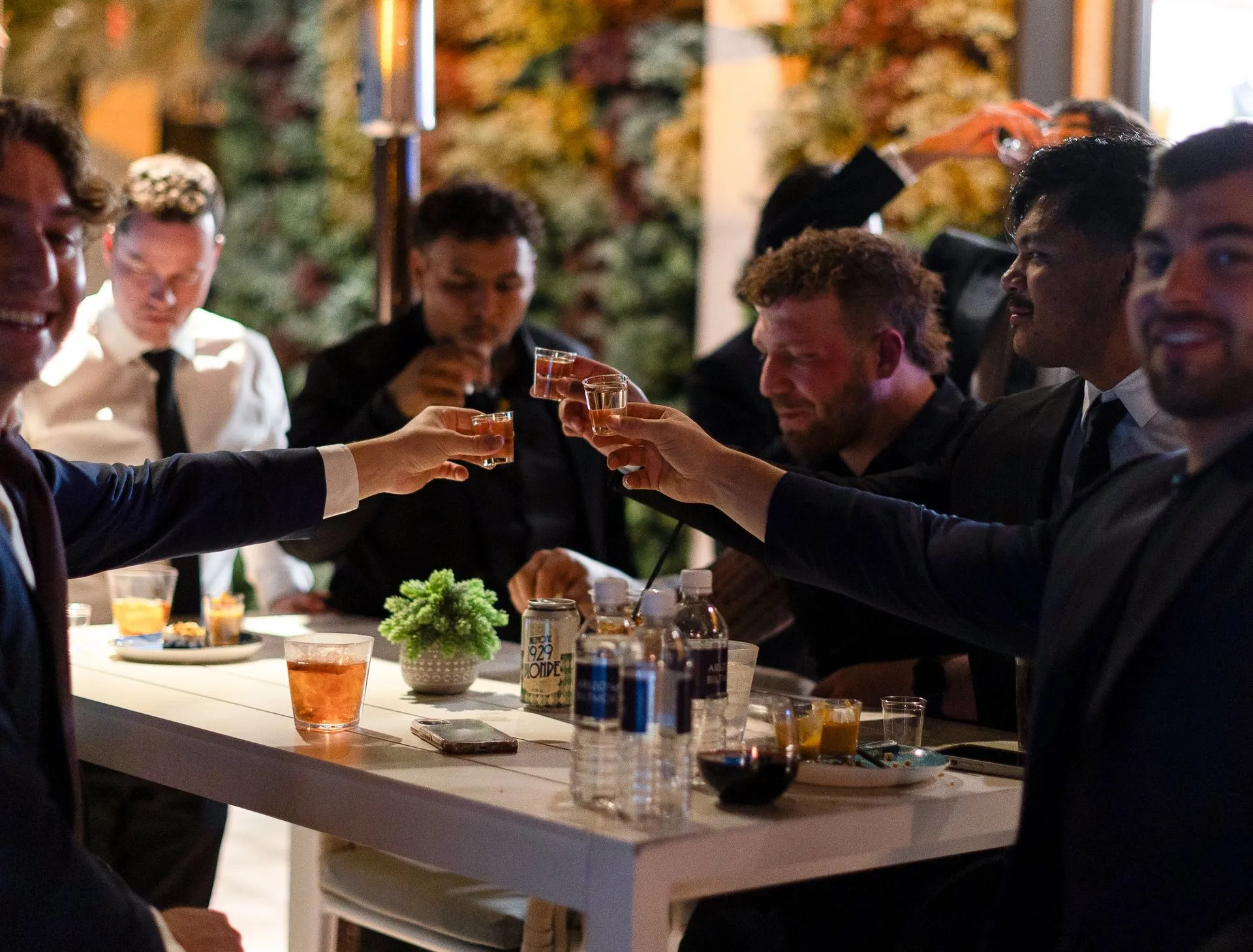
Participation doesn't have to mean fire or aerial to count. It can be as simple as guests choosing which of two paths to walk into a room, or a character performer who remembers a guest's name from the RSVP list. The scale changes with the budget. The principle, guests as participants instead of an audience, doesn't.
What's the story?
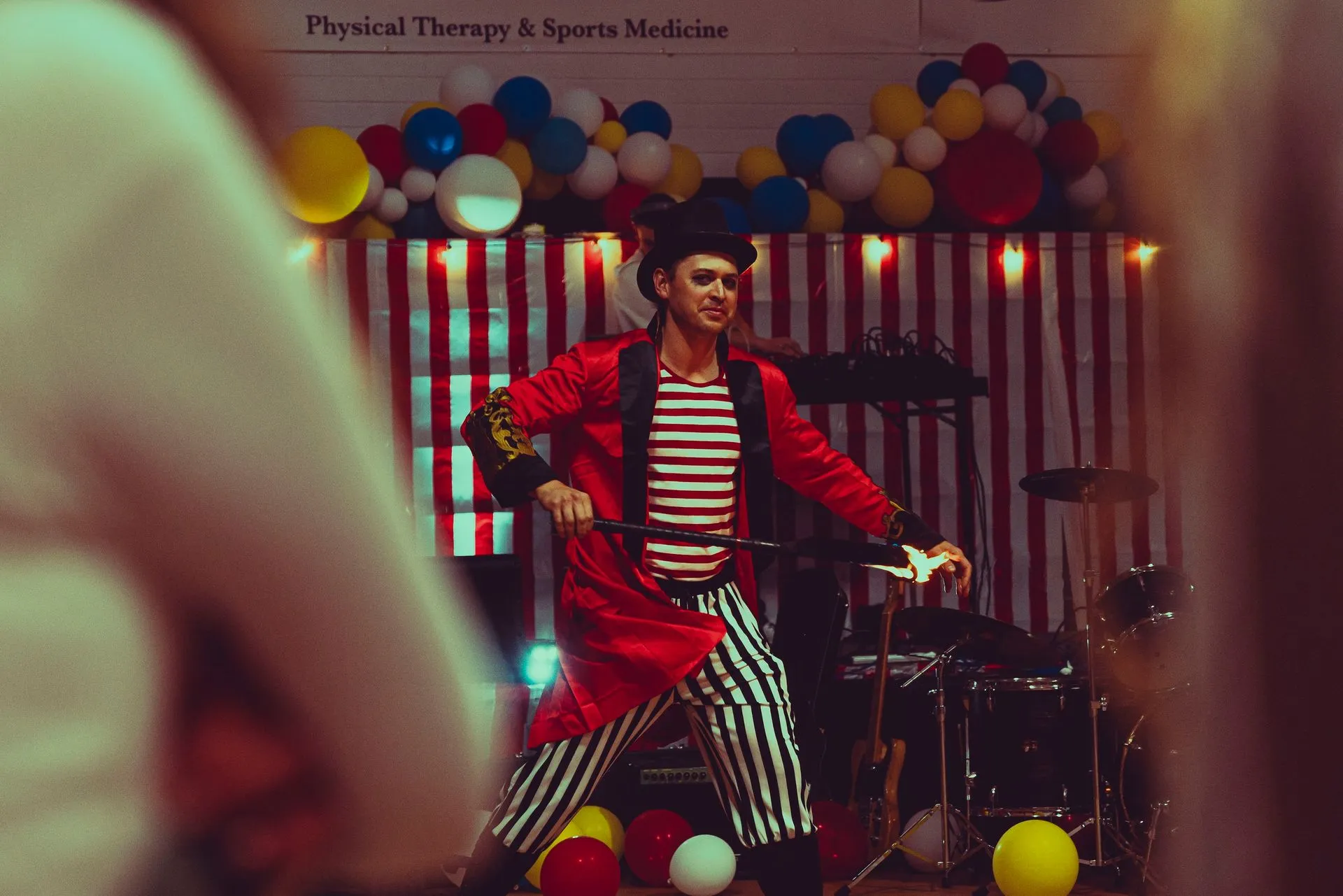
A theme is a color palette. A story is a world guests walk into, with a reason behind everything in it. Our Haunted Circus program is a good example. Performers stay in character all night, the space is built as an environment guests enter rather than a stage they watch, & every detail from costume to lighting serves the same world instead of fighting it. That's the difference between "we hired entertainment" & "we walked into something."
How does the night flow?
Immersive design falls apart fast when the pacing is off. Entertainment dropped in as filler between speeches reads as filler. Entertainment built into the run of show, timed to the moments that actually need lift, reads as design. This is the part planners underestimate most: a great performer in the wrong slot still lands flat. Flow is a production decision, not a talent decision, & it's usually the difference between a night that feels planned & one that feels assembled.
What does it cost to skip all of this?
Skip it & you still get a functional event. Open bar, good food, a DJ, people show up & leave on time. There's nothing wrong with that on its own. But nobody talks about a functional event a year later, & whoever planned it rarely gets credit for a room nobody remembers.
The real cost usually isn't the entertainment line item. It's fragmented planning: lighting from one vendor, entertainment from another, staging from a third, nobody owning how they fit together. Immersive design is the layer that gets cut first when nobody's job is to protect it, because it's the connective tissue, not any single piece. That's the actual gap between a room people sat through & a room people talk about for years.
We see the pattern most in the debrief. A functional event gets a "thanks for putting that together" email. A designed one gets forwarded to next year's planning committee with a note that says do that again. That's the whole return on the investment, in one sentence.
If you're planning something & want it to be the second kind of room, tell us about your event. We'll walk you through what building it as one experience, instead of a list of separate vendors, looks like for your budget.
New posts, straight to your inbox.
Real lessons from real corporate events, no filler.





-1920w.jpg)
-1920w.jpg)