Engaging All Five Senses
Most events design for two senses. Sight gets the lighting plot & the photo wall. Sound gets the DJ booth & the mic check. Touch, taste & smell get whatever time is left, which is usually none. After 28 years standing in a room with fire in my hands, I've watched which senses actually change how a night feels. It's rarely the ones getting the biggest budget line. It's rarely the ones a planner thinks to ask about first, either.
Why most events stop at sight & sound
Sight & sound are the senses you can point a camera at. A stage, a light rig, a band, all of it photographs well & shows up in a proposal deck. Touch, taste & smell don't photograph the same way, so they get treated as an afterthought instead of a design choice. That's a mistake. The senses nobody plans for are usually the ones guests remember longest, because nobody else designed for them either.
What is sight actually doing?
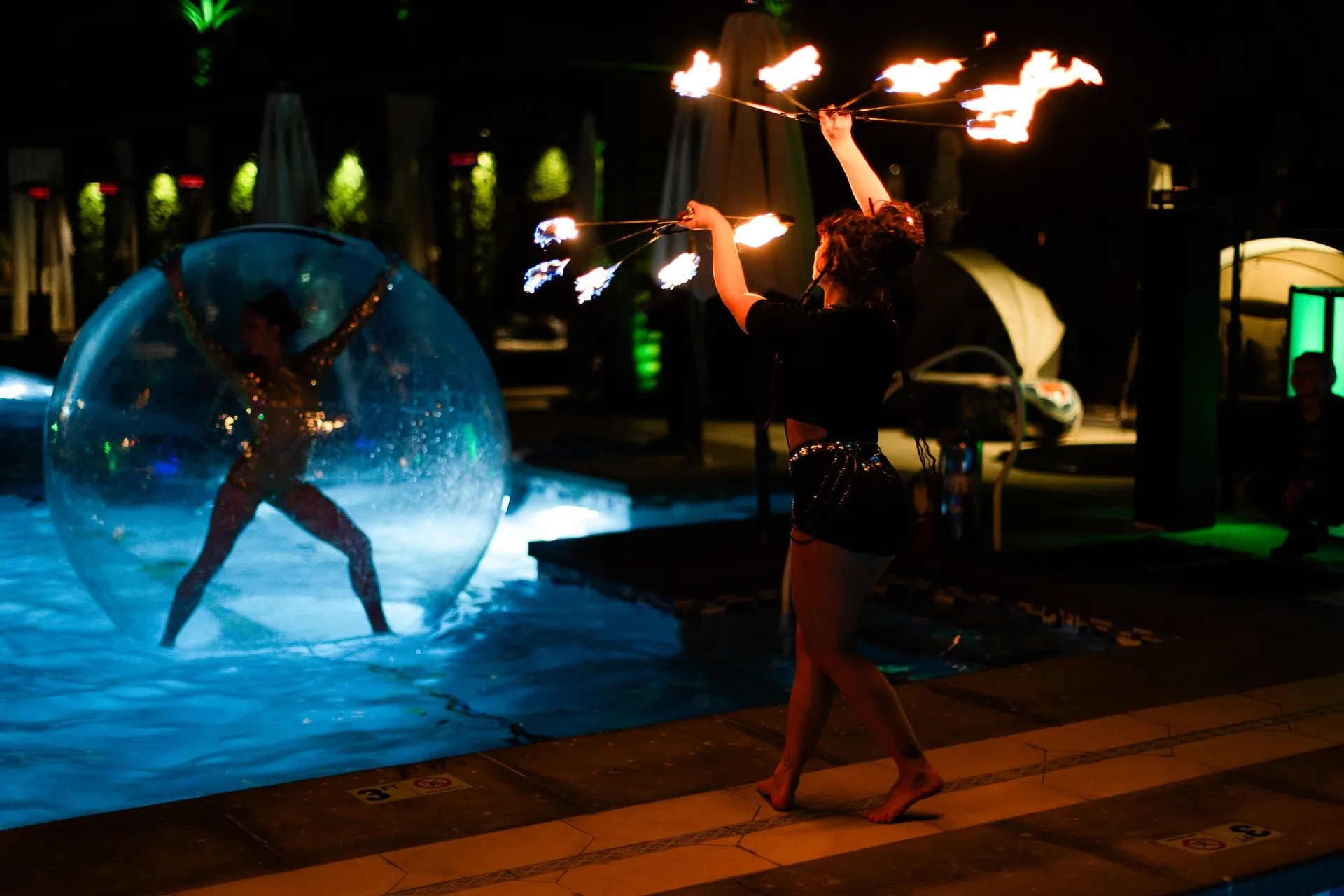
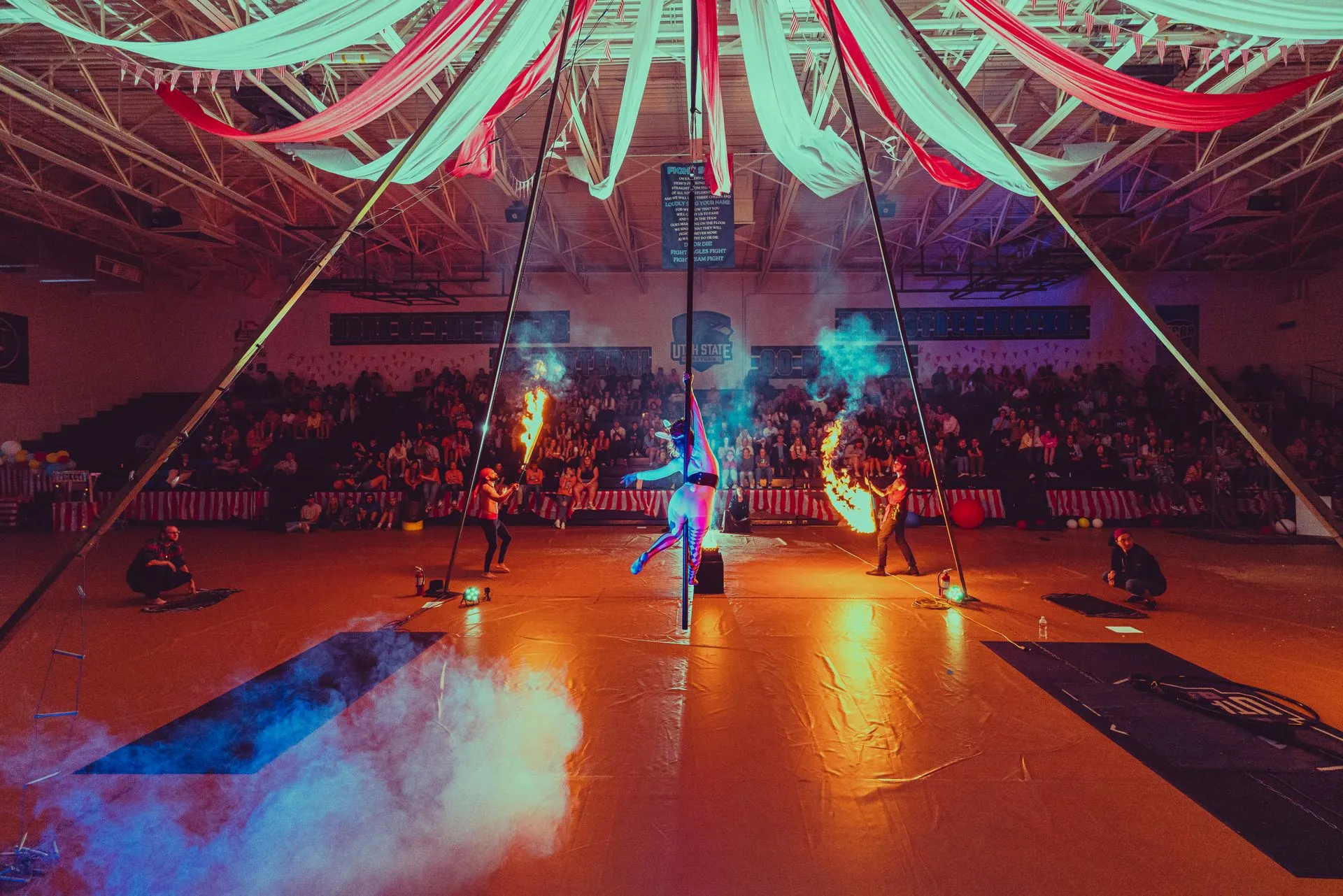
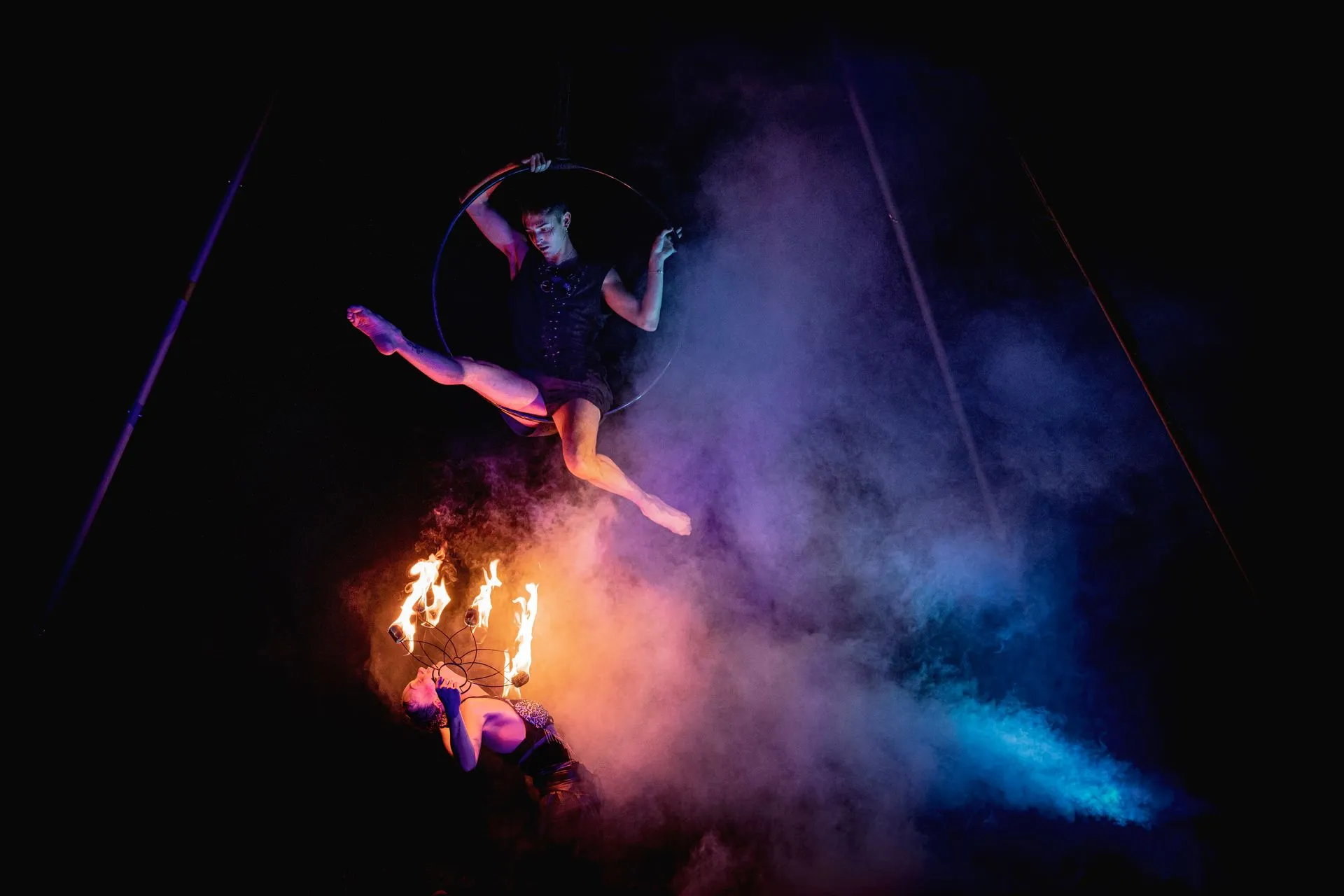
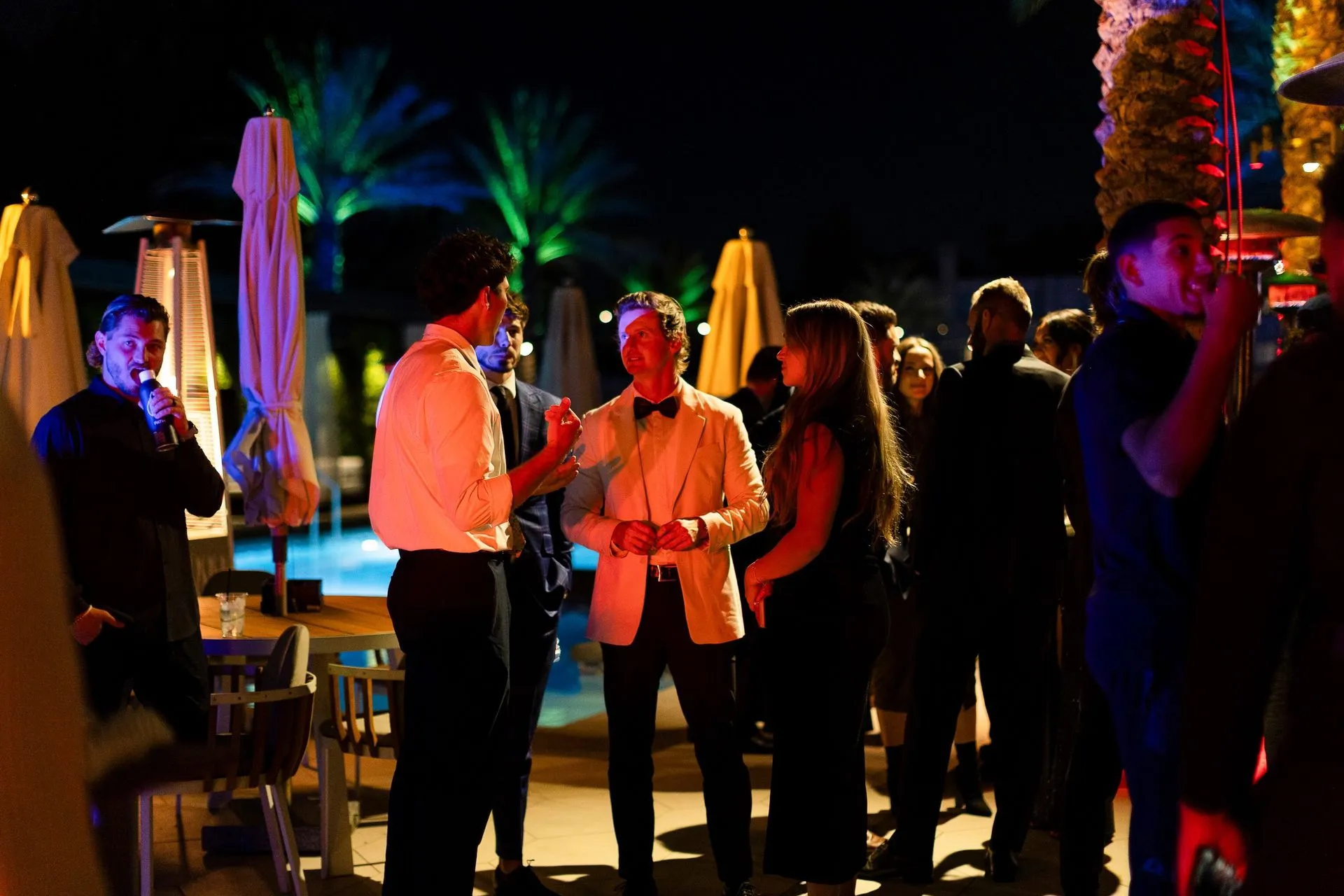
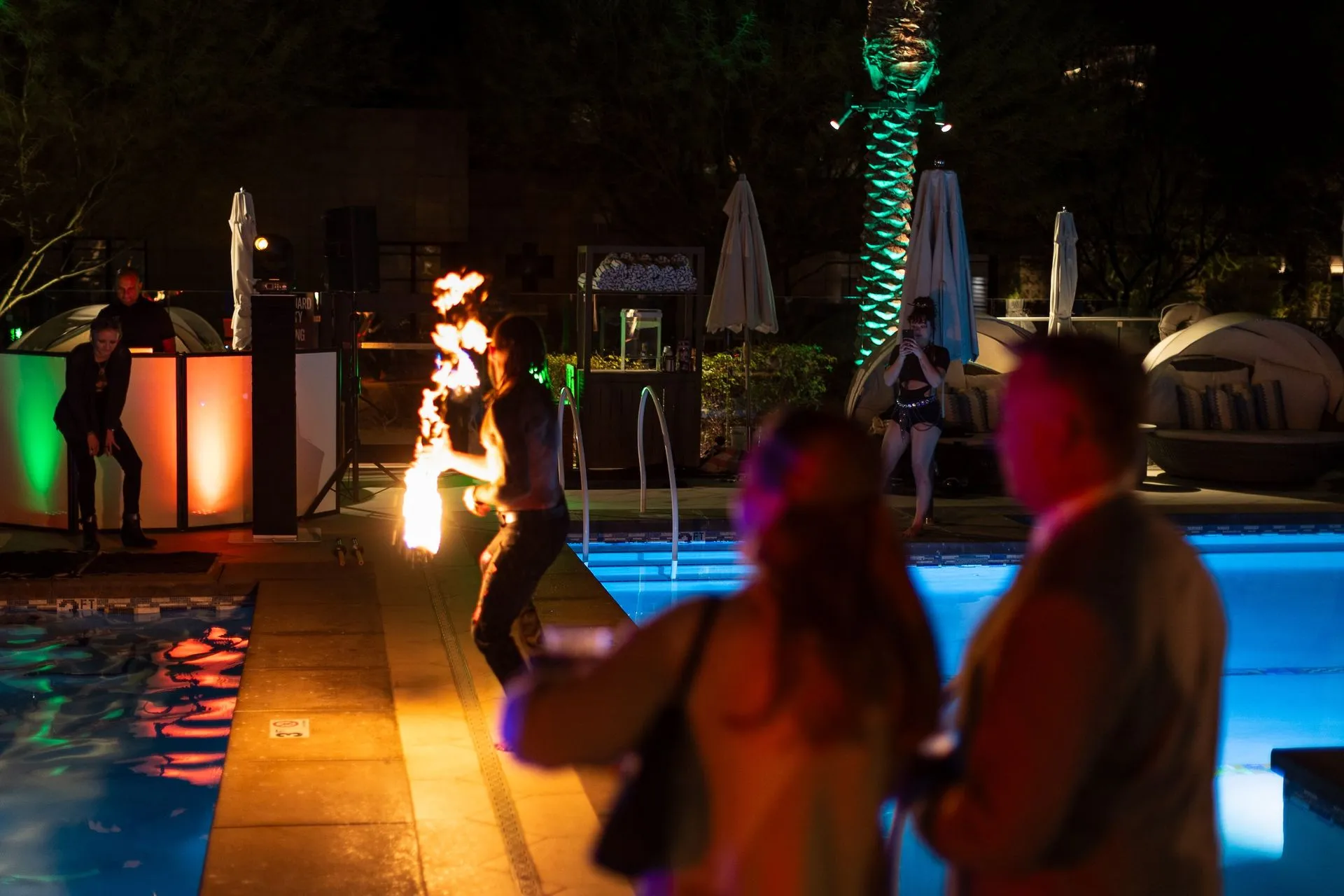
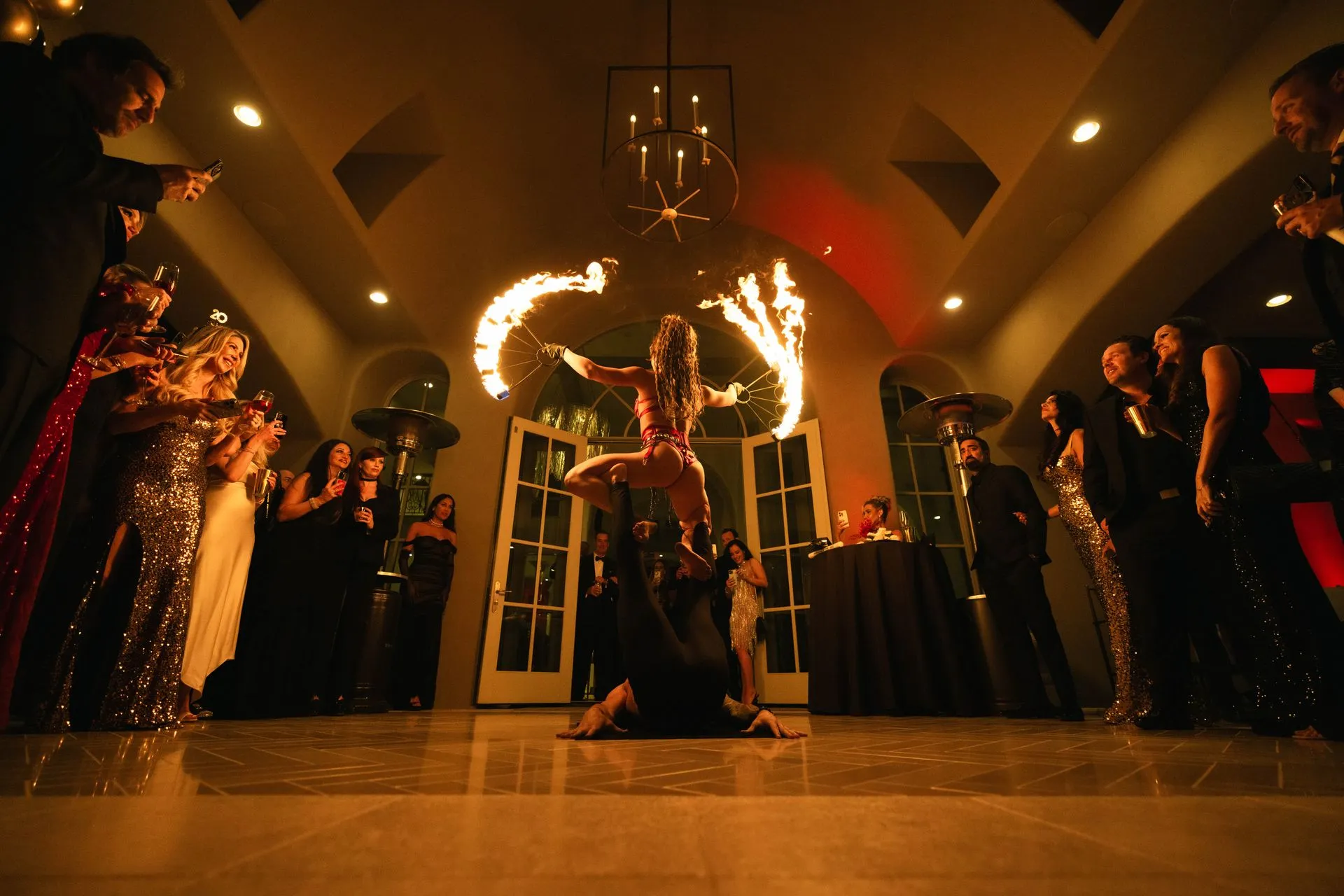
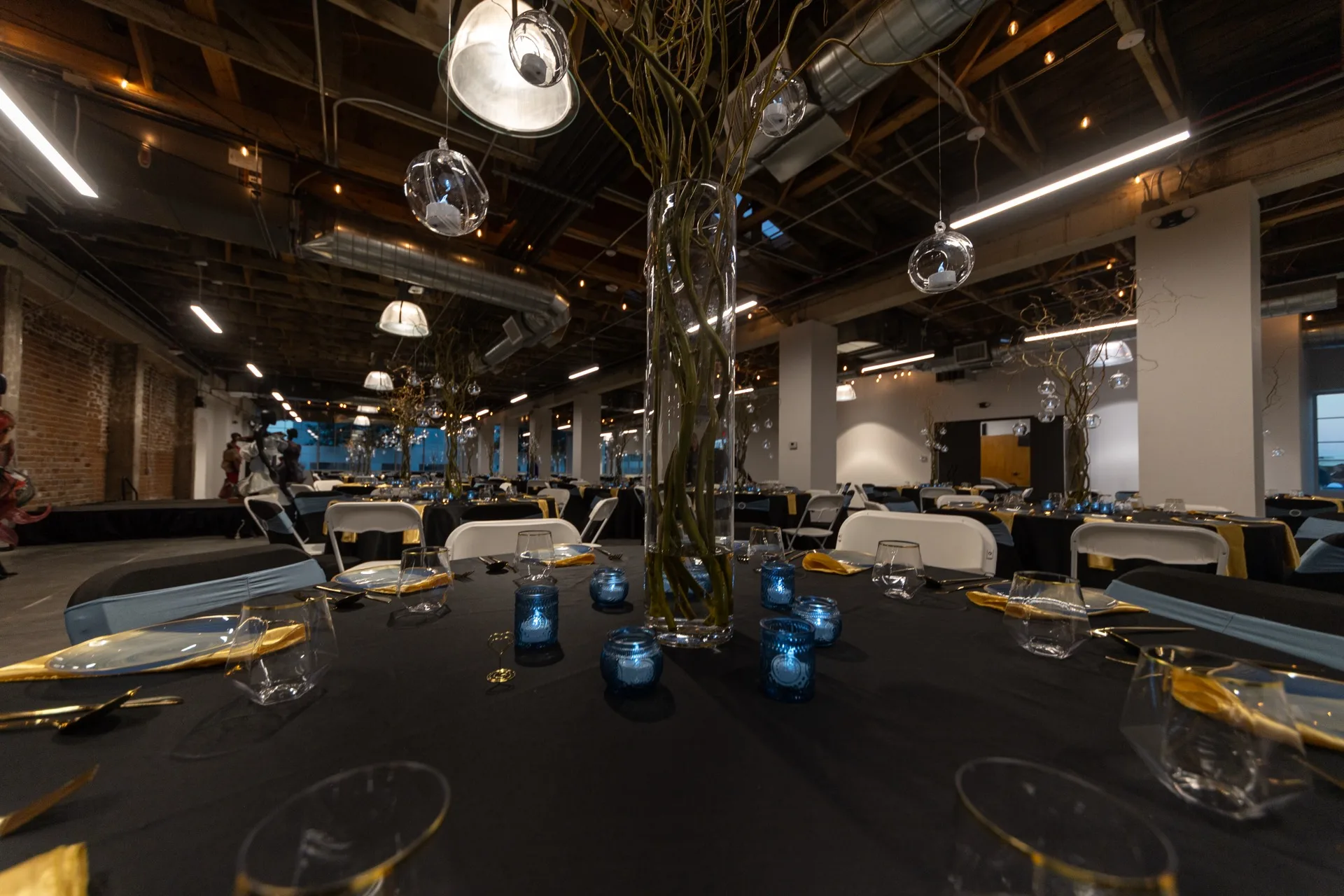
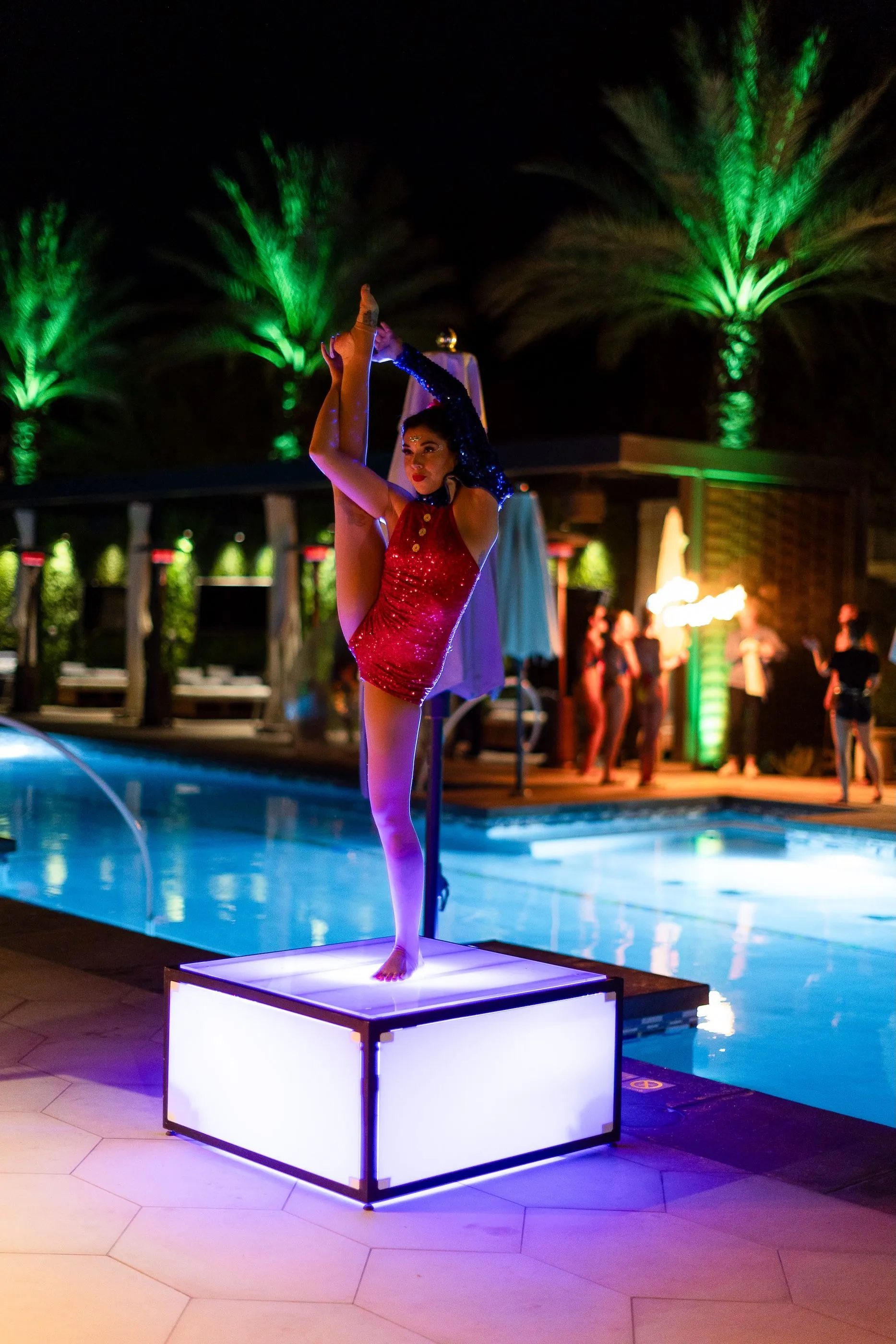
Sight sets the frame the second someone walks in. Our ambient LED performers exist for exactly this reason. Their light & movement give a room a visual anchor before anyone has said a word to another guest. That first read of the space tells people how to behave in it. A dim room with warm light says slow down. A bright room with sharp movement says something's about to happen.
The performers aren't just there to be looked at either. They move through the crowd, catch a guest's eye, hold a pose near someone's table for a photo. That interaction is part of the design, not a bonus. Sight isn't decoration. It's the instruction manual for the room, whether anyone reads it consciously or not.
What is sound doing when nobody's watching the stage?
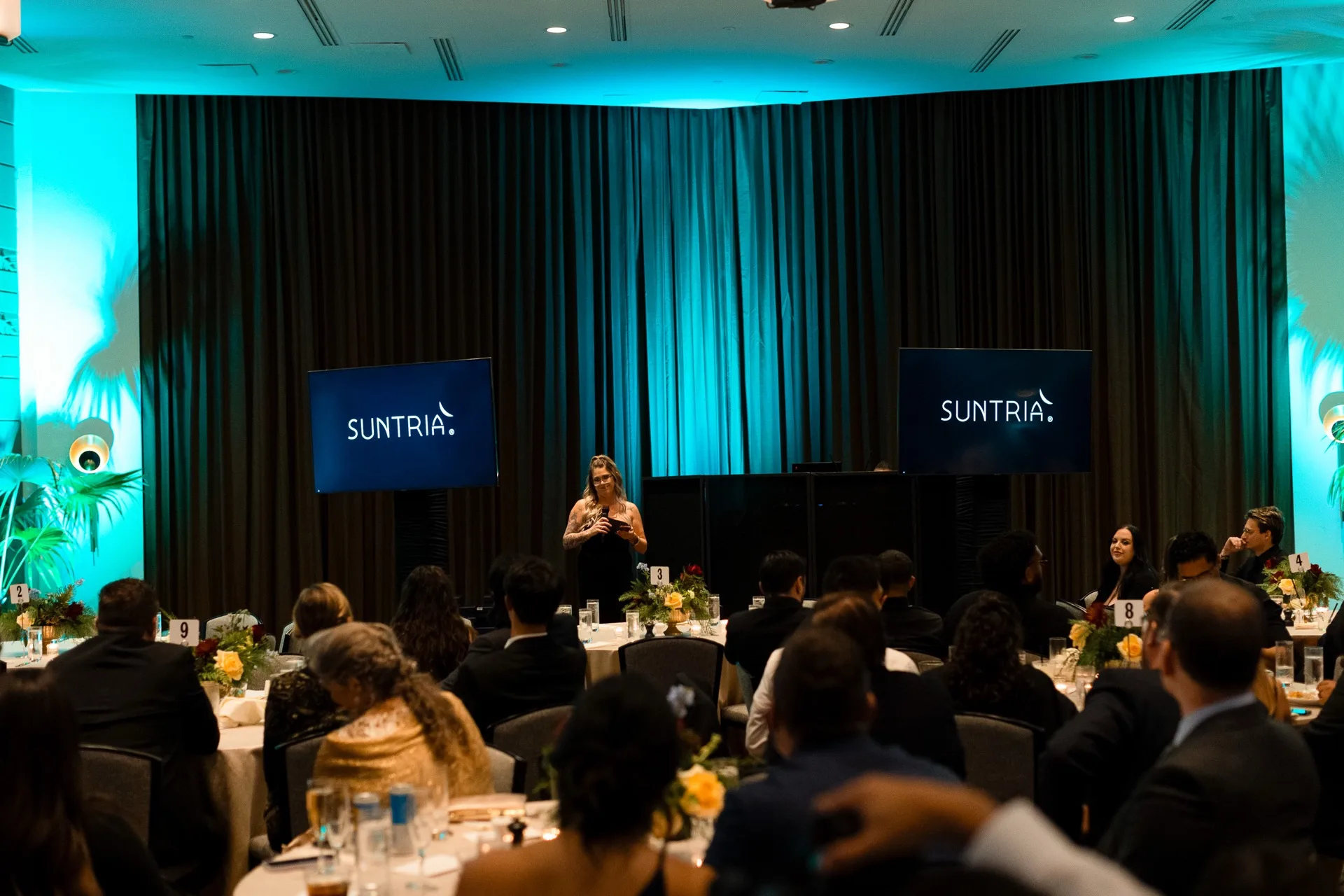
Sound is the sense that's working even when guests aren't paying attention to it. Live music & curated soundscapes fill the space between conversations, cover the awkward pause at a cocktail table & carry a room through a lull the way lighting can't. A soft acoustic set during a seated dinner does something different than a live band during cocktail hour. The difference isn't volume. It's what the sound is asking the room to do at that specific moment.
Most events treat sound as background. We treat it as the thing holding the room together between the moments people actually notice.
What does touch add that sight & sound can't?
Touch is the sense that makes an event physical instead of just watched. Interactive moments, like guests getting to hold a bird or stand near a horse during a cocktail hour, give people something to do with their hands & their attention instead of just standing at the edge of a stage. That kind of encounter also slows people down in a good way. It's hard to check your phone while you're holding something alive.
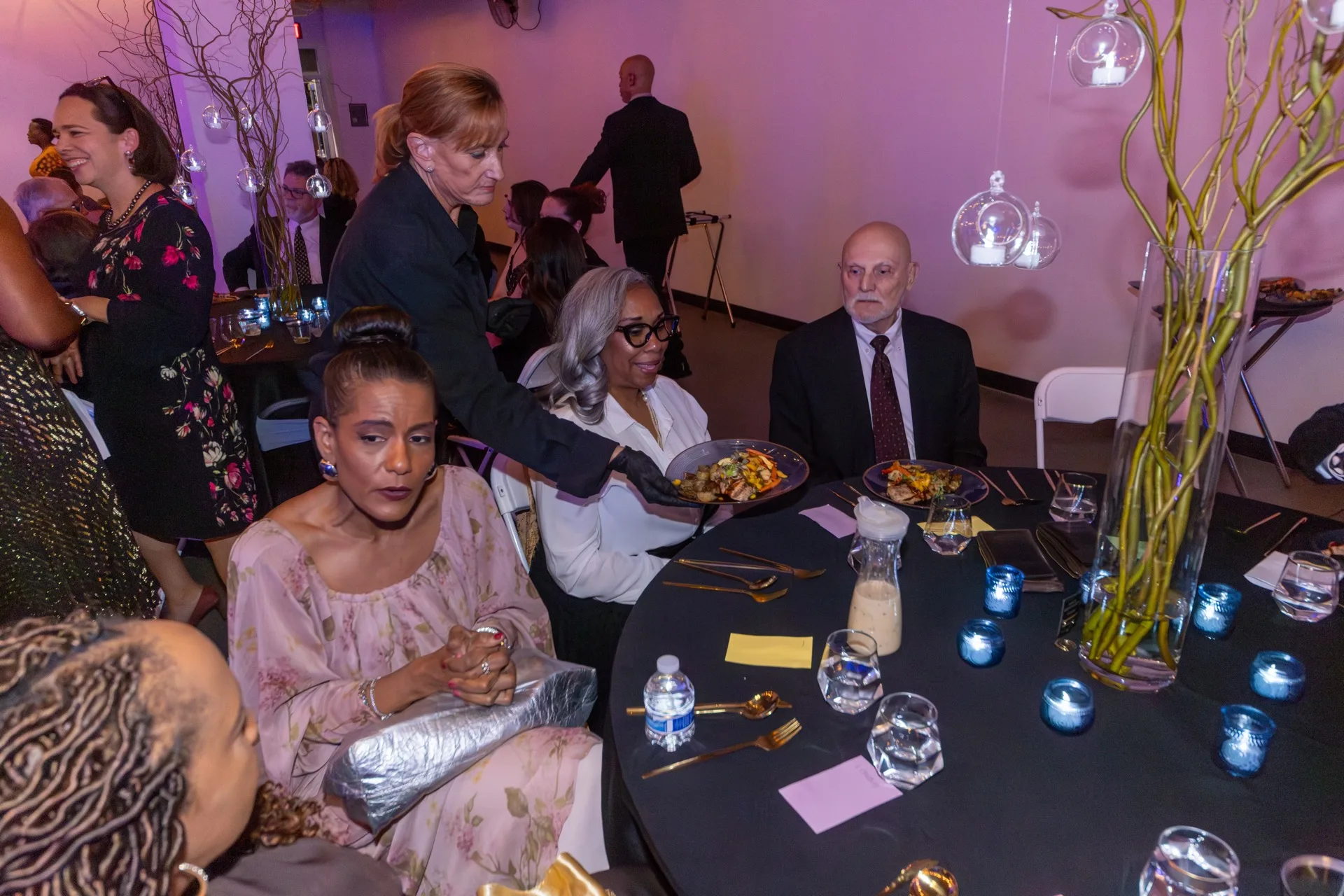
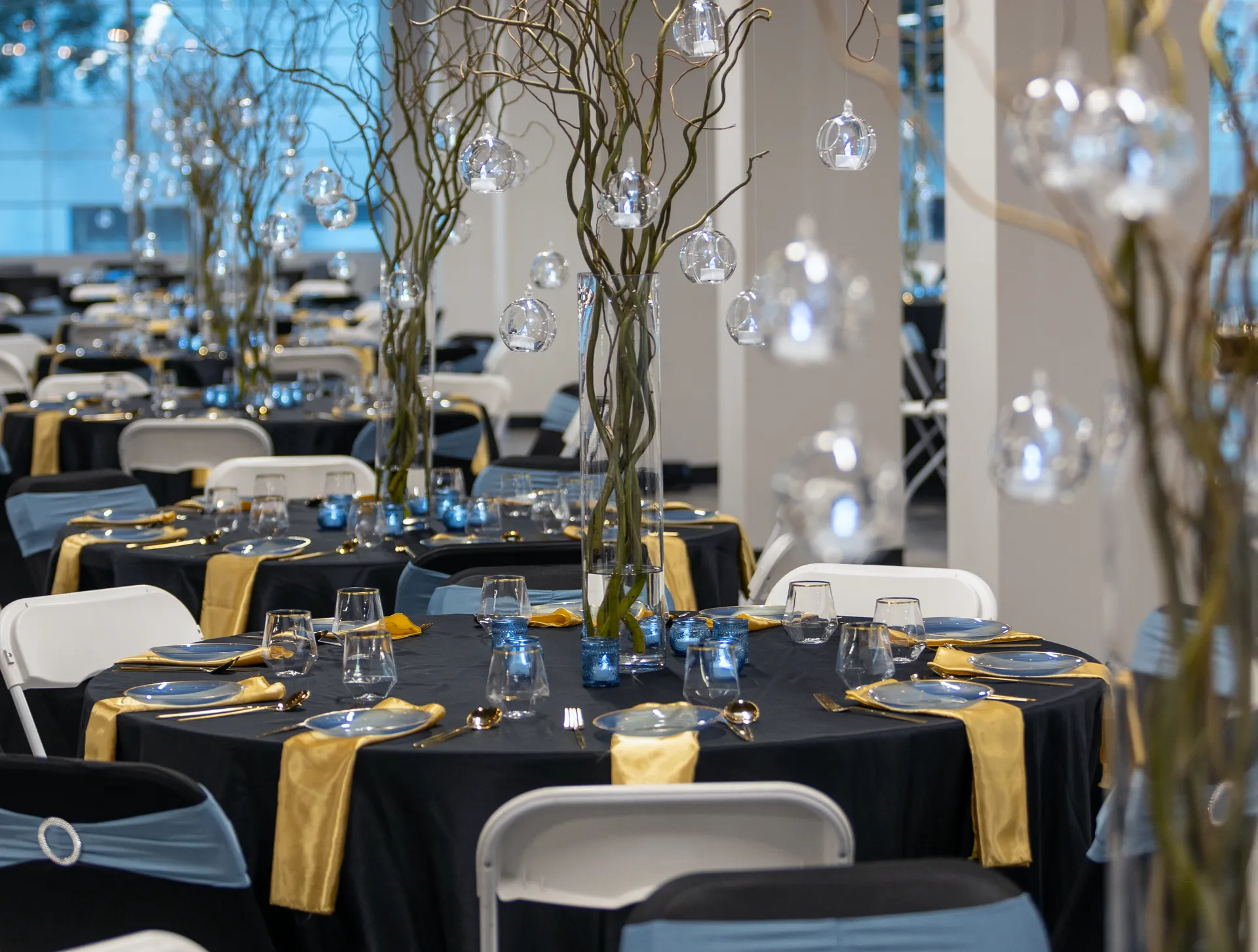
The same principle shows up in dining. A plate that's warm when it should be warm, a glass that's cold when it should be cold, a texture that surprises you, all of that is touch doing work sight & sound can't.
Where does taste do the heavy lifting?
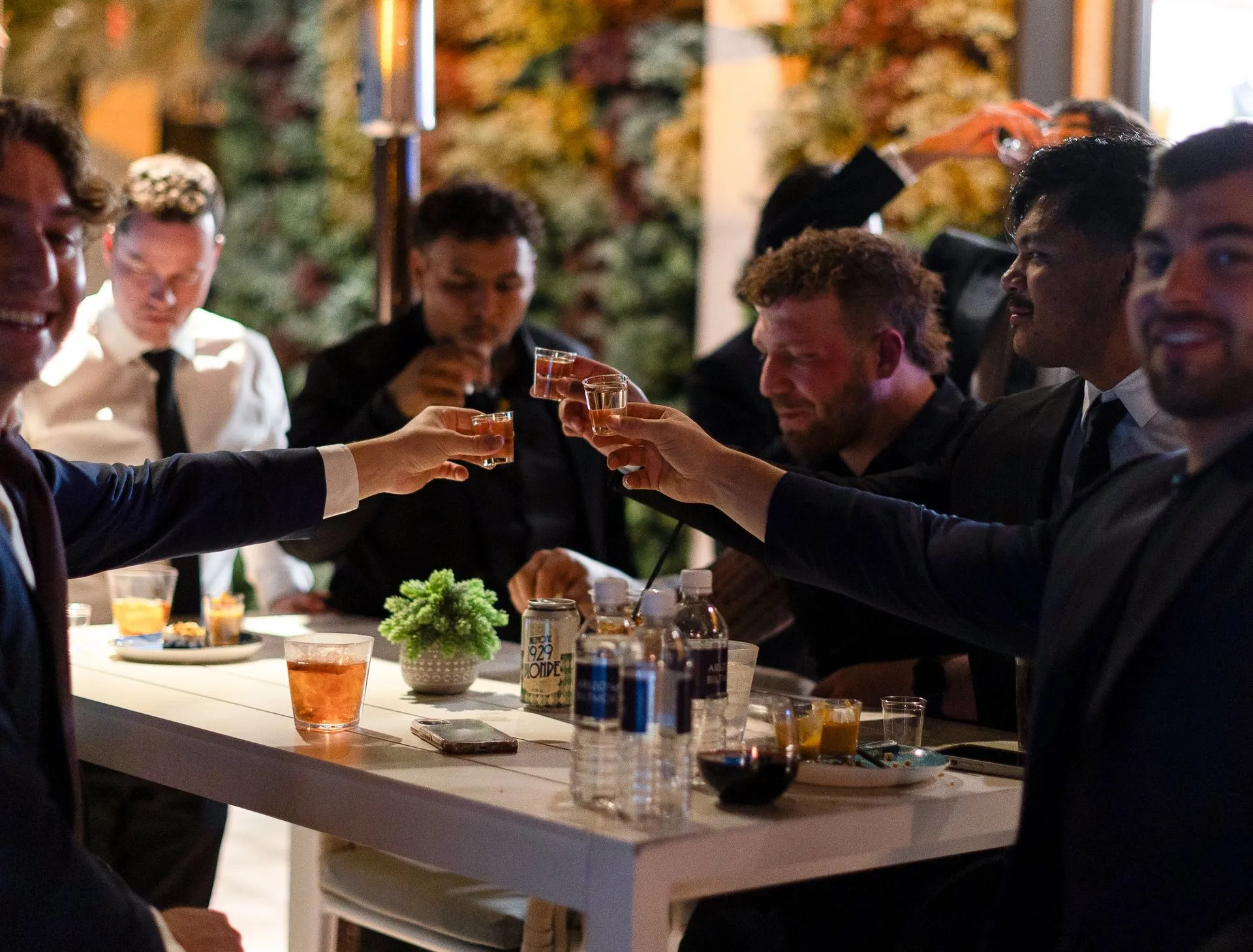
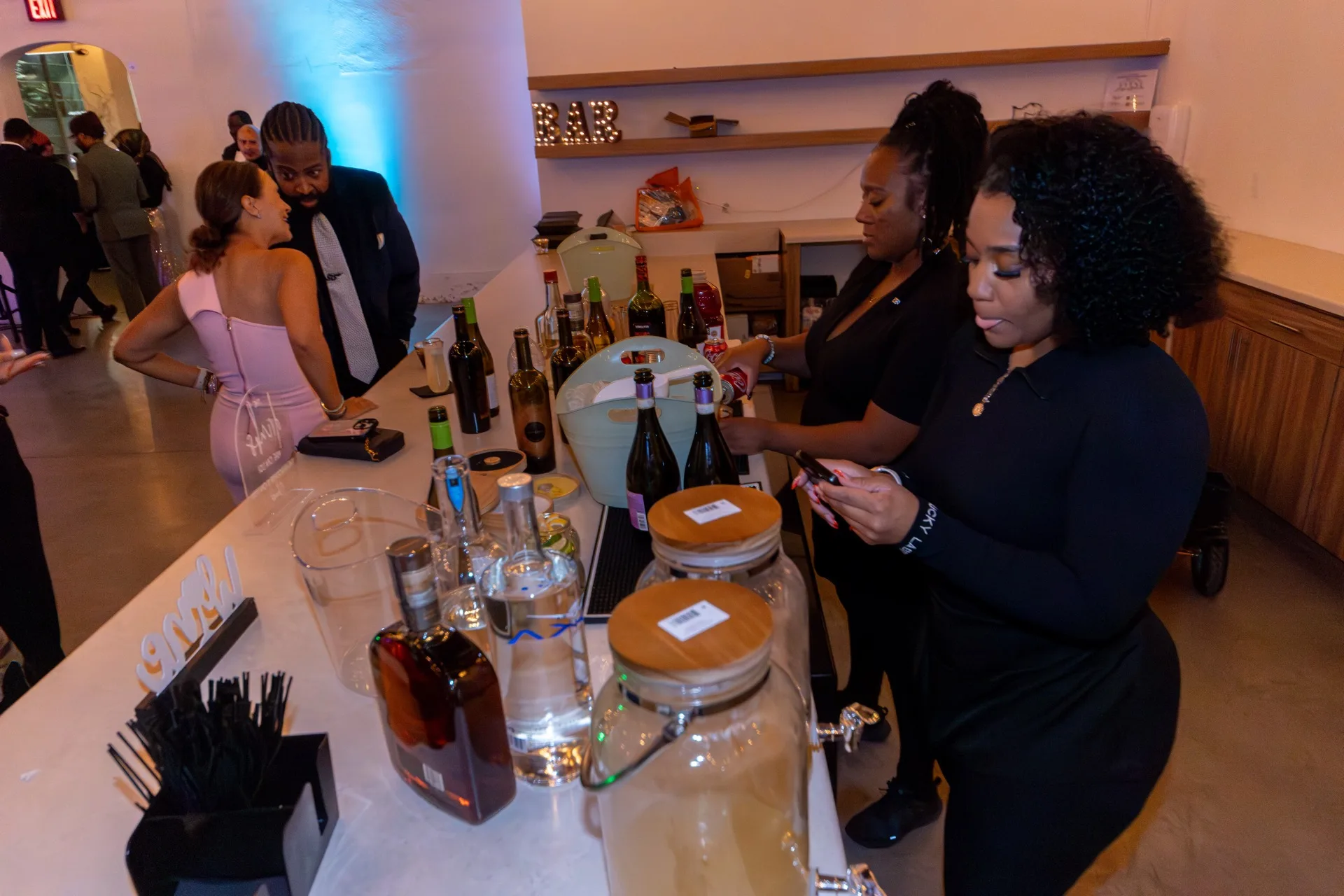
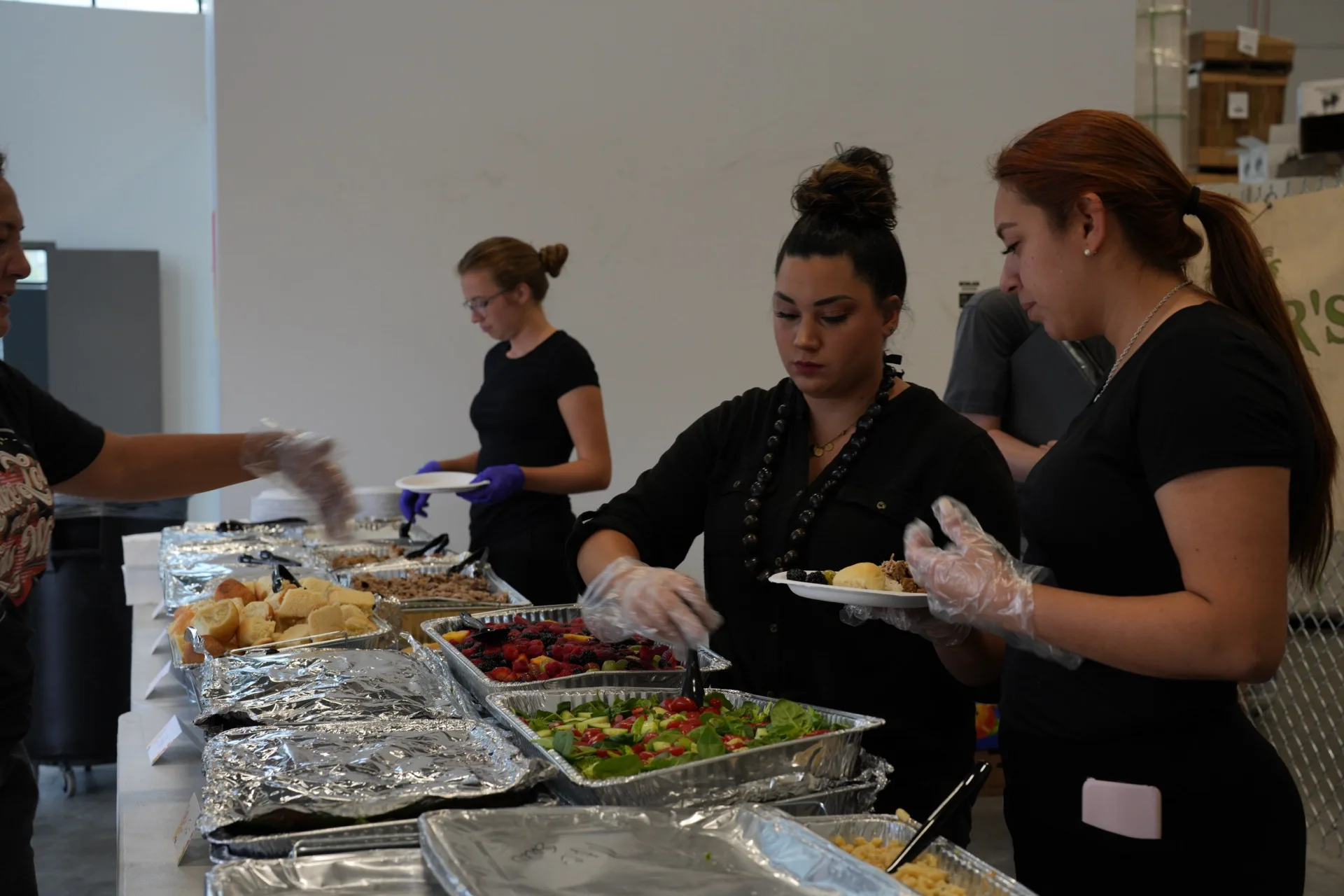
Taste leaves a longer impression than most planners give it credit for. A wine & cheese pairing, a cocktail tasting bar, a gourmet dessert station, these aren't just food service, they're a sensory beat in the night with its own pacing. When we layer a tasting moment with live music or shifted lighting, the flavor lands harder because it's not competing with three other things for a guest's attention. It's part of why our food & beverage work sits right next to entertainment on the run of show instead of somewhere else on the timeline.
When we run dining moments like a body-taped sushi presentation, that's touch, taste & sight working together on purpose, not a gimmick stacked onto a menu. The visual gets guests to look, but it's the taste & the surprise of it that gets talked about the next day.
The sense nobody designs for
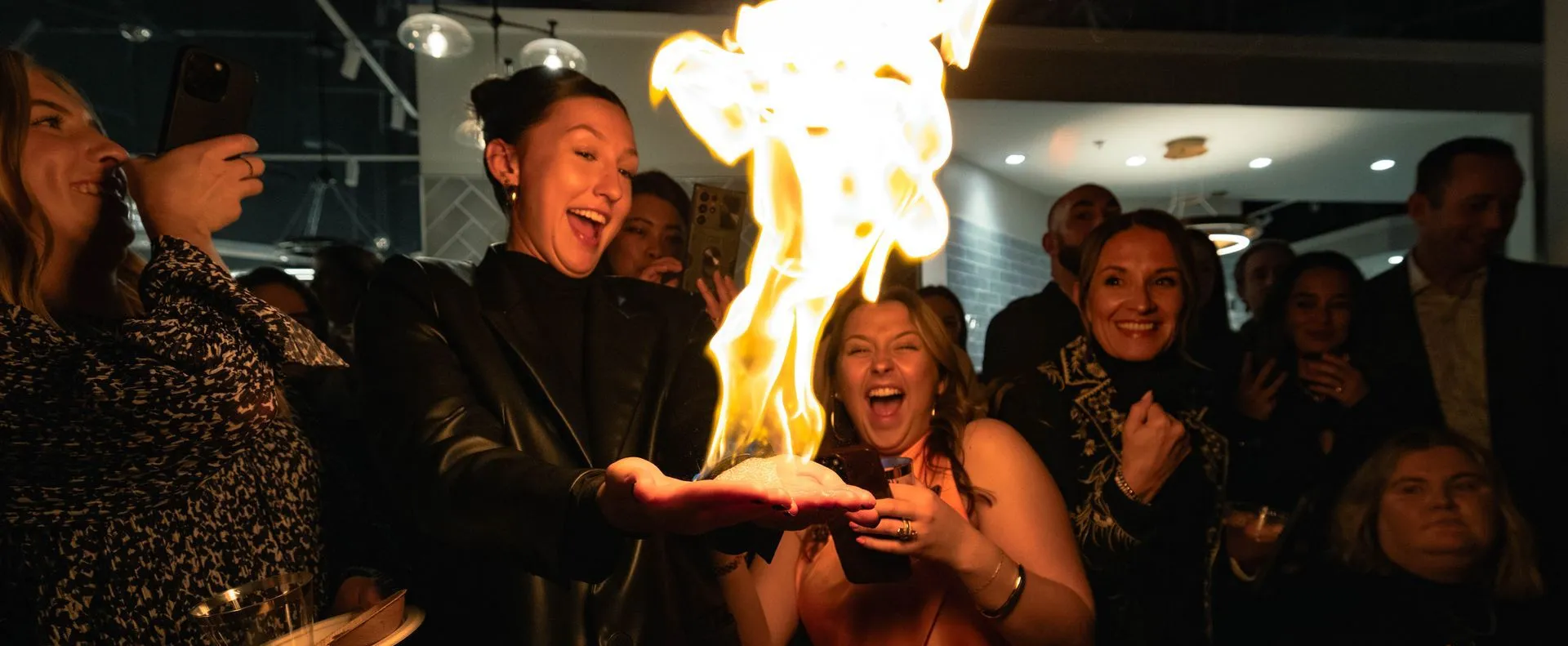
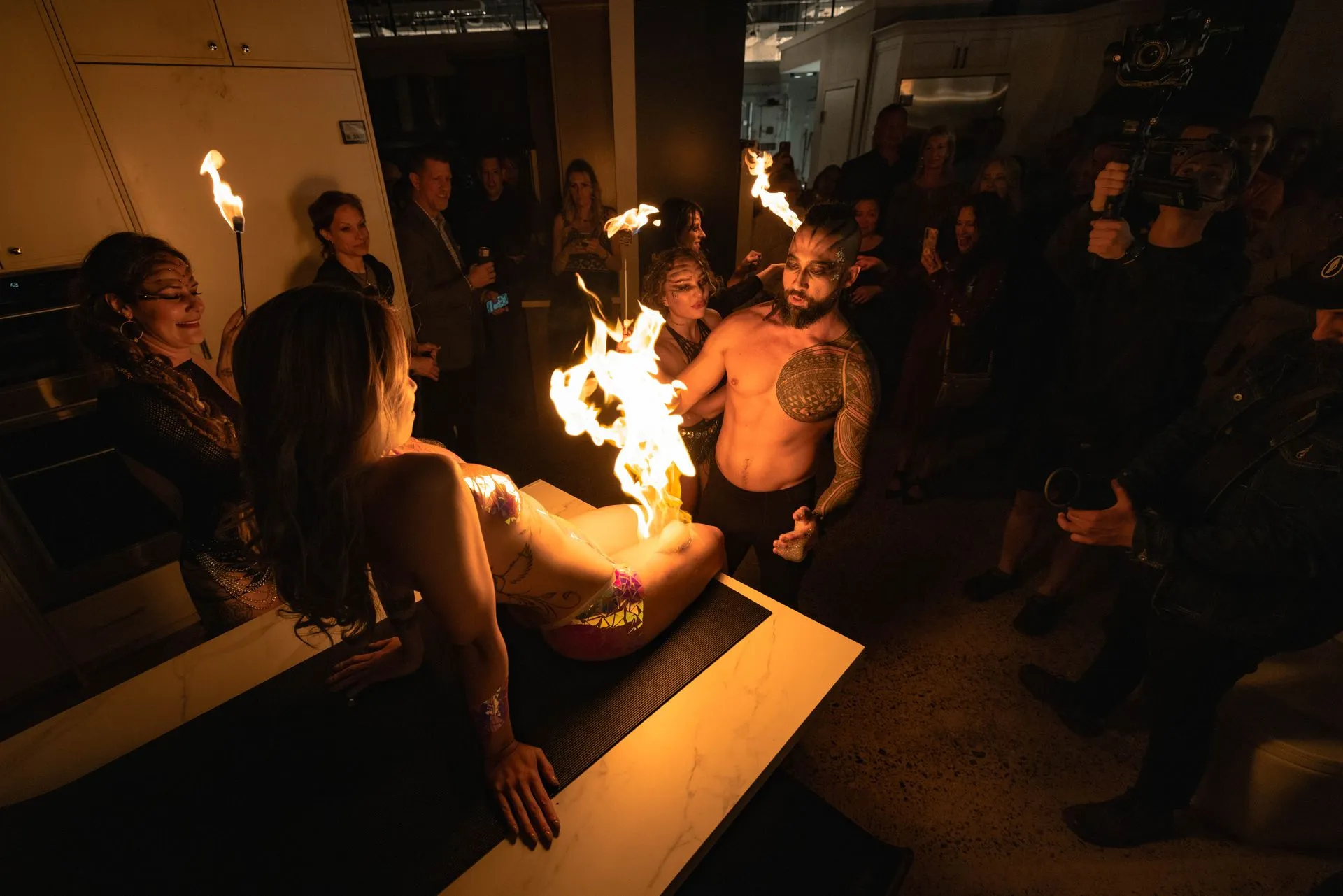
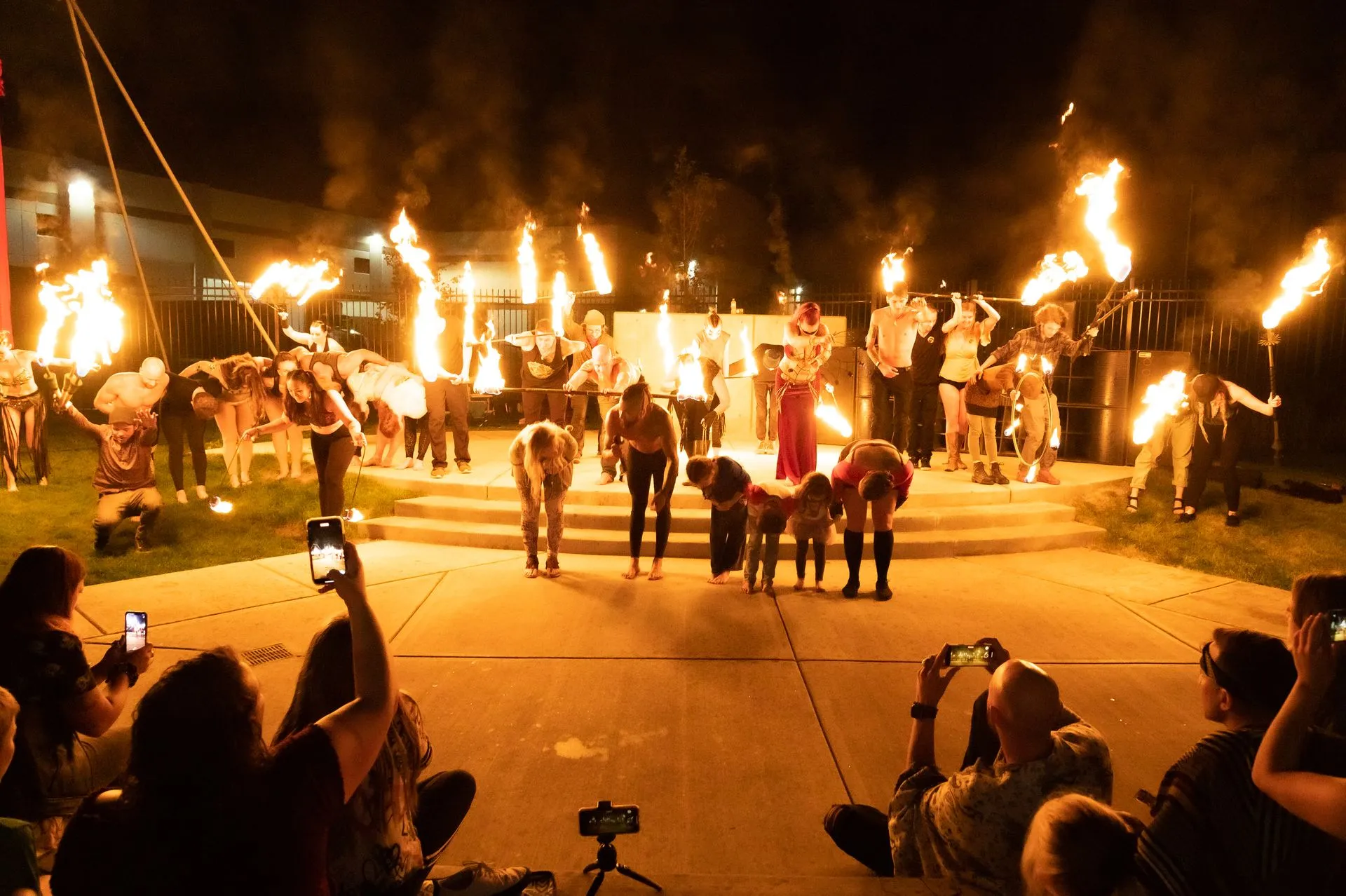
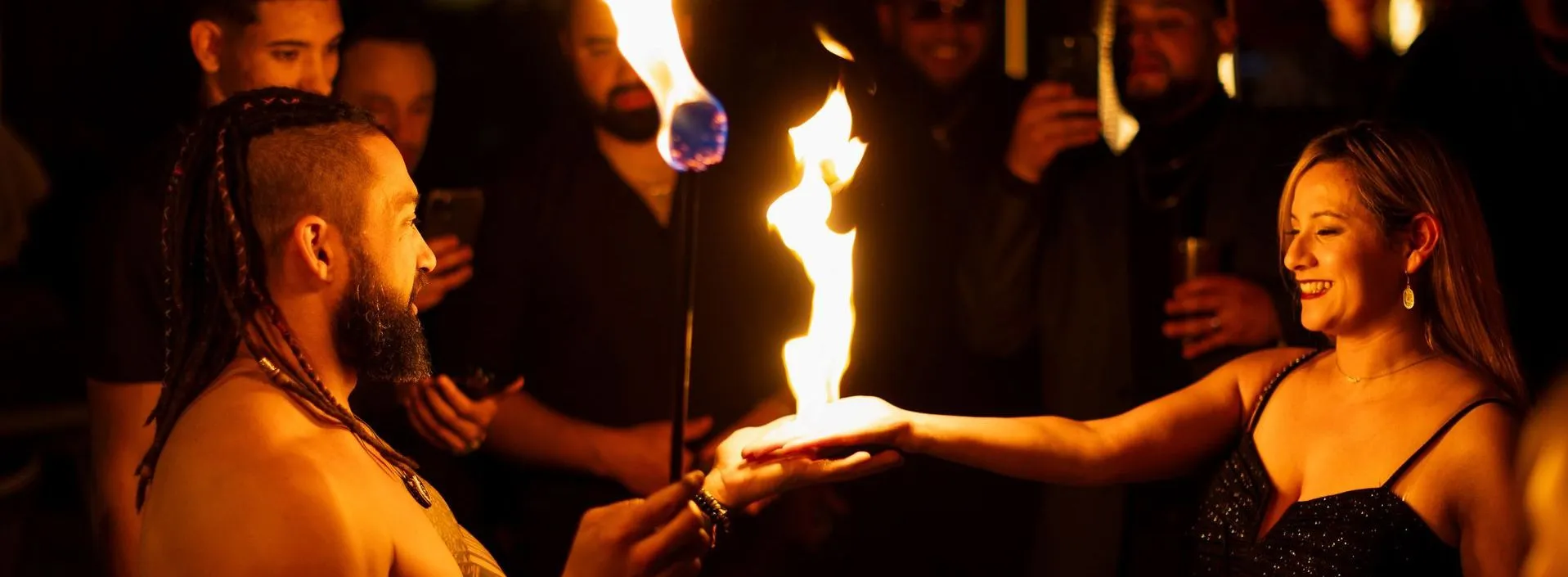
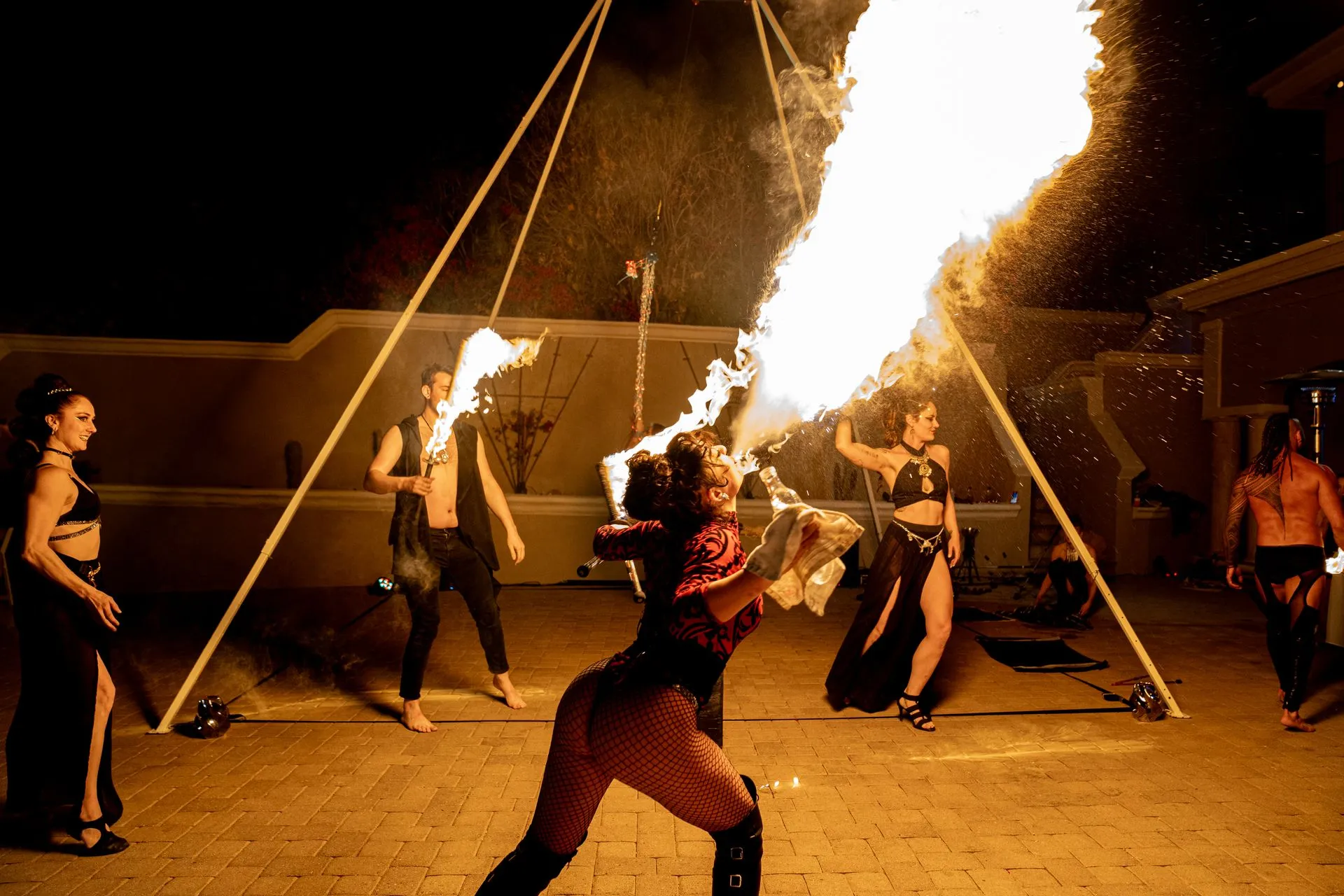
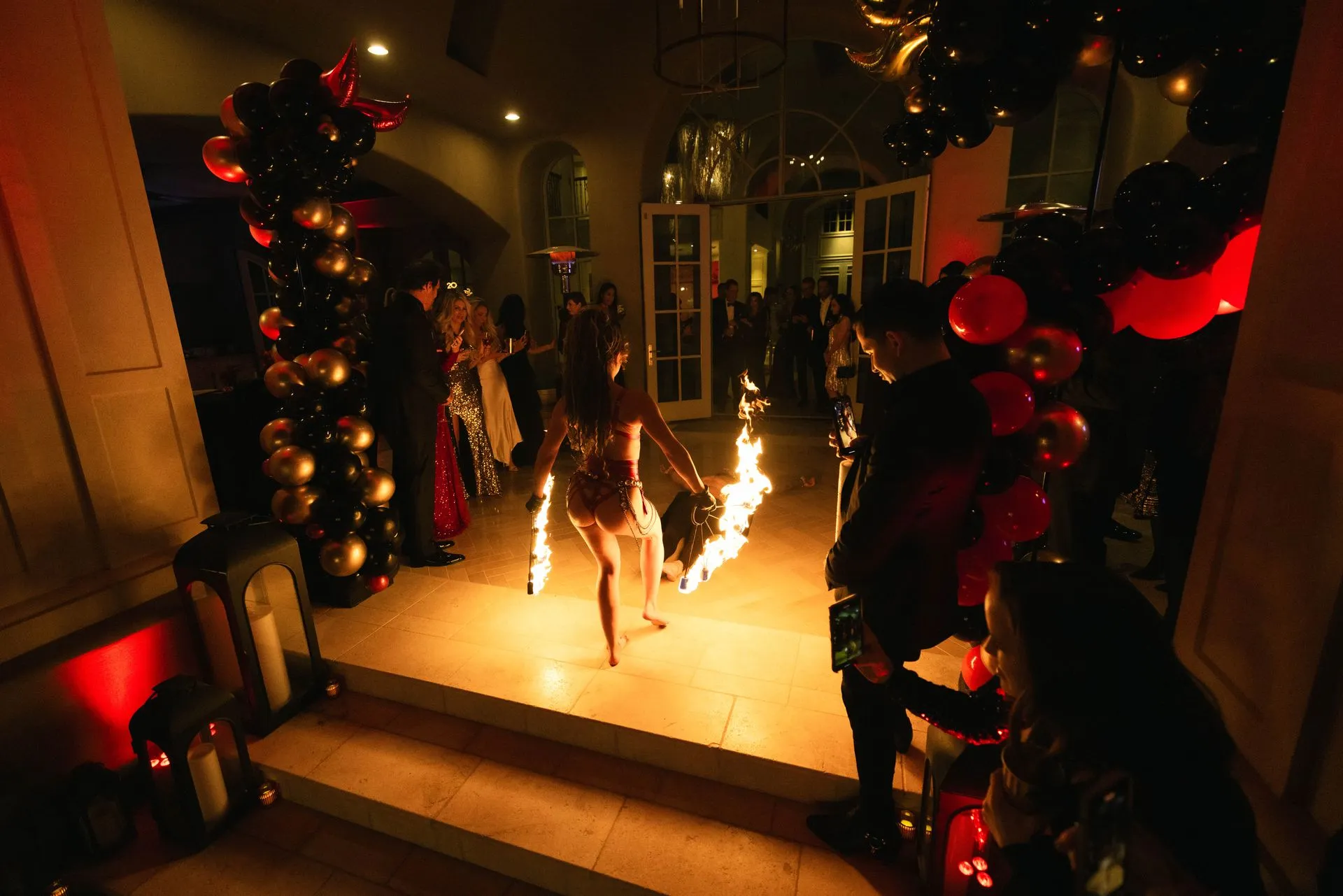
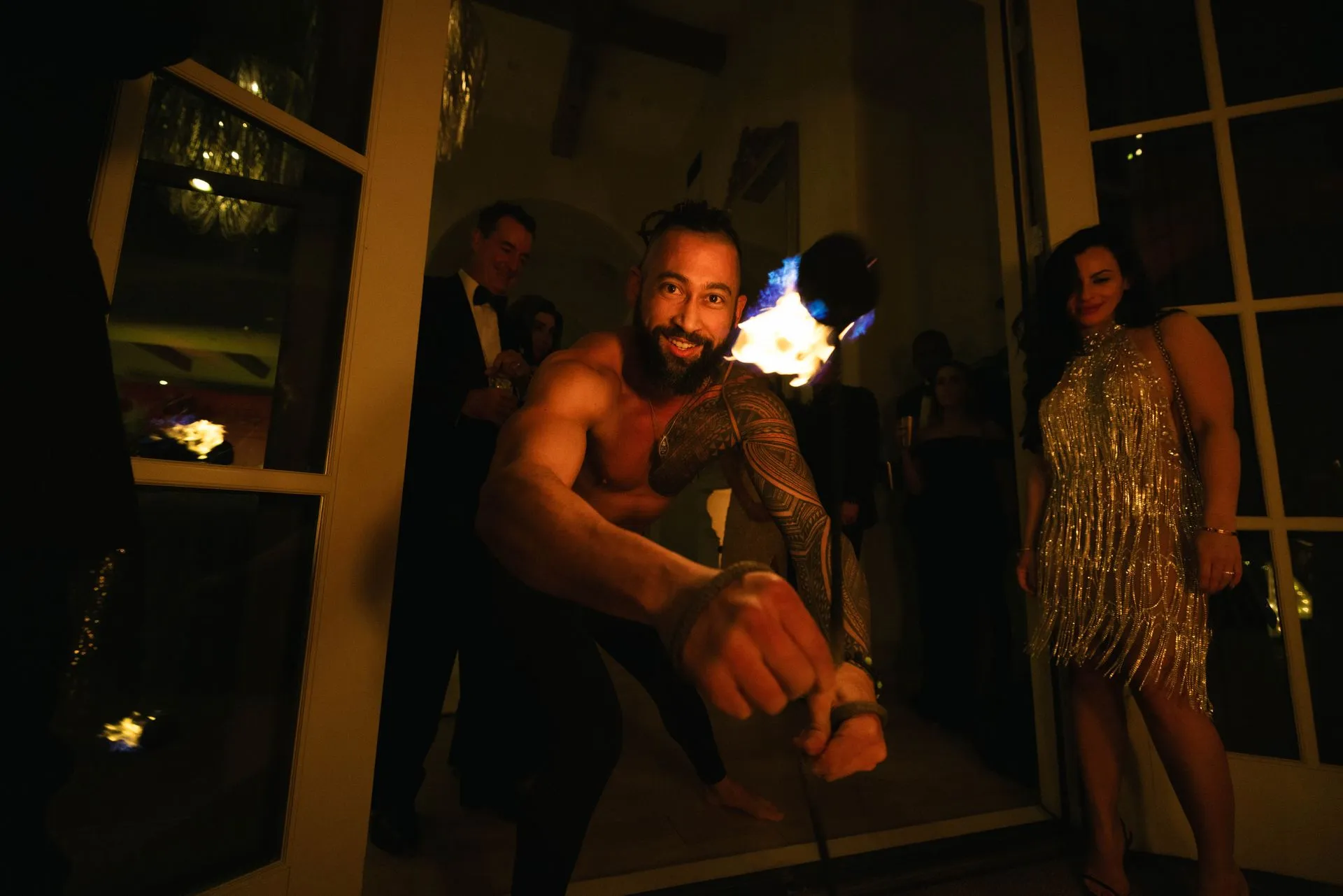
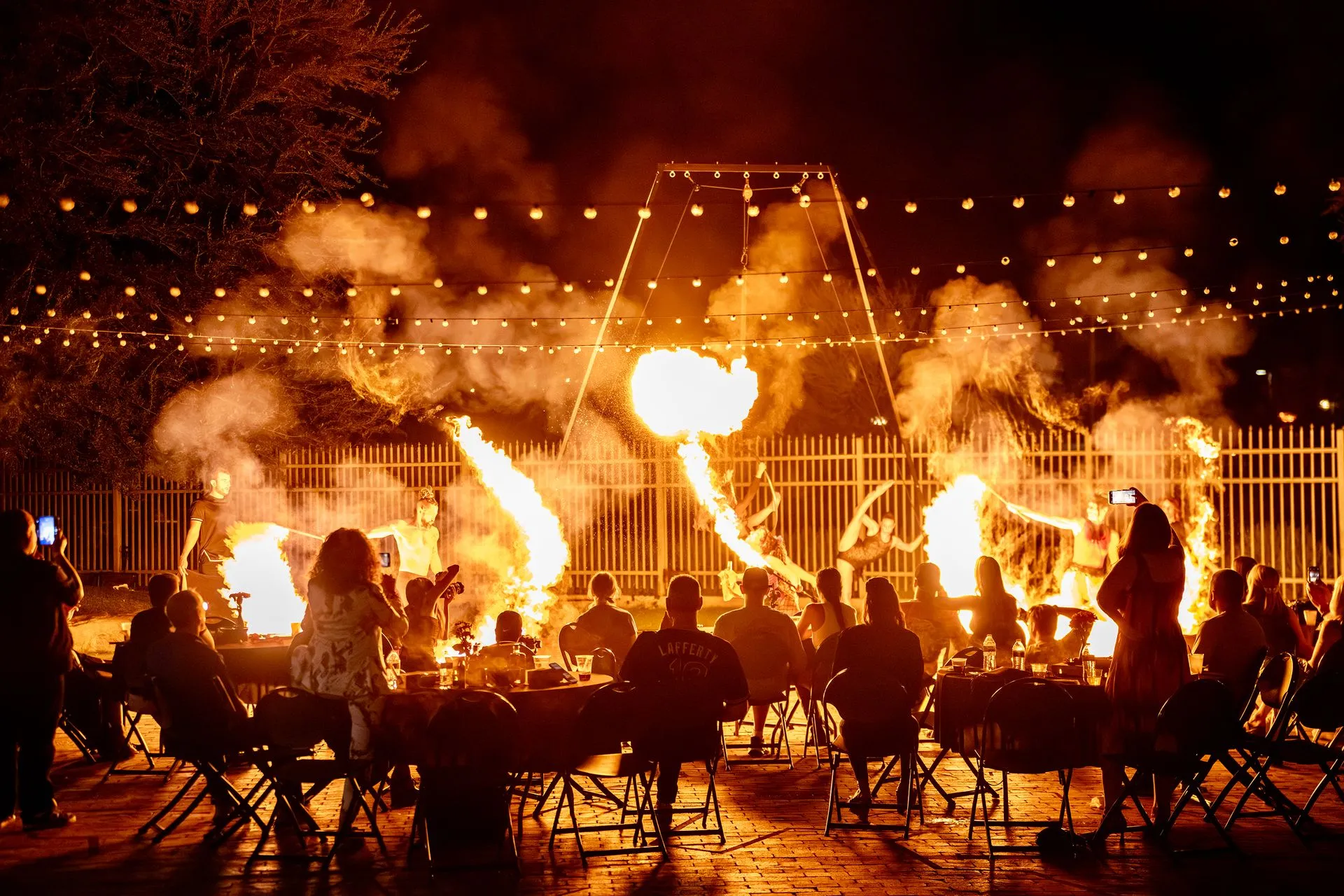
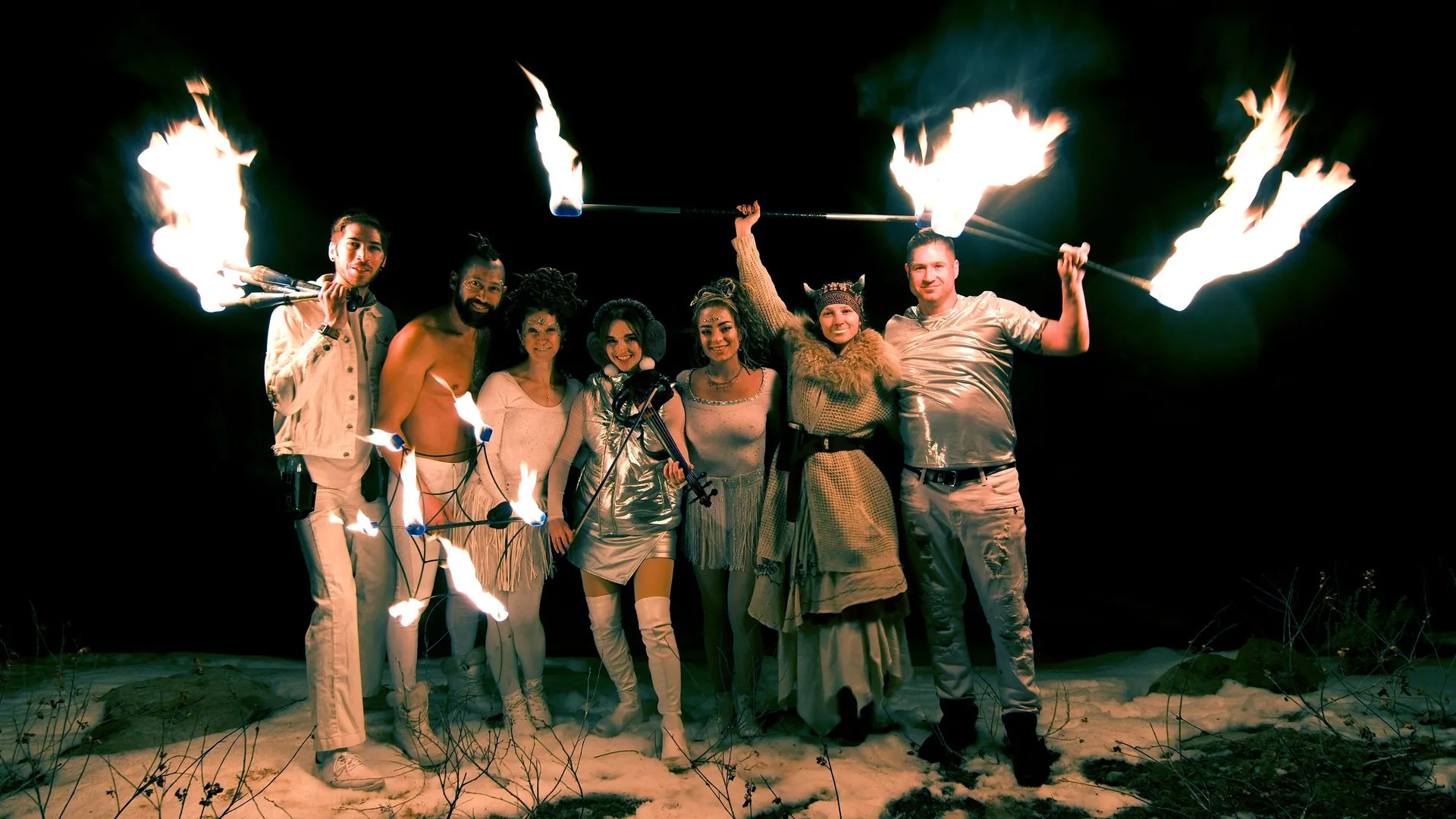
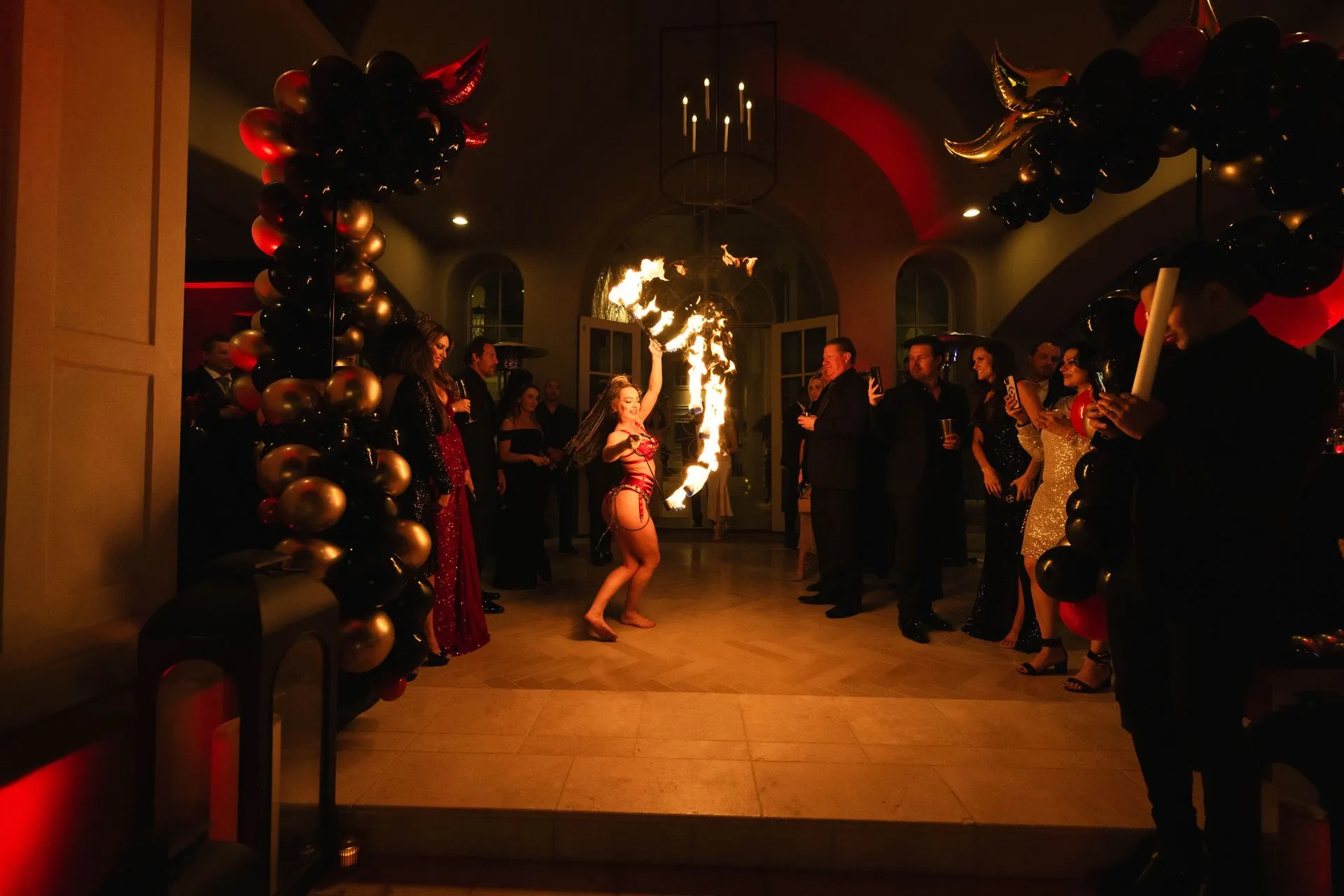
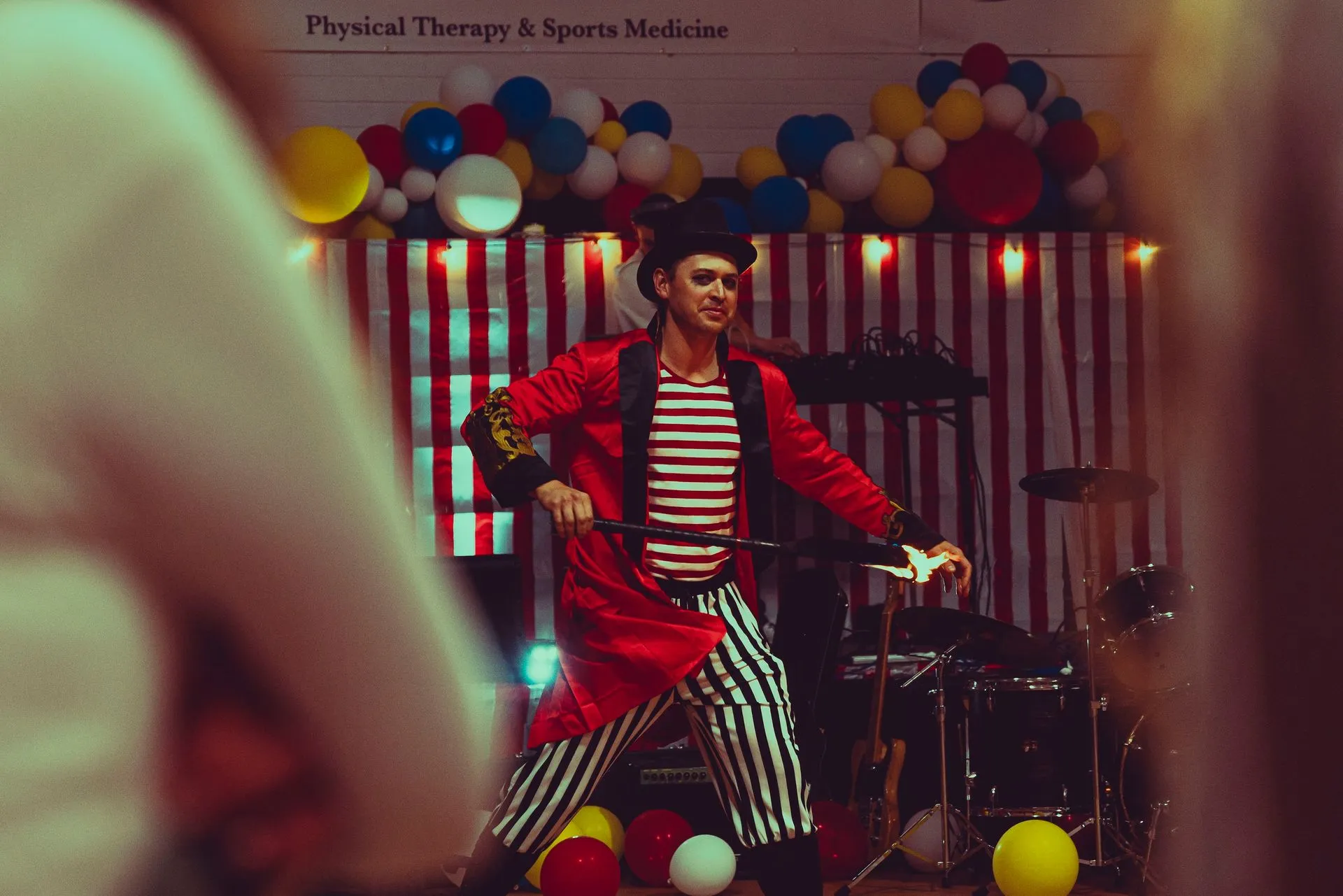
Smell is the sense most tied to memory & the one almost nobody plans on purpose. It's also the one I know best from 28 years of fire performance. There's a specific smell that comes with an open flame that guests remember years after the show, longer than most of what they actually saw that night. Most events leave smell to whatever the kitchen happens to be doing or whatever the venue smells like by default. We think about it the same way we think about lighting: on purpose, tied to the moment, not an accident of the venue.
How do you layer senses without it turning into a gimmick?
The mistake is treating each sense as a separate feature to check off, when they need to work as one sequence. A dinner course should hit the table right as the lighting shifts, not five minutes before or after. A performer's movement should match what the sound is doing at that exact moment, not run on a separate clock. Stack five senses without sequencing them & you get noise. Sequence them right & a guest can't tell you why the night felt the way it did. They just know it did.
When we build an event, we're not asking how many senses we can hit. We're asking what story the room is telling & which sense should carry which part of it. That's the actual work behind our entertainment experiences. It's what separates a night people describe in detail a year later from one they forget by the drive home.
Most planners get sight & sound right because that's what gets photographed & put in a deck. The other three senses are where the room actually gets designed. That's also where most events run out of attention before they run out of budget. If you're building something where every sense earns its place instead of getting left to chance, let's talk.
New posts, straight to your inbox.
Real lessons from real corporate events, no filler.

-1920w.jpg)
-1920w.jpg)