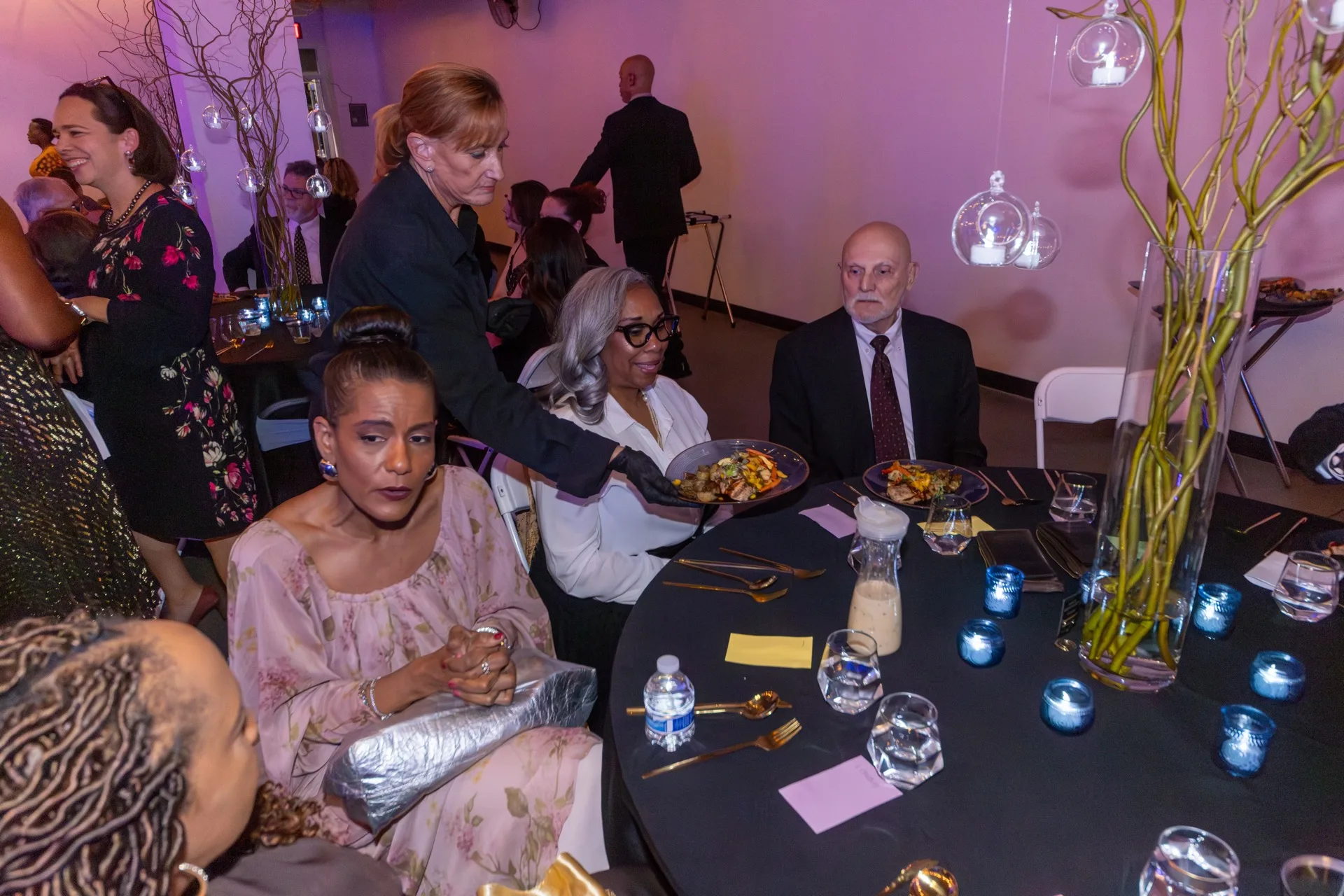
How to Time Catering Around Your Corporate Event Program
The dessert course lands exactly on schedule & nobody in the room notices, because an award speech ran four minutes long, the toast that was supposed to happen before the entree is happening after it & the kitchen has been holding forty plates warm under heat lamps while the room waits for applause to die down.
Catering timing works when the food serves the program instead of competing with it: key remarks land after guests have settled in but before the final course, the service style gets chosen for how much flexibility the night actually needs & the caterer gets the real running order, not just a headcount, early enough to plan around it.
Start with the running order, not the menu
Crafted Catering & Events puts the priority order plainly: "We always start with the agenda. When speeches are done, plates hit the table. When the energy dips, service moves faster." The menu decisions, entree choice, course count, plating style, all sit downstream of one earlier decision: what the night's actual schedule looks like once the program is set. A caterer working from a real running order can build slack into the kitchen's pace on purpose. A caterer working from a start time & a guest count is guessing. That schedule is the same document that drives the rest of the night's event strategy & design, decided before the menu is.
Where speeches actually belong in the night
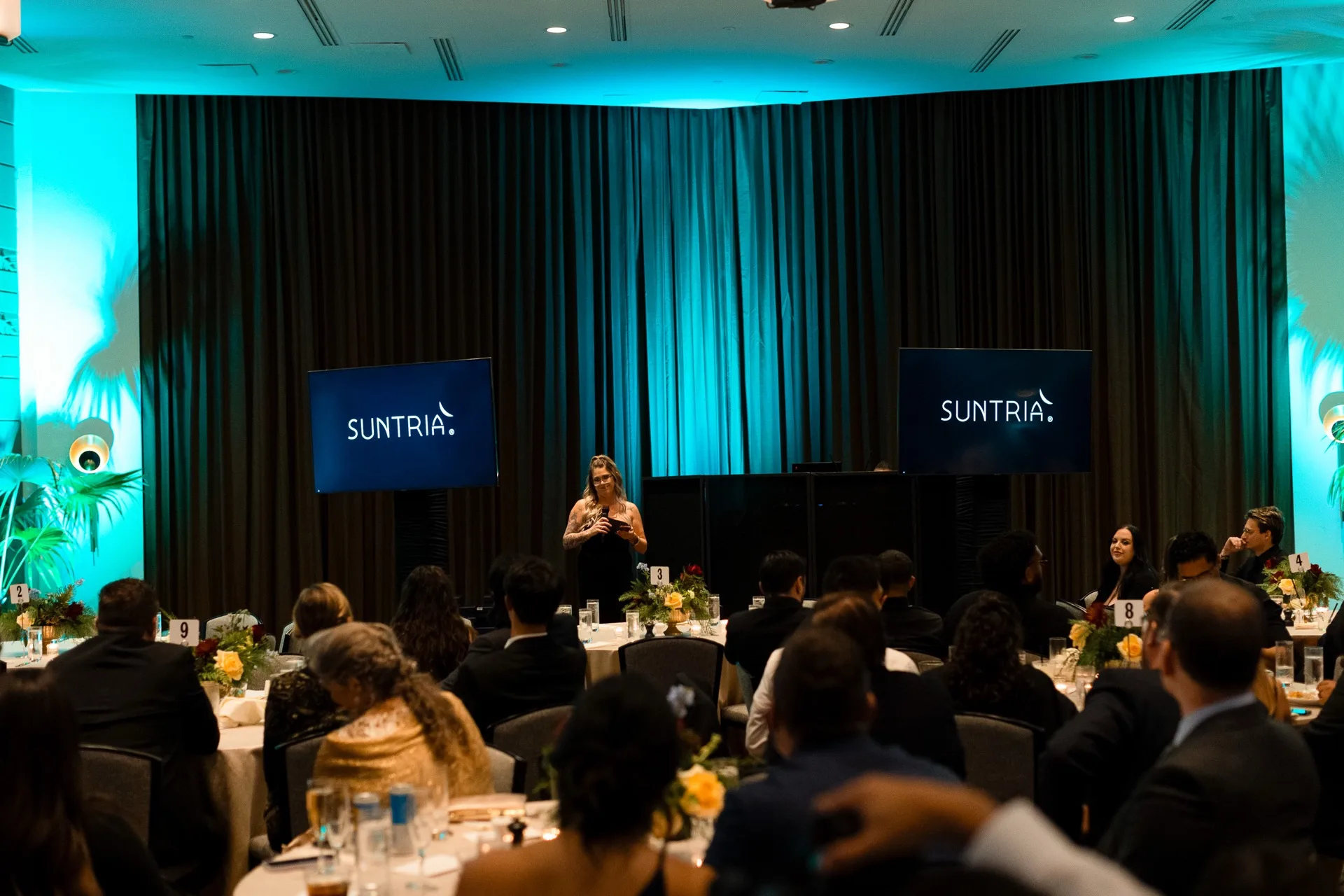
Magic Essential's guide to corporate dinner programs gives a clean rule for where remarks should sit: "place key remarks after guests have had time to settle in but before dinner reaches its final course." Stack multiple speeches back to back & they start competing with the food for the room's attention instead of working alongside it. The other trap is length. A five-minute message can become 12 minutes once applause, video cues & transitions get added, so every speaker gets a real time limit & the schedule gets a buffer built around it, not just the number they were given.
Every transition costs more time than it looks like
Magic Essential's breakdown of running-order timing is direct about where schedules actually fall apart: "Every change takes time: guests returning to seats, lights adjusting, videos loading, award recipients walking to the stage & photographers capturing the moment." A two-minute award presentation, on paper, can run five or six minutes once someone is introduced, walks up, receives the award, poses for photos & exits the stage. None of that is a mistake. It's just what the segment actually costs & a kitchen holding a hot course for a schedule that assumed the shorter number is the part that turns into cold plates.
Service style is a timing decision, not just a formality decision
Promach Hospitality's corporate catering checklist lays out the tradeoff by format: "Plated service offers a controlled, elegant experience but demands more staff and precise kitchen timing," while buffets "let attendees self-select and move at their own pace" & reduce wait times when the schedule is tight and the group is large. Family-style sits in between. None of these is the correct choice in the abstract. The real question is how many movable parts the program has, multiple speakers, an awards segment, a live entertainment feature, because that's how much slack the service style needs to absorb without the kitchen running out of room to adjust.
Give the caterer the whole picture, not just a headcount
Hey Pesto Catering's guide to timeline planning makes the case for sharing more than the guest count: "Sharing the full running order with your caterer also allows them to suggest where service will fit most comfortably." The same guide names the failure mode directly: "a well-positioned refreshment or lunch break can support the agenda, while serving food during the wrong part of the programme may leave guests distracted or create unnecessary interruptions." This is the same instinct behind how we build a run-of-show for a Hana event: the people serving food & the people running the program are working off the same document, not two schedules that happen to share a room.
If your last event had guests watching cold plates during a toast, or a kitchen holding a course while an award ceremony ran long, that's a running-order problem before it's a catering problem. Send us your program & we'll tell you where the food actually fits. Start the conversation here.
Questions planners ask us
When should dinner be served relative to speeches at a corporate event?
Key remarks should land after guests have had time to settle in but before dinner reaches its final course. Avoid stacking multiple speeches back to back unless they're brief & tightly coordinated. This keeps food & speeches working alongside each other instead of competing for the room's attention.
How much extra time should I build in for award presentations or transitions?
More than the segment looks like it needs on paper. A two-minute award presentation can run five or six minutes once the recipient is introduced, walks to the stage, receives the award, poses for photos & exits. Build that real number into the schedule, not the optimistic one, so the kitchen isn't holding a course for a delay nobody planned for.
Does buffet or plated service work better for a tight or complicated schedule?
Buffet service, especially with multiple serving lines, reduces wait times when the schedule is tight and the group is large. Plated service offers more control and a more formal feel but requires more staff & precise kitchen timing, which leaves less room to absorb a program that runs long. The right call depends on how many movable parts, speakers, awards, entertainment, the program actually has.
What should I share with my caterer beyond the guest count?
The full running order: when speeches happen, how long each segment is expected to run, where entertainment or awards fall & what the room transitions look like. A caterer working from the real program can plan service around it. A caterer working from a start time & a headcount is building the timing blind.
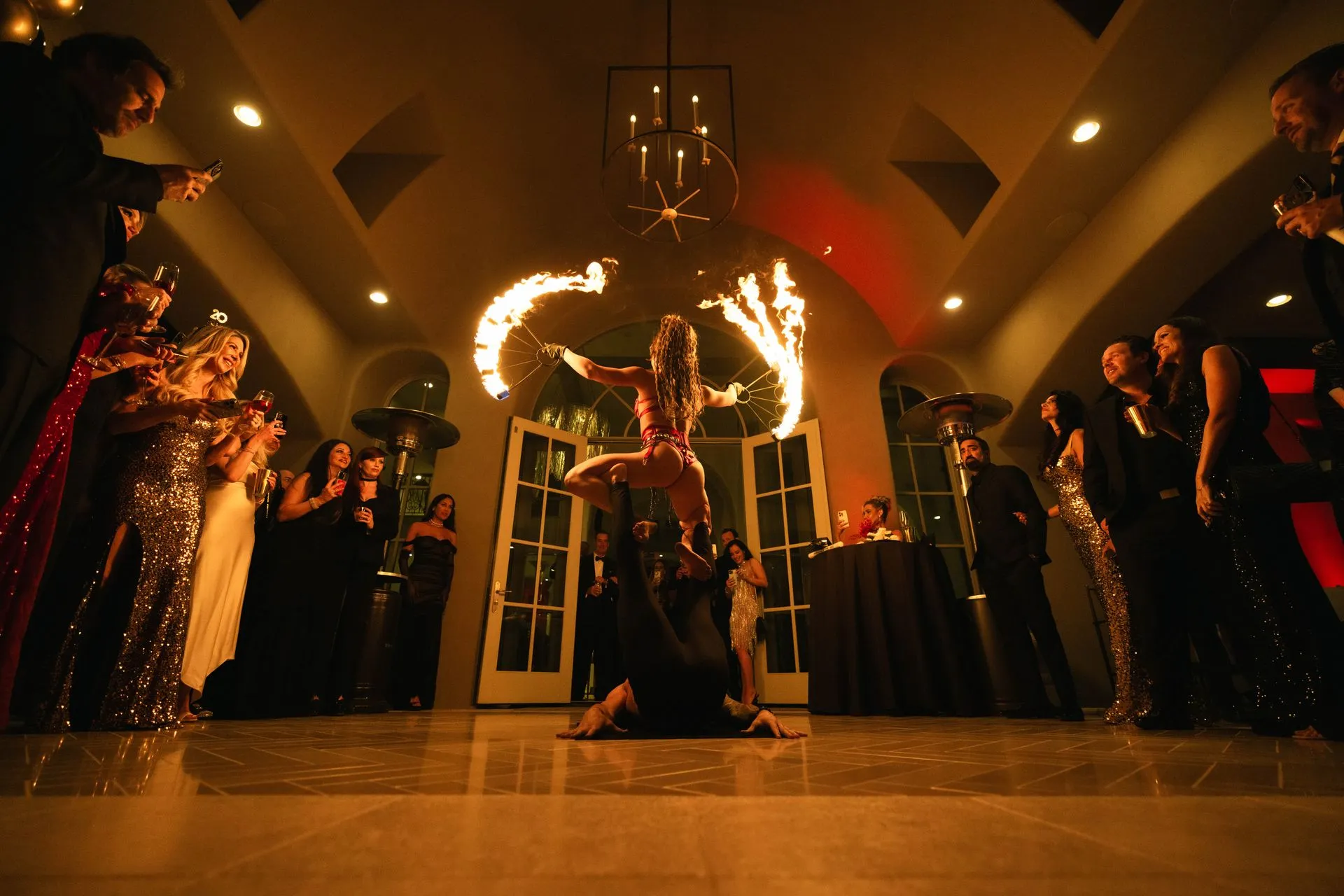
Photo: Your Media Guy (instagram.com/your_media_guy)
New posts, straight to your inbox.
Real lessons from real corporate events, no filler.


-1920w.jpg)

-1920w.jpg)