What to Negotiate in a Corporate Event Venue Contract
A venue contract usually gets read once, for the date & the total. The clauses that decide whether the night actually runs smoothly, who's allowed to cater it, how much has to be spent regardless of guest count, what happens if the event can't go forward, get signed without much of a second look.
What to negotiate in a corporate event venue contract
Four terms are worth pushing back on before signing: any exclusivity or preferred-vendor clause that locks the event into the venue's own AV or catering at a markup, the food & beverage minimum & what actually counts toward it, force majeure language specific enough to name real triggers instead of vague acts-of-God wording, & the venue's noise curfew, since sound restrictions can shut a program down mid-event depending on the jurisdiction. Each one is negotiable. Almost none of them get negotiated, because most planners don't know to ask before the deposit is down.
The exclusivity clause that locks you into the venue's own vendors
Some venues require their own in-house AV, catering, or décor team for certain services, sometimes disclosed in the first conversation, sometimes found in the contract after a deposit is already down. Reviewing a venue's preferred-vendor requirements before signing is what catches this early instead of after.
The clause itself usually isn't the real problem, most venues have real reasons to control what runs through their space. The real problem is pricing found out after commitment. Ask for the full vendor list, the service menu & the pricing in writing before signing. If exclusivity isn't negotiable, at minimum those numbers should be locked into the contract instead of left open to change later.
What actually counts toward a food & beverage minimum
A food & beverage minimum is a spending floor, not a guest-count estimate. The venue sets a dollar amount that has to be spent on food & drink regardless of how much the group actually consumes, & that number often applies before tax & service charge get added, not after. Negotiating the food & beverage terms of a venue contract starts with getting specific about what counts: does a welcome cocktail hour count, does an in-room bar tab count, does anything purchased through a venue-owned outlet count.
If the minimum itself can't move, ask what unused spend can be redirected instead, toward AV, décor, or a service upgrade the event needed anyway. A venue that won't lower the number will often move where it applies.
Force majeure language that actually protects you
A force majeure clause & a cancellation clause solve different problems. Cancellation penalties apply when the event backs out. Force majeure applies when something outside anyone's control makes the event impossible to hold, & the exact wording in the contract decides whether that protection is real or just decoration.
Language limited to events that make the event "illegal or impossible" leaves out a lot of what actually happens in practice. Negotiating a force majeure clause means asking for specific named triggers instead of a generic "act of God" line, & pushing for broader language like "commercially impracticable" or "frustrates the purpose" rather than the narrowest possible reading of what qualifies.
The noise curfew that can shut a program down mid-event
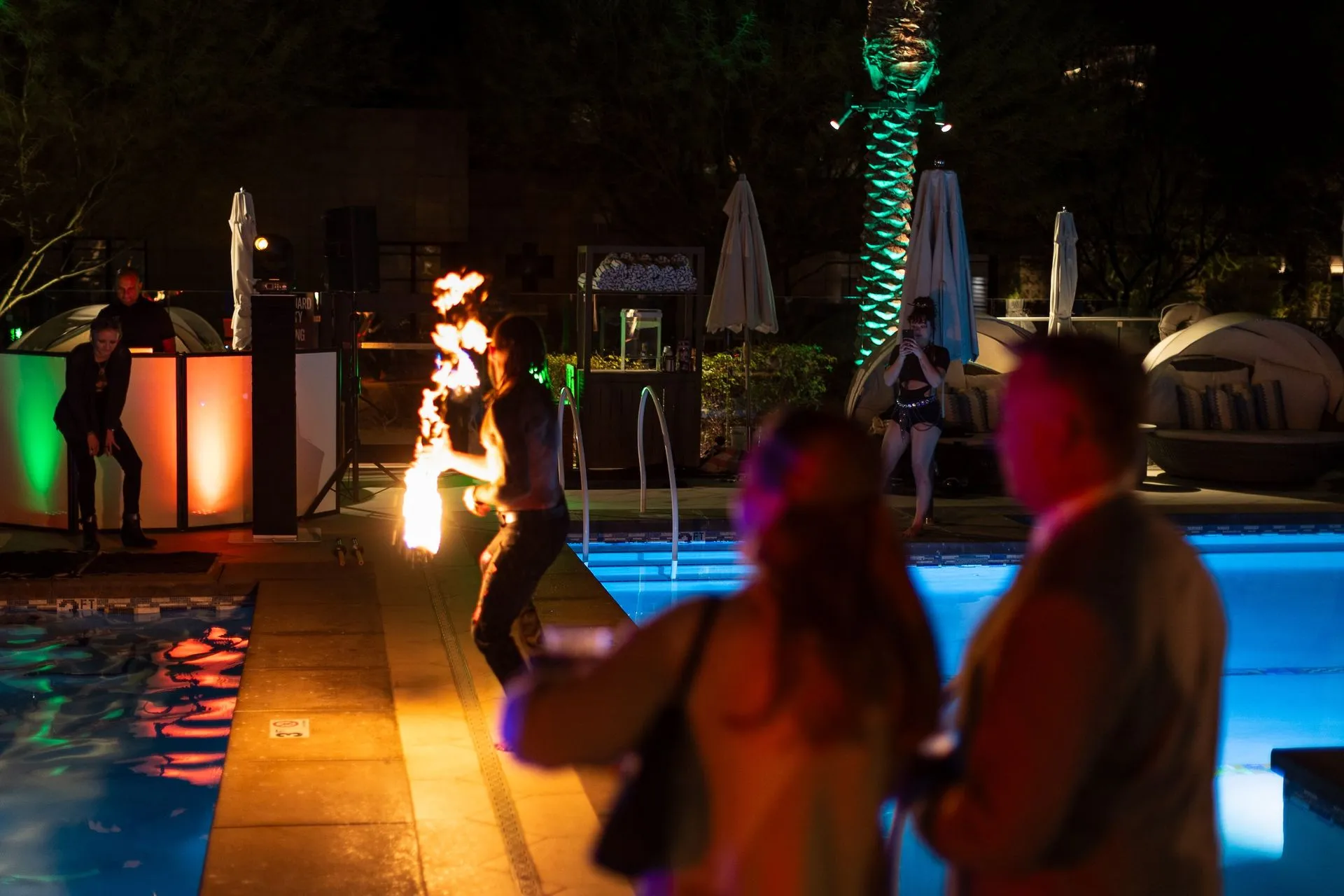
Sound restrictions are set locally, & they don't relax for a private, invite-only corporate event. Noise curfews & decibel limits vary by jurisdiction, sometimes block by block. Some cities allow a normal volume through the evening & then require a sharp drop after 10 or 11pm. Others enforce a hard cutoff time regardless of decibel level, with fines for a first violation & steeper penalties for repeat ones.
The venue usually knows its own curfew. What it doesn't always volunteer is how it gets enforced, a warning, a fine, or the sound getting cut by venue staff mid-set. Get that answer before the run of show gets built around a live band's second half, not during it.
What to get in writing before you sign
- The full preferred-vendor list, service menu & pricing, if the venue requires exclusivity for any category
- What counts toward the food & beverage minimum, & whether it applies before or after tax & service charge
- Named force majeure triggers, not a generic "act of God" clause
- The cancellation penalty schedule & how it scales as the date gets closer
- The venue's noise curfew, how it's enforced & whether it applies indoors as well as outdoors
Venue contract FAQs
What is an exclusivity clause in a venue contract?
A clause requiring the event to use the venue's own AV, catering, or décor team for certain services instead of an outside vendor. It's negotiable if caught before signing, ask for the full preferred-vendor list & pricing in writing.
What counts toward a food and beverage minimum?
It depends on the venue. Some count anything spent through a venue-owned outlet, including bars & in-room dining, toward the total. Confirm what counts & whether the number applies before or after tax & service charge, before signing.
What is the difference between a force majeure clause and a cancellation clause?
A cancellation clause sets financial penalties for backing out of an event. Force majeure covers something outside anyone's control that makes the event impossible to hold. The strength of a force majeure clause depends on whether it names specific triggers or relies on vague language.
Does a venue's noise curfew apply to a private corporate event?
Noise restrictions are set locally & apply regardless of whether the event is private or invite-only. Curfew times & enforcement methods vary by jurisdiction, sometimes block by block, so this gets confirmed with the venue directly.
Want a second read on the contract before it's signed? Tell us what's in it & we'll tell you what's worth pushing back on: start the conversation here.
Photo: Your Media Guy (instagram.com/your_media_guy)
New posts, straight to your inbox.
Real lessons from real corporate events, no filler.




-1920w.jpg)


-1920w.jpg)