How Many Check-In Staff Does a Corporate Event Need?
The line backs up at the door before the program has started, before a single performer has gone on, before the room even matters. A lot of what a guest decides about how buttoned-up the event is happens in those first minutes, standing in a hallway waiting for someone to find their name.
How many check-in staff does a corporate event need?
Premier Staff puts the baseline at one registration staff member for every 100 to 150 attendees per hour, then adjusts for how complex check-in is. Its starting ratio for QR-only check-in is 3–4 staff per 100 peak arrivals (Premier Staff). For standard badge pickup it is 5–6 staff per 100 peak arrivals (Premier Staff). And when printing, walk-ins, payments or VIP issues are in play, it climbs to 6–8 or more (Premier Staff). Premier Staff also says staffing needs usually jump by at least 20 percent when an event has tight arrival windows, mixed badge types, and VIP handling.
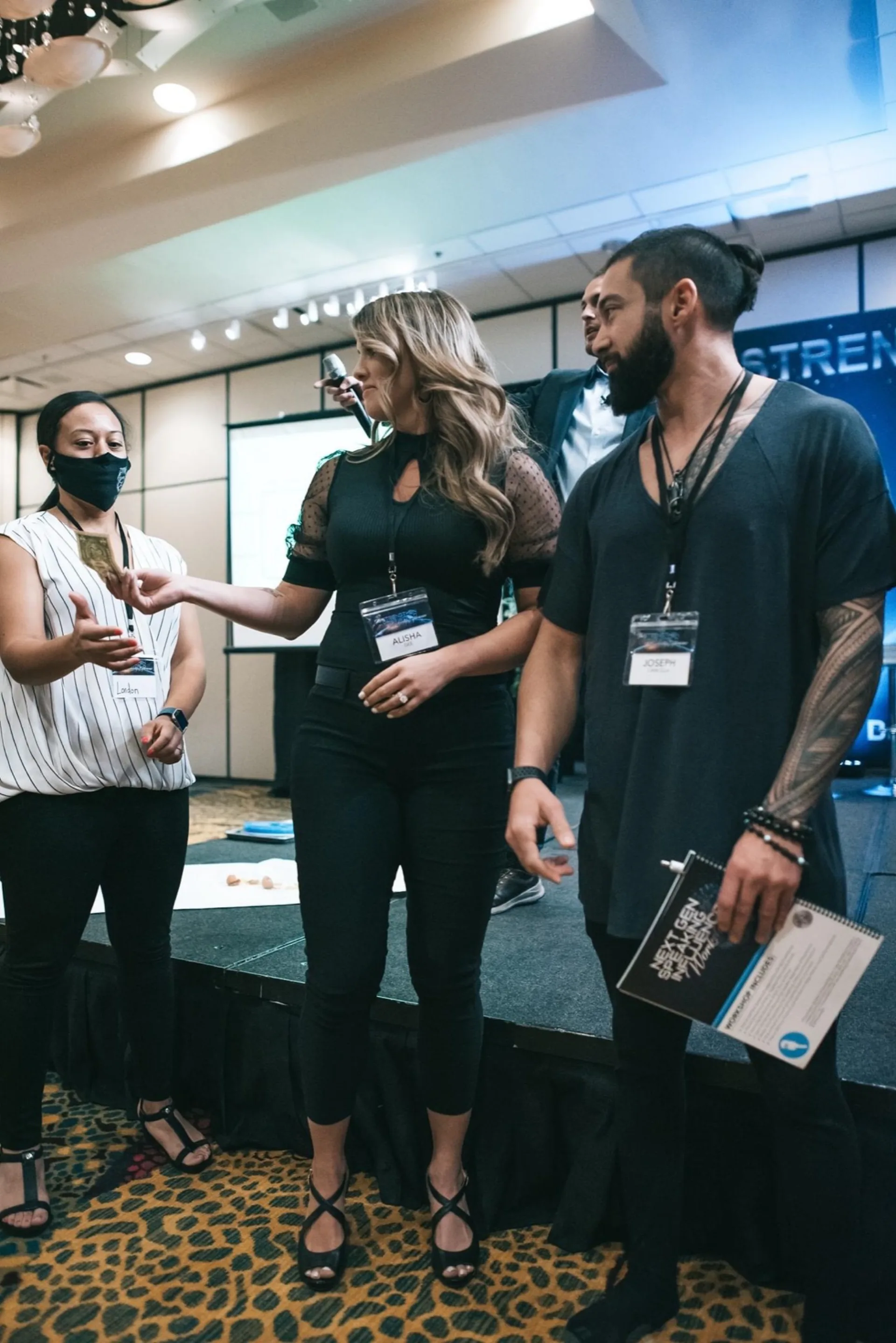
The three check-in speeds, and the staff number inside each one
Most planners size check-in off total guest count & stop there. The number that matters more is speed per guest, because an event with simple QR scanning needs fewer hands than one where every attendee needs a printed badge with their title, company, & session schedule on it. Premier Staff lists a minimum plan and an optimal plan by guest count: for 500 attendees, 10–12 staff minimum and 14–16 optimal. For a thousand attendees, the same table runs 18–22 staff minimum and 25–28 optimal (Premier Staff). The same guide recommends splitting check-in into three lanes, an express lane for pre-registered QR guests, a standard badge pickup lane, and a separate lane for walk-ins, payments and issues, so one complicated fix never stalls the clean check-ins stacked up behind it.
What QR code check-in actually changes, and what it doesn't
A QR scan is the fastest path through check-in, which is why it changes the staffing math as much as it does. It doesn't remove the need for a backup. fielddrive's guide to QR code check-in recommends setting up multiple entry points to avoid bottlenecks, running a complete dry run of the check-in system before the event, & choosing a system that supports offline scanning and stores data locally, so check-in keeps moving if the venue's WiFi drops. A fallback station with a printed guest list is cheap insurance on top of that. It's the one piece of front-of-house that has to exist whether the technology works perfectly or not.
On-site badge printing vs. pre-printed badges
Pre-printed badges feel safer on paper & cause more problems in the room. Expo Pass's rundown of on-site badge printing describes the cost of pre-printing: sorting and alphabetizing a stack, shuffling through it to find a name, & waste from no-shows or last-minute changes. On-demand printing from a kiosk or a staffed station handles walk-ins, late arrivals, & last-minute edits without that scramble. For a corporate audience, the printed badge is also quiet wayfinding. Title & company on the badge does double duty as an icebreaker in a room full of people meeting for the first time.
Where check-in gets harder: out-of-town guests
A local guest list behaves differently than one flying in. On a destination event, a meaningful share of the guest list is checking in for the first time in an unfamiliar building, sometimes straight off a shuttle, sometimes still looking for the right floor. That's where the staffing math in the first section needs padding beyond what the guest count alone suggests, & where a badge or lanyard insert showing session rooms or the shuttle return time earns its cost. Better technology at the table helps, but the real fix is someone owning arrival the way someone owns the run of show once doors open, because check-in is the first cue in that run of show, not a separate thing that happens before it starts.
Check-in staffing FAQs
How many staff do I need for a 200-person corporate event check-in?
Five to six staff minimum, seven to eight optimal. Staffing needs usually jump by at least 20 percent when arrivals are tightly bunched, badge types are mixed, and VIPs need special handling.
Is QR code check-in faster than badge printing?
QR check-in is faster. Premier Staff's starting ratio for QR-only check-in is 3–4 staff per 100 peak arrivals, compared to 5–6 for standard badge pickup. That gap is why the staffing ratio shifts with how people check in, not only with how many show up.
Do we still need a printed guest list if we're using digital check-in?
A printed fallback list is cheap insurance even with digital check-in. Offline scanning plus a printed list covers the moment a venue's WiFi or a scanning device fails, so one technical hiccup doesn't stop every guest from getting in the door.
If arrival is the one piece of the night nobody's assigned to own yet, that's a conversation worth having before the guest list is final, not after the first guest is standing in a hallway. Tell us about your event & we'll tell you what we'd staff it with.
New posts, straight to your inbox.
Real lessons from real corporate events, no filler.













-1920w.jpg)








-1920w.jpg)