Outdoor Corporate Catering in Phoenix Heat: What Actually Holds Up
The cheese on a Phoenix pool party's grazing table looks fine at noon. By two, in direct sun, it's sweating. By three, if nobody's replaced the ice underneath it, a texture problem has turned into a food safety one.
Outdoor corporate catering holds up in Phoenix heat when the caterer treats the FDA's danger-zone rule as a one-hour rule from the first setup, not a warning label read after something's already warm. Food sitting in the 40°F to 140°F danger zone gets half its normal window once the air outside clears 90°F, which in Phoenix runs from roughly May through September. That means smaller trays cycled faster, real shade over every station & ice checked on a clock instead of a glance.
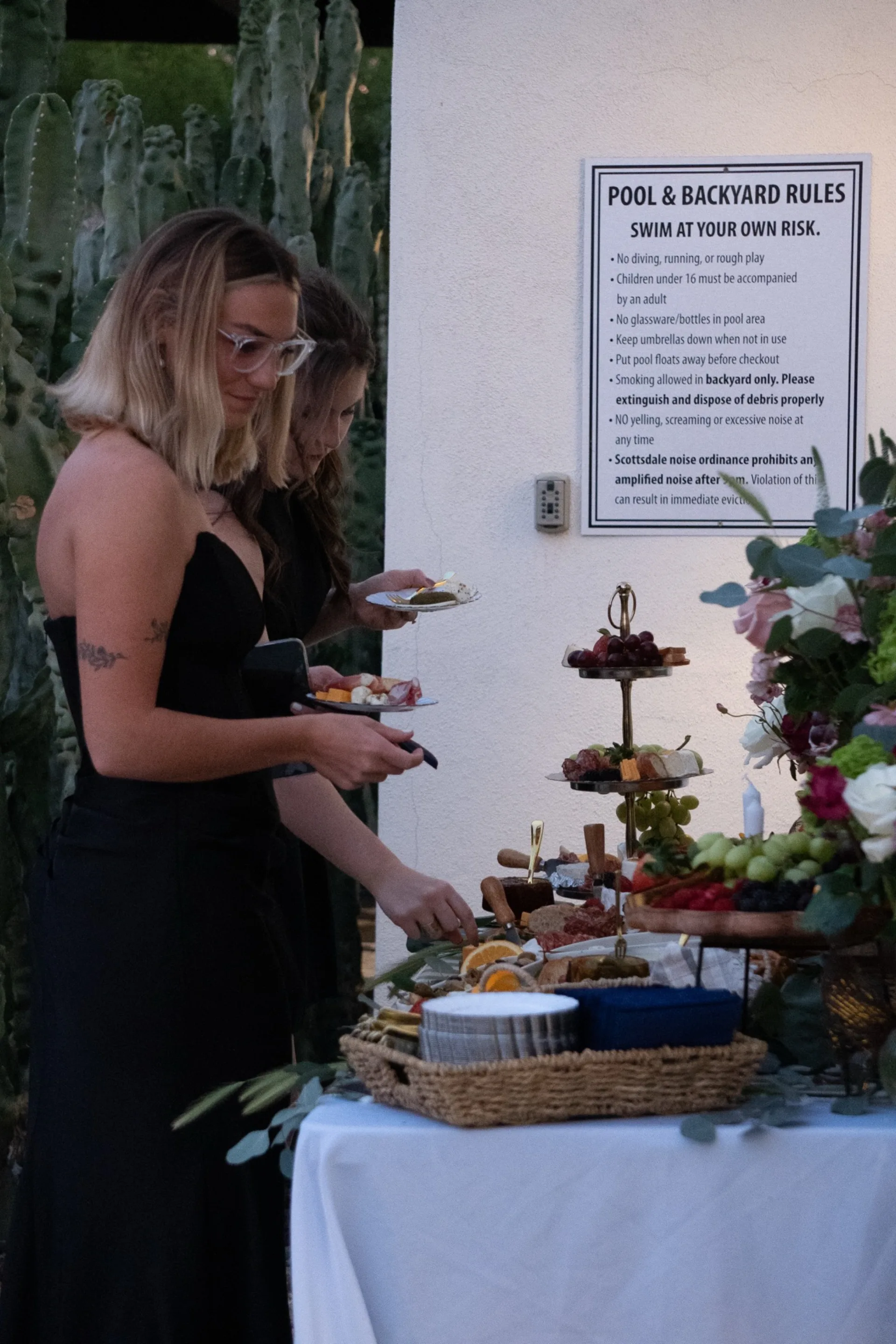
The dishes that hold up best outdoors are the ones that were never going to melt in the first place. A tiered display of fresh fruit, vegetables & cold appetizers, kept over ice & restocked in small batches, survives a Phoenix afternoon in a way a tray of warm hors d'oeuvres under a heat lamp never will. The goal is food that can sit in the sun for twenty minutes & still be safe to eat, not something more elaborate.
The clock is half as long outside
The FDA's guidance on food safety outdoors sets the boundary at the 40°F to 140°F danger zone, the range where bacteria grow fastest. Indoors, in a climate-controlled room, food can sit in that zone for up to two hours before it has to be reheated, re-chilled or thrown out. The FDA's outdoor guidance cuts that window to one hour once the air temperature passes 90°F, & the USDA's own summer guidance uses the same cutoff. That's cumulative time in the danger zone, not a fresh hour every time a tray gets refilled.
Phoenix doesn't leave much margin
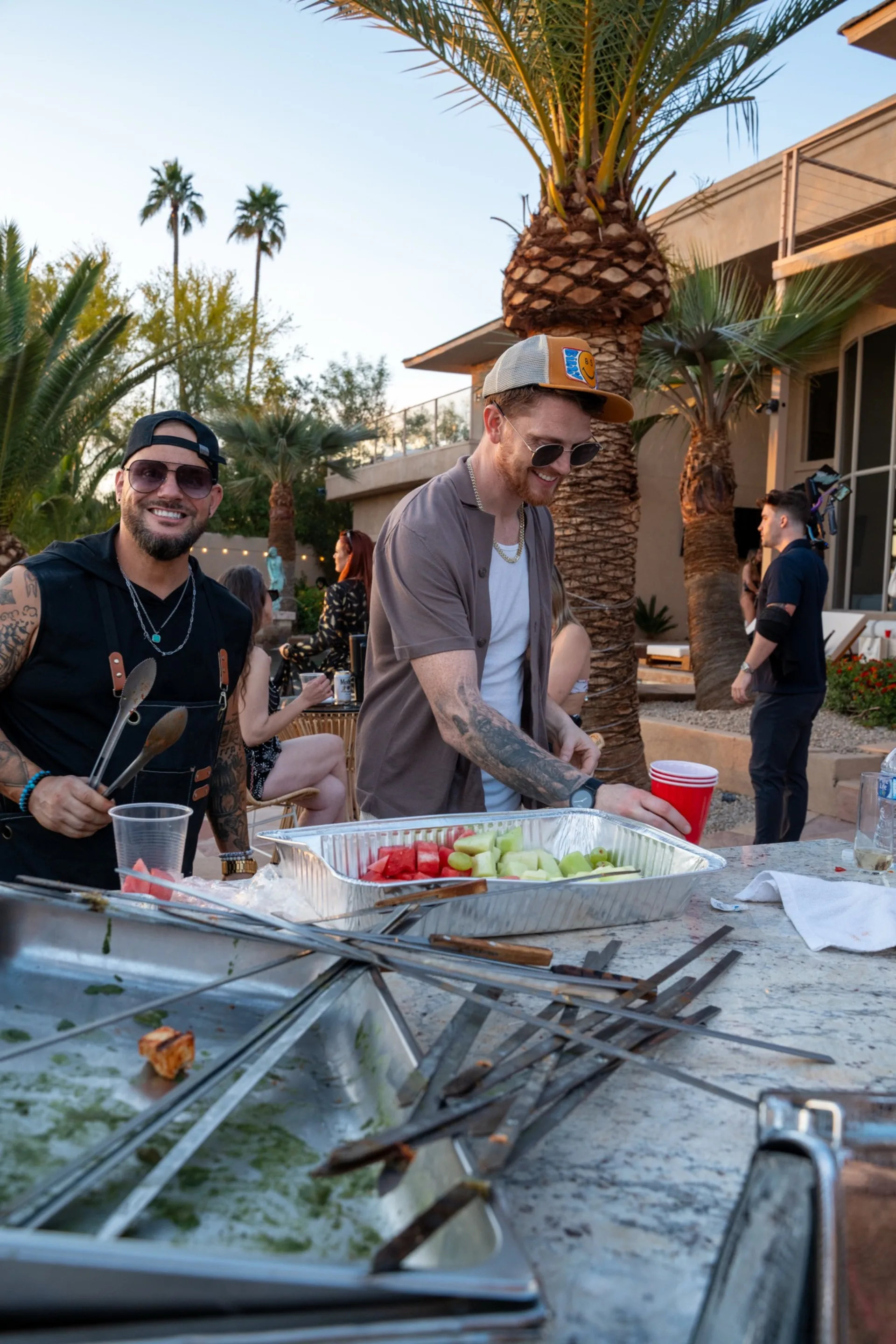
That one-hour rule isn't a rare edge case here. Phoenix's normal summer highs sit above 105°F from June through August, & 2026 was one of the hottest summers on record for the city, with 63 days over 100°F & an average summer temperature of 97°F. A one o'clock buffet in August is catering well past 90°F, which makes the one-hour clock, not the two-hour one, the real planning number for roughly five months of the year.
Shade is staging, not decor
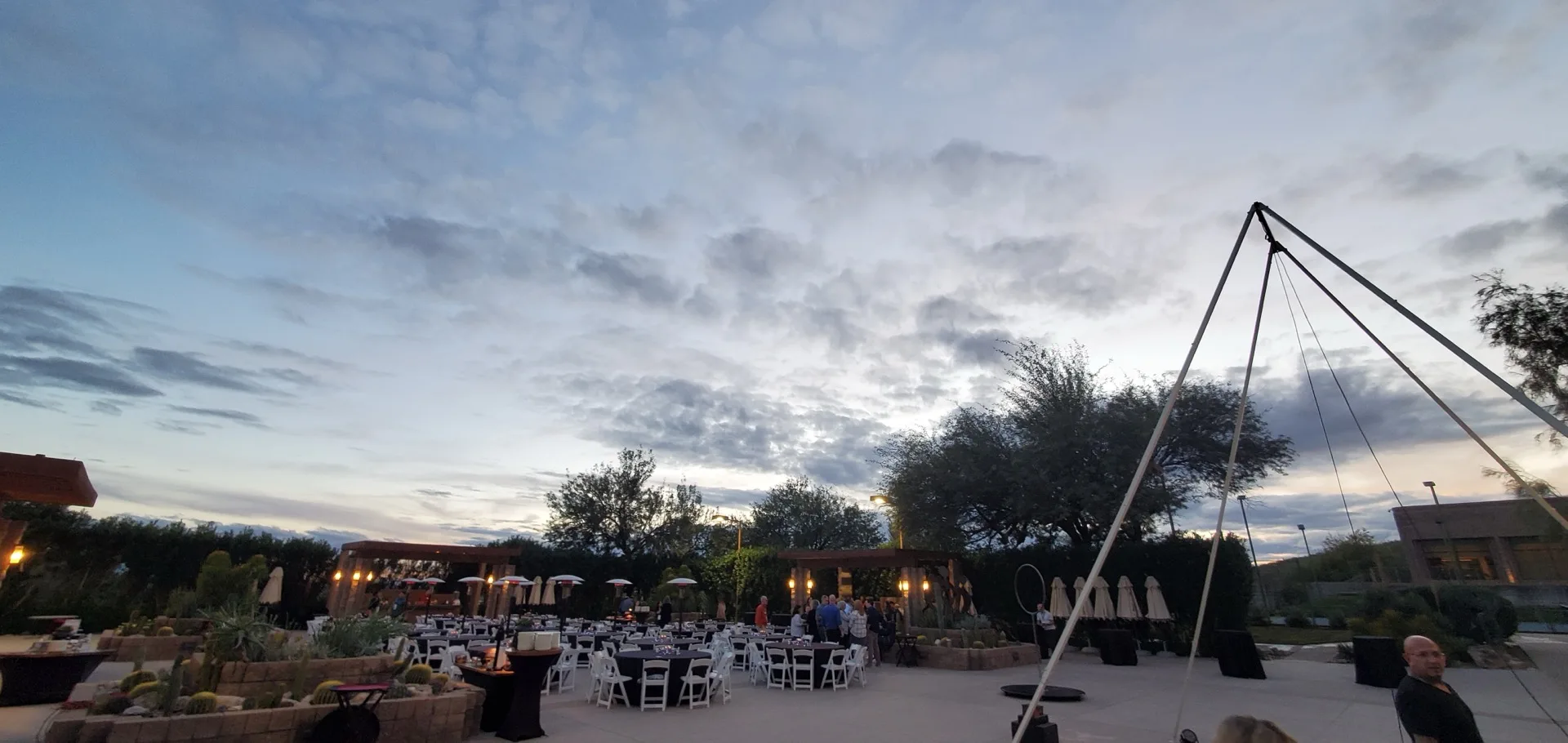
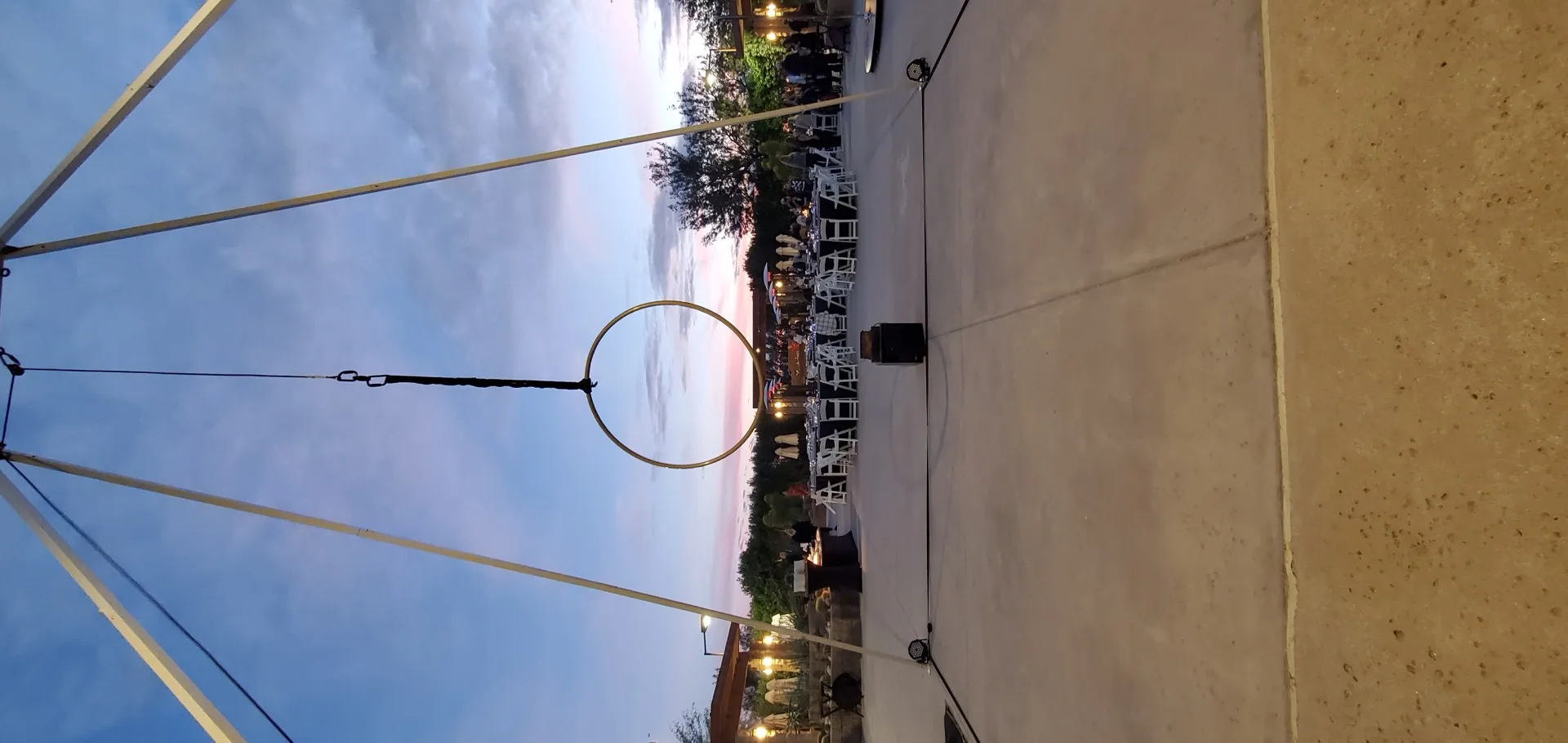
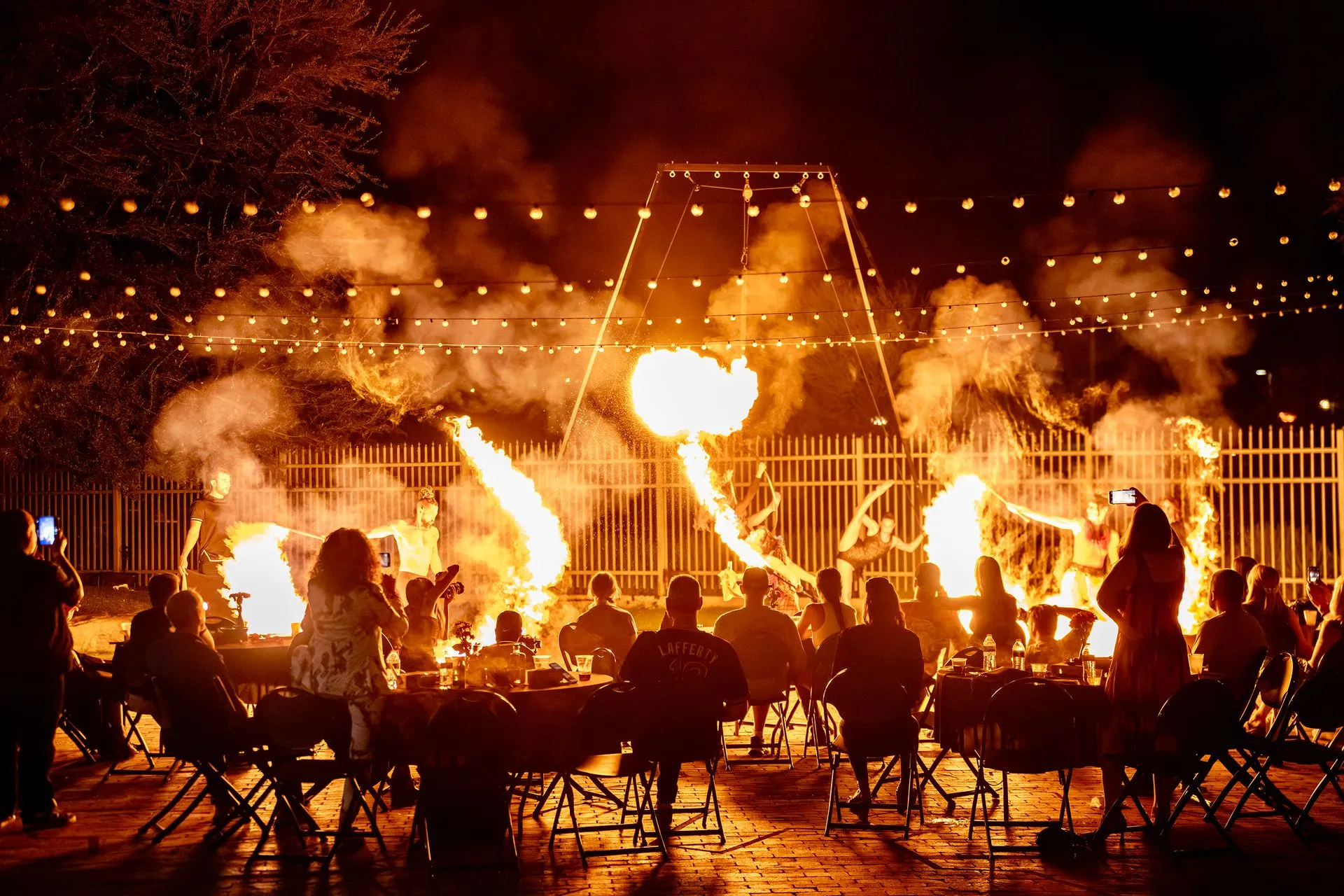
A shade structure over a catering station keeps food out of direct sun long enough to matter, which is also why the tent or umbrella has to go up before the first tray does, not after a guest complains. That's part of the same event strategy & design work that has to happen before a caterer ever sets up, not a detail left to the day of. The same logic applies to ice: a station that looks fully stocked at eleven is a different station by one, so the caterer needs a replenishment schedule tied to the clock, not a visual check whenever someone walks by.
The crew needs the same protections the menu does
Arizona adopted its first statewide guidance on outdoor heat in 2026, calling for employers to give outdoor workers water, shade & scheduled rest. Reporting on the new guidance frames it around construction & landscaping crews, but a catering team working a July event on an uncovered patio is standing in the same heat. Ask any outdoor caterer what their water & rotation plan is for staff before the event, not during it. A crew that's rotating through shade & staying hydrated is also the crew more likely to catch the ice tray running low before a guest does.
If your next event is outdoors & booked for a Phoenix summer, the menu & the staffing plan both need to be built around the heat, not around what reads well on a tasting menu in a cool kitchen in March. That's part of the same catering conversation we have alongside timing around the program & budget & service style. Tell us your date & your venue & we'll tell you what to ask your caterer before you book. Start the conversation here.
Questions planners ask us
How long can food sit out at an outdoor event in Phoenix heat?
One hour, not two, once the air temperature passes 90°F. The FDA & USDA both treat the 40°F to 140°F danger zone as cumulative time, so a tray that's been out for forty minutes already has twenty minutes left, not a fresh hour because it just got refilled.
What foods hold up best for outdoor catering in extreme heat?
Cold, ice-held items that were never meant to be served warm: fresh fruit & vegetable displays, chilled appetizers, dips kept over ice. Anything that depends on a heat lamp or melts on contact with sun, like soft cheeses or cream-based dishes, is the first to fail outdoors.
Does shade matter for food safety at outdoor events?
Yes, and it's not optional for food. Direct sun pushes food past the danger-zone threshold faster than ambient air temperature alone, so a shade structure over every catering station, up before service starts, is part of the food safety plan, not a styling choice.
Outdoor catering staff need heat protections too
Arizona's 2026 statewide guidance calls for outdoor workers to get water, shade & scheduled rest, & that applies to a catering crew working an uncovered patio in July the same way it applies to a construction site. Ask your caterer what their staff rotation plan is before the event.
New posts, straight to your inbox.
Real lessons from real corporate events, no filler.
Planning a Phoenix corporate event? Get the free planning guide.